
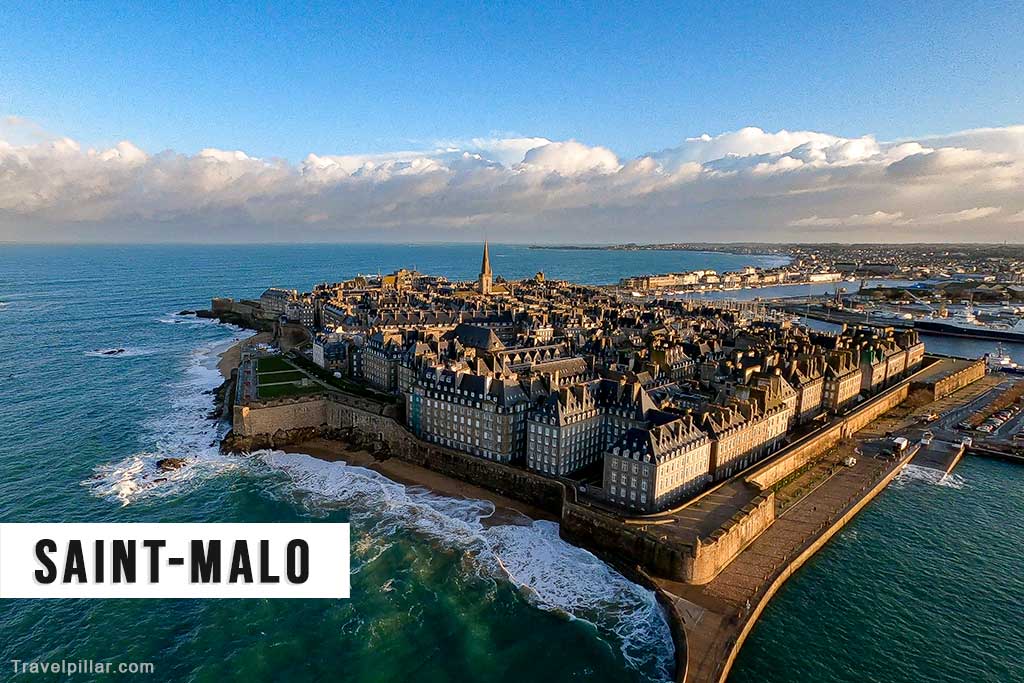
Saint-Malo, located on the northern coast of Brittany, France, is a fortified port city known for its rich maritime history and striking architecture. Founded in the Middle Ages, Saint-Malo has a long tradition as a center for privateering, exploration, and commerce. The city’s impressive granite walls and bastions, which date back to the 12th century, surround the historic old town, making it one of the most visited destinations in the region.
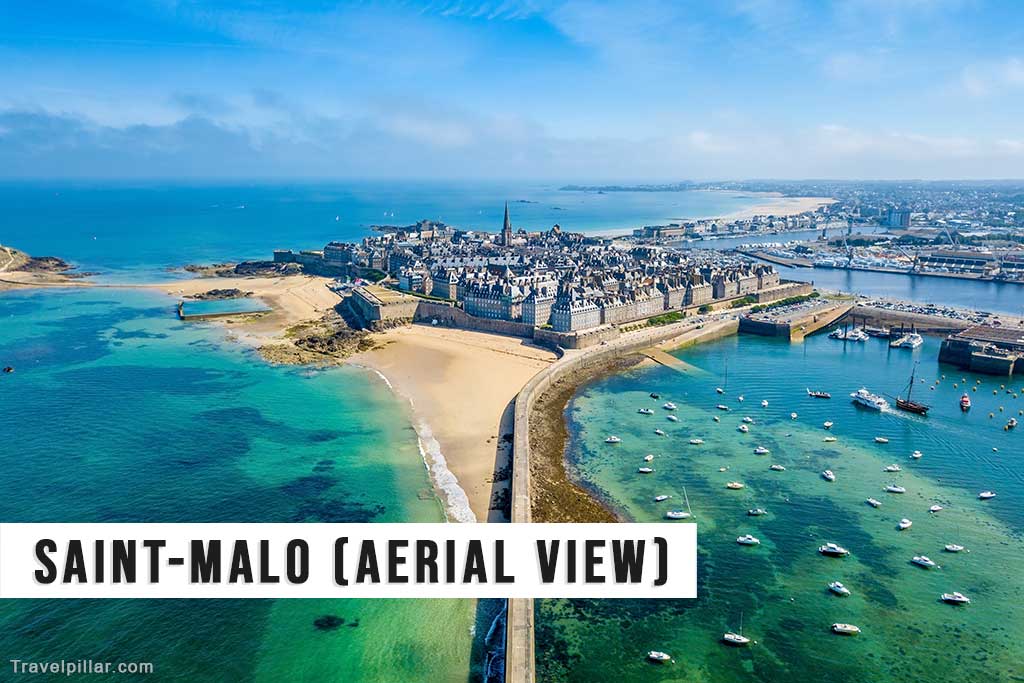
The most notable feature of Saint-Malo is its intra-muros, or “within the walls” district, where narrow streets wind between centuries-old buildings. Visitors can walk along the city walls, which offer panoramic views of the surrounding coastline, beaches, and nearby islands. The Château de Saint-Malo, which once served as the residence of the Dukes of Brittany, is now home to the Musée d’Histoire de la Ville and provides insight into the city’s naval and privateering past.
Saint-Malo’s history is closely tied to privateers, who were authorized by the French crown to attack enemy ships. One of the most famous privateers was Robert Surcouf, whose legacy is still celebrated in the city today. The city’s maritime heritage is further explored at the Musée International du Long-Cours Cap-Hornier, dedicated to the long-distance sailors who navigated the Cape Horn trade routes.
The city is also known for its beaches, which are accessible from the old town. Plage de Bon Secours is a popular spot, featuring a tidal swimming pool and views of the nearby Île du Grand Bé, which can be reached on foot at low tide. The Île du Petit Bé, another tidal island, is home to a historic fort.
Saint-Malo is a gateway to the Mont Saint-Michel Bay, offering easy access to the famous Mont Saint-Michel, located about an hour’s drive away. The city also serves as a departure point for ferries to the Channel Islands and England.
With its well-preserved architecture, maritime heritage, and scenic location, Saint-Malo remains a key destination for visitors interested in history, coastal landscapes, and Breton culture.
Official tourism website: https://www.saint-malo-tourisme.co.uk
Top 10 Things to Do in Saint-Malo
City Walls (Les Remparts)
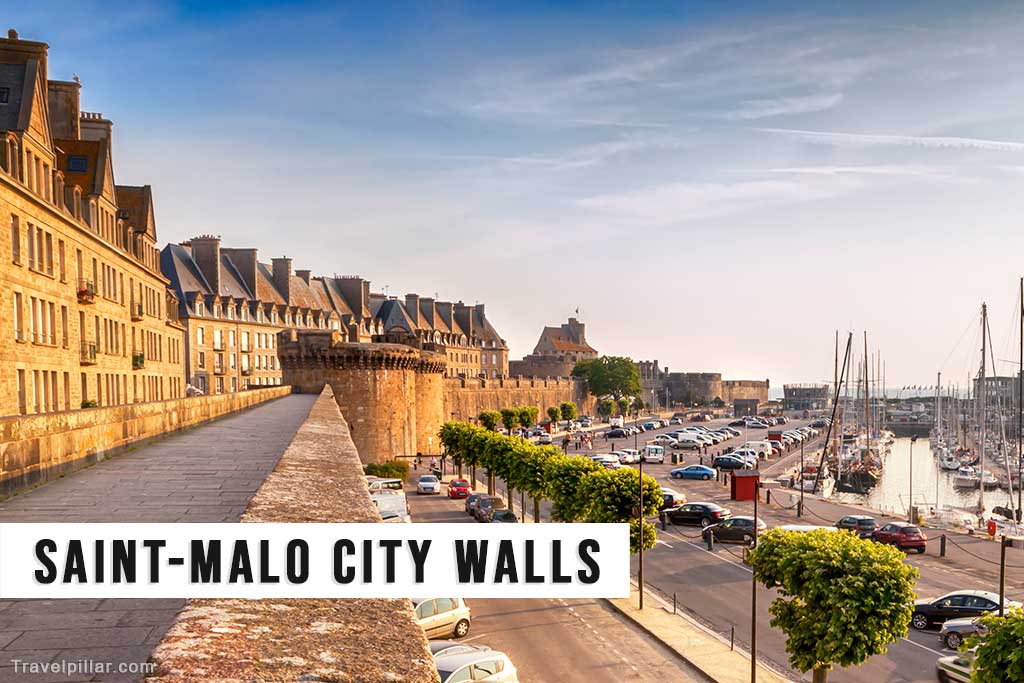
The city walls of Saint-Malo, known as Les Remparts, encircle the historic centre and offer a continuous elevated walkway overlooking the sea, port, and town. Constructed and expanded between the 12th and 18th centuries, the granite ramparts include fortified gates, towers, and bastions. They provide access to key landmarks and offer views of the surrounding coastline, serving as both a defensive structure and a prominent feature of the city’s urban layout.
Google map 4.8/5
Château de Saint-Malo
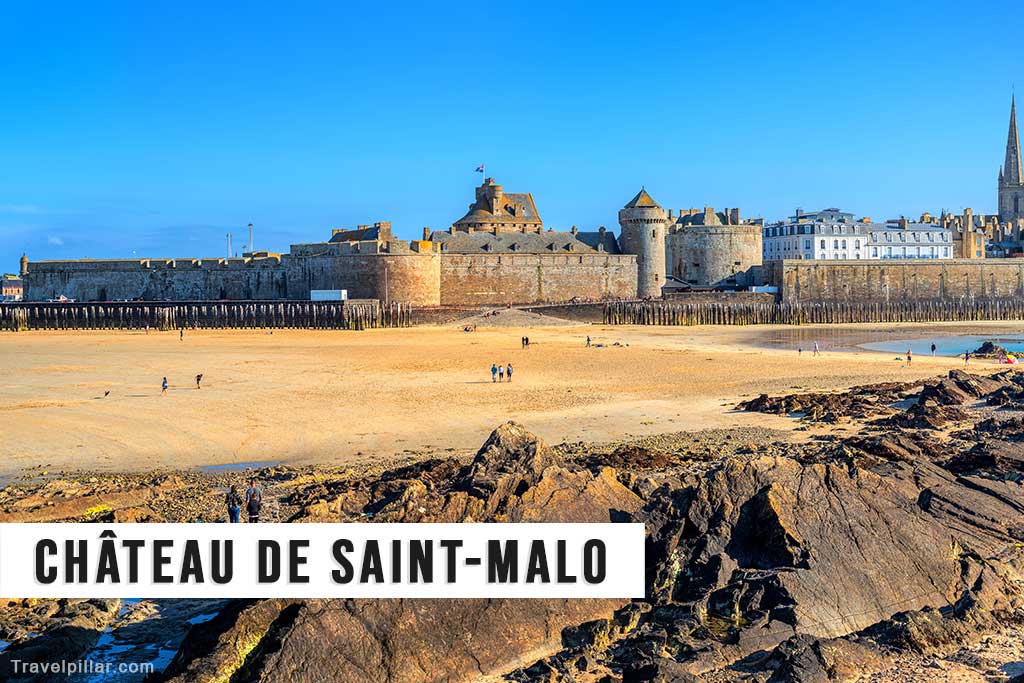
The Château de Saint-Malo is a fortified structure located at the northeast corner of the walled city. Built between the 15th and 18th centuries by the Dukes of Brittany and later the French crown, it served as a defensive and administrative centre. The château now houses the Saint-Malo History Museum, which presents exhibits on the city’s maritime past, local culture, and notable figures, including explorers and privateers associated with Saint-Malo.
Google map 4.4/5
Saint-Malo Cathedral (Cathédrale Saint-Vincent)
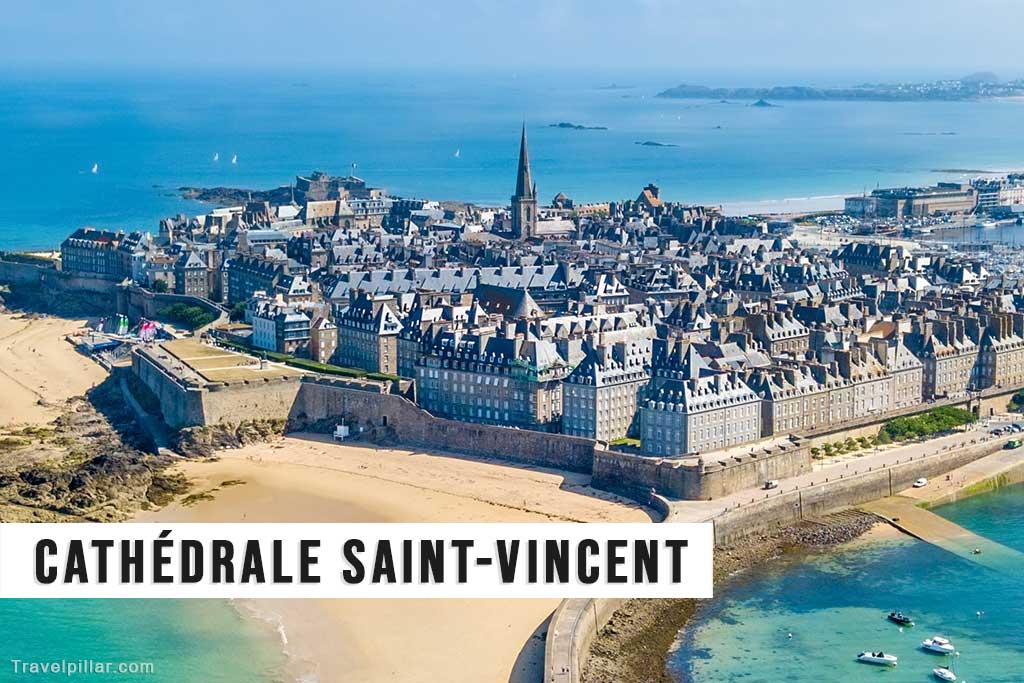
Saint-Malo Cathedral, officially known as Cathédrale Saint-Vincent-de-Saragosse, is a Gothic-Romanesque church located within the city walls. Originally founded in the 12th century and modified through later centuries, it features a mix of architectural styles and stained glass windows. The cathedral houses the tomb of explorer Jacques Cartier and remains an active place of worship. Restoration work followed damage sustained during World War II, preserving its historical and religious significance.
Official website: https://cathedralesaintmalo.fr (in French)
Google map 4.5/5
Plage de Bon Secours
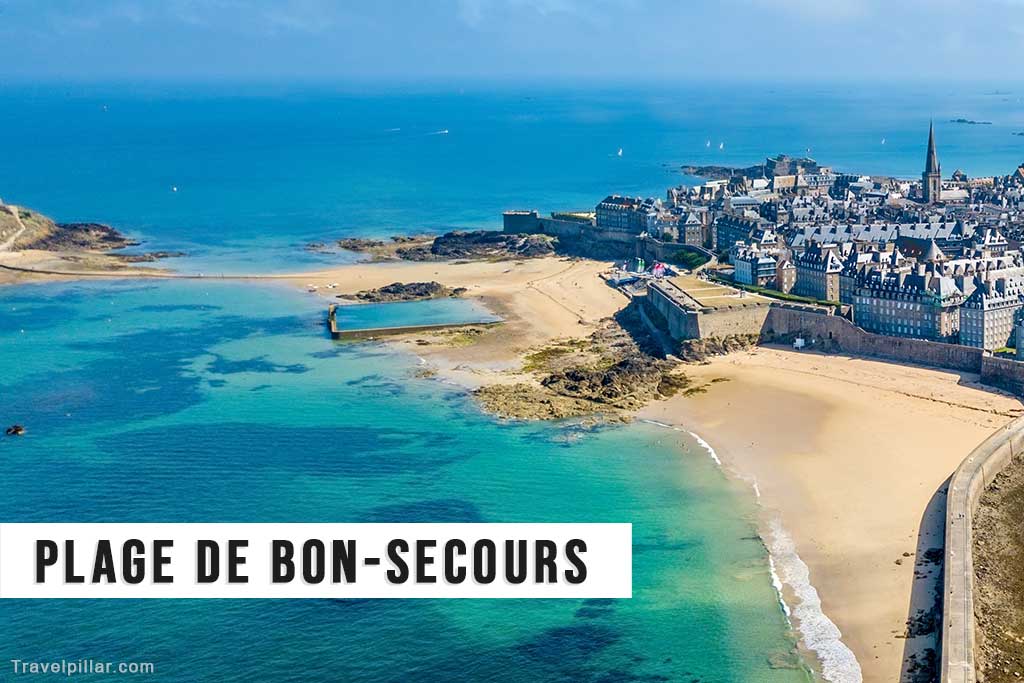
Plage de Bon Secours is a sandy beach located at the base of the city walls, accessible from the intra-muros area. It features a distinctive seawater swimming pool with a diving board, submerged and revealed by the tides. The beach offers views of the Bay of Saint-Malo and nearby islets. It is popular for swimming and walking during low tide and includes a lifeguard station during the summer months.
Google map 4.6/5
Plage du Mole
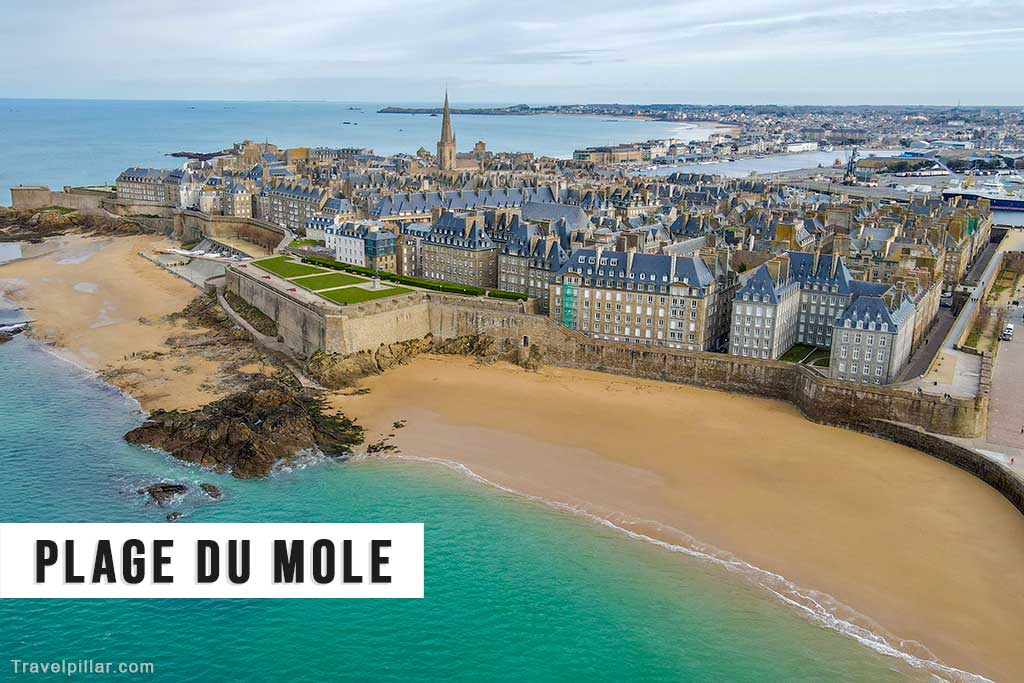
Plage du Môle is a sheltered beach located at the southern tip of the walled city, near the Môle des Noires breakwater. Protected by surrounding walls and structures, it offers calmer waters suitable for swimming. The beach provides views of the harbor entrance and nearby coastal areas. Access is via stairways from the ramparts or nearby streets. Its location makes it a quieter alternative to the more central beaches in Saint-Malo.
Google map 4.5/5
Île du Grand Bé
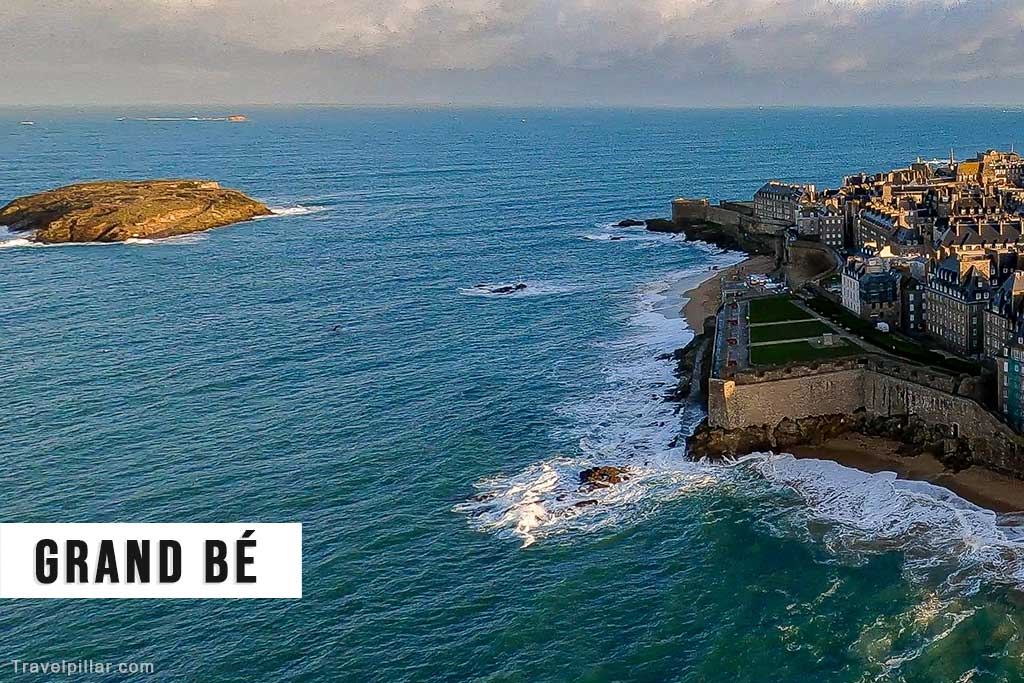
Île du Grand Bé is a tidal island located just off the coast of the city, accessible on foot at low tide from Plage de Bon Secours. The uninhabited island contains the tomb of writer François-René de Chateaubriand, a native of Saint-Malo. It offers panoramic views of the walled city, surrounding coastline, and neighboring islets. The island is undeveloped, with rocky terrain and remnants of military fortifications visible along its surface.
Google map 4.7/5
Fort National
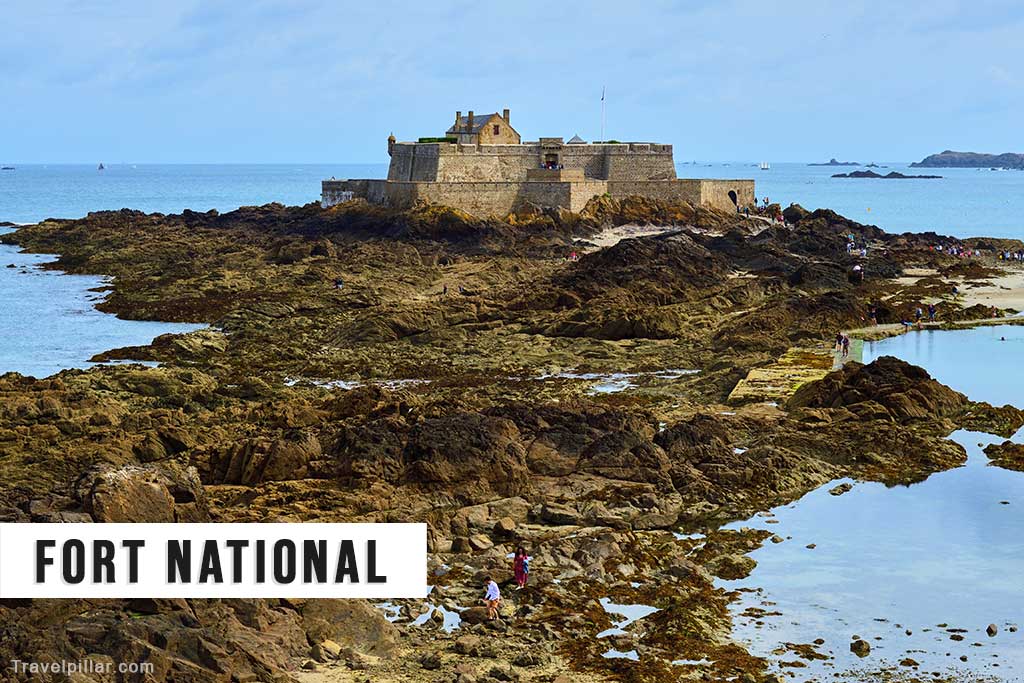
Fort National is a coastal fortification located on a tidal islet just off the city’s main beach. It was designed by military engineer Vauban and constructed in 1689 to defend the walled city from seaborne attacks. Built of granite, the structure includes ramparts, barracks, and gun emplacements. Accessible on foot at low tide, the fort is open seasonally for guided visits and provides views of the city, bay, and surrounding fortifications.
Google map 4.5/5
Solidor Tower (Tour Solidor)
The Solidor Tower (Tour Solidor) is a three-towered keep located in the Saint-Servan district of Saint-Malo, overlooking the Rance estuary. Constructed in the 14th century by the Dukes of Brittany, it served as a strategic defensive structure controlling river access. Built of granite, it features a central courtyard and thick walls.
Google map 4.5/5
Mont Saint-Michel Bay

Mont Saint-Michel Bay is a vast tidal area located near Saint-Malo, extending between Brittany and Normandy. Known for having some of the highest tidal ranges in Europe, the bay features mudflats, sandbanks, and shifting channels. It surrounds Mont Saint-Michel, a UNESCO-listed island commune. The bay supports diverse birdlife and is subject to guided crossings due to its fast-moving tides. It remains a significant natural and cultural landmark in the region.
Saint-Malo Local Markets
The city hosts several local markets offering regional produce, seafood, baked goods, and artisan products. The main market takes place at Marché de Rocabey, operating multiple days a week. Smaller markets are held in Saint-Servan and Paramé. These markets serve both residents and visitors, providing access to local specialties such as salted butter, cider, and fresh fish. Covered and open-air stalls contribute to the town’s commercial activity and culinary culture.
Who was Saint-Malo?
Saint-Malo, also known as Maclou or Maclovius, was a 6th-century Christian missionary and one of the seven founding saints of Brittany. Born in Wales, he became a monk and later a bishop in the region of Aleth, near the present-day city of Saint-Malo, which is named after him. He is traditionally linked to Saint Brendan and early missionary voyages. Saint-Malo played a key role in spreading Christianity in Brittany and is commemorated in the Tro Breizh pilgrimage. His legacy is particularly associated with the development of religious communities and the Christianisation of the Armorican peninsula during the early medieval period.