
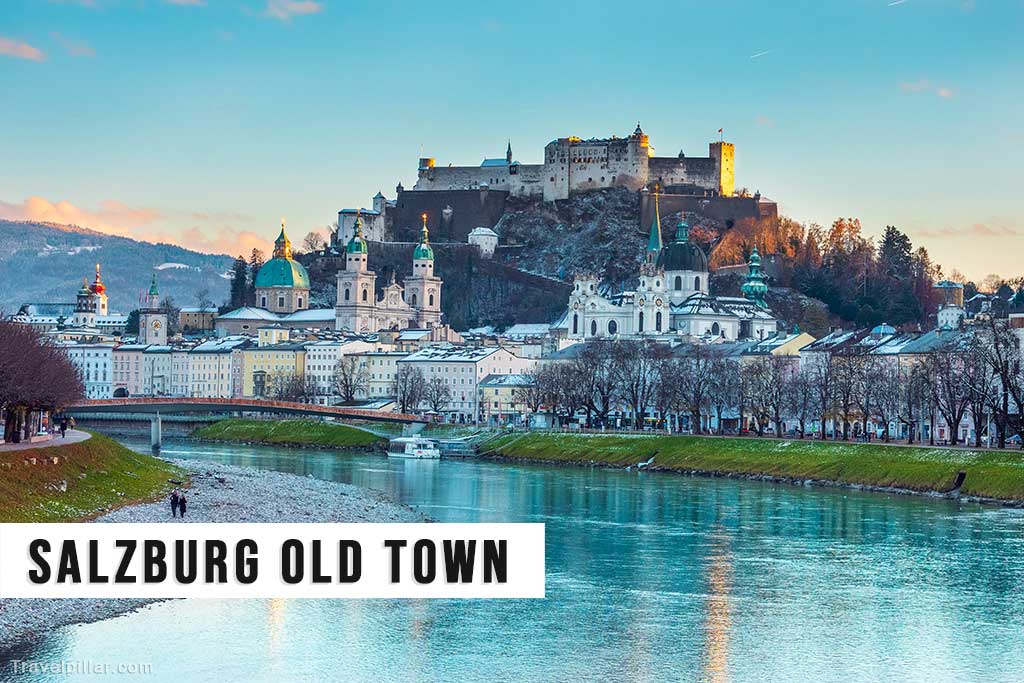
Salzburg Old Town, or Altstadt, is one of the best-preserved historic centres in Europe and a UNESCO World Heritage Site since 1996. Situated on both banks of the River Salzach, it developed under the rule of the prince-archbishops, who combined political power with cultural patronage. The town’s wealth derived from the salt trade, which supported the construction of churches, palaces, and civic buildings that still define its appearance today.
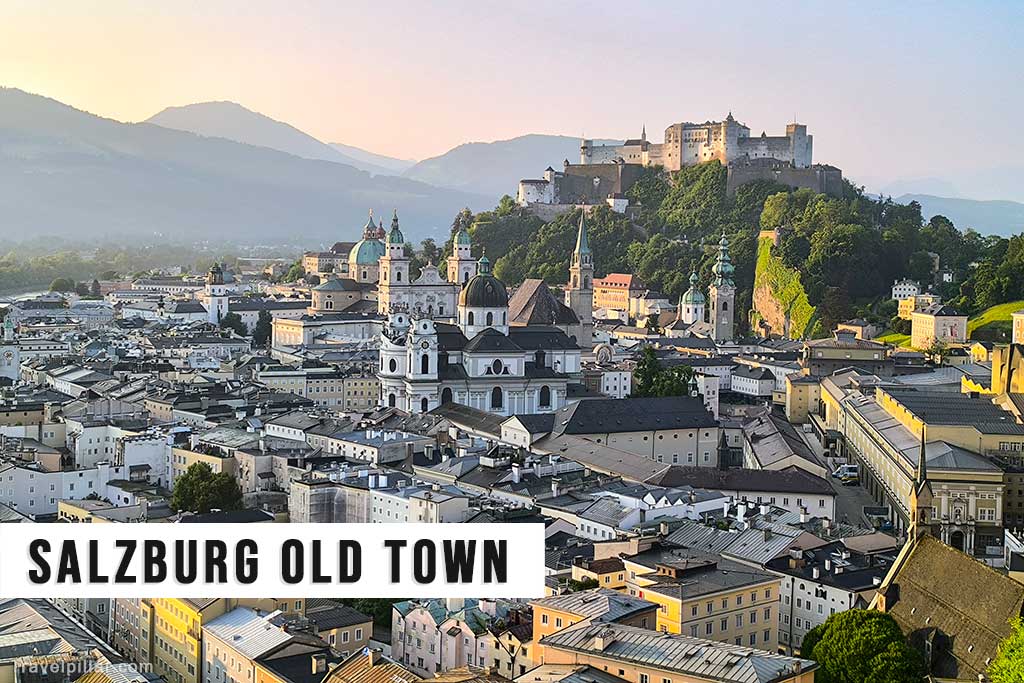
The area is characterised by a dense network of narrow streets, arcaded courtyards, and baroque squares. The most important religious building is Salzburg Cathedral, consecrated in the 17th century, with its baroque facade and spacious interior. Nearby are the Residenz, the former palace of the prince-archbishops, and the Franciscan Church, which combines Romanesque and Gothic elements. The old town also contains monasteries, chapels, and civic institutions that reflect its long history as an ecclesiastical centre.
Above the old town rises Hohensalzburg Fortress, one of the largest medieval castles in Europe. Built from the 11th century onwards, it dominates the skyline and provides views over the city and surrounding Alps. The fortress, together with the churches and palaces, illustrates Salzburg’s role as both a defensive stronghold and a seat of religious authority.
Salzburg Old Town is also closely associated with music. Wolfgang Amadeus Mozart was born here in 1756, and his birthplace and residence are now museums. The city remains a major centre for music, with annual festivals and performances that draw international audiences. This cultural dimension enhances the architectural and historical value of the old town.
Today, the old town combines historic monuments with modern activity. Shops, cafes, and markets occupy its streets, while institutions such as the University of Salzburg contribute to its academic and cultural life. Its preserved buildings, musical associations, and urban layout make Salzburg Old Town one of Austria’s most important historic and cultural destinations.
Google map
1. Salzburg Cathedral
Salzburg Cathedral is the city’s principal church, consecrated in 1628. Its baroque facade and domed interior reflect Italian influences, while earlier foundations date back to the 8th century. The cathedral contains significant artworks, altars, and the baptismal font used for Mozart.
Google map
2. Hohensalzburg Fortress
Hohensalzburg Fortress dominates the skyline above the old town. Built in the 11th century and expanded over time, it served as a military stronghold and residence for the prince-archbishops. Today it offers exhibitions on medieval life and panoramic views.
Google map
3. Residenz Palace
The Residenz was the palace of the prince-archbishops, located on Residenzplatz. Its state rooms contain baroque decoration, stucco work, and paintings. The palace reflects the wealth and authority of Salzburg’s rulers and now hosts cultural events and exhibitions.
Google map
4. Mozart’s Birthplace
Mozart’s Birthplace, on Getreidegasse, is preserved as a museum. Exhibits include family portraits, instruments, and documents relating to the composer’s life. It provides insight into his early years and Salzburg’s role in his development.
Google map
5. Franciscan Church
The Franciscan Church combines Romanesque and Gothic structures with later baroque additions. Its high nave, slender columns, and medieval choir are notable architectural features. The church reflects the continuity of religious life in Salzburg.
Google map
6. St. Peter’s Abbey
St. Peter’s Abbey is one of the oldest monasteries in Central Europe, founded in the 7th century. The complex includes a church, cemetery, and catacombs carved into the cliffs. It remains an active Benedictine monastery.
Google map
7. Getreidegasse
Getreidegasse is Salzburg’s most famous shopping street, lined with medieval buildings, wrought-iron signs, and arcaded courtyards. It combines commercial activity with historic character. Mozart’s Birthplace is located here, adding cultural significance to the street.
Google map
8. Kapitelplatz
Kapitelplatz is a large square beside the cathedral, framed by historic buildings and overlooked by the fortress. It hosts markets and public art, including modern installations. The square connects key religious and civic landmarks.
Google map
9. Salzburg Museum
The Salzburg Museum, located in the Neue Residenz, covers the city’s art, history, and culture. Exhibitions include paintings, decorative arts, and archaeological finds. It provides context for Salzburg’s development as both a religious and cultural centre.
Google map
10. Alter Markt
The Alter Markt, or Old Market, dates back to the Middle Ages. Surrounded by historic houses and shops, it contains a baroque fountain known as St. Florian’s Fountain. The market reflects Salzburg’s long commercial history.
Google map