
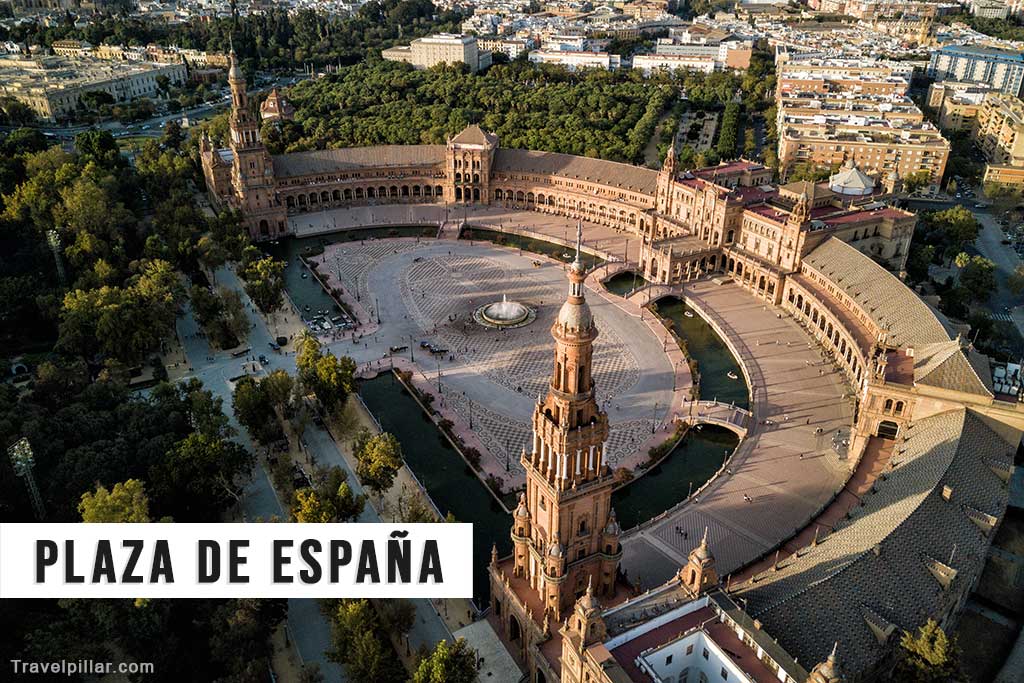
Plaza de España is a breathtaking public square located in the Parque de María Luisa in Seville, Spain. Designed by Spanish architect Aníbal González for the Ibero-American Exposition of 1929, the plaza showcases an impressive mix of architectural styles, including Art Deco, Neo-Mudéjar, and Regionalism. This expansive semicircular space is characterized by its curved façade, ornate bridges, and intricate tile work, making it an essential destination for tourists and architecture enthusiasts alike.
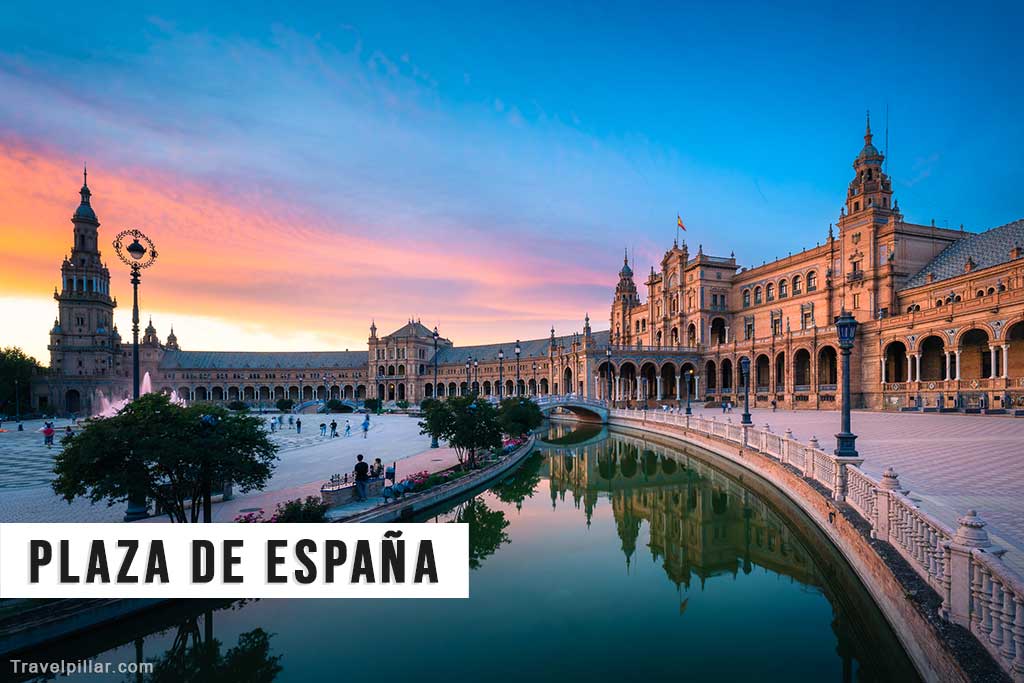
Covering an area of approximately 50,000 square meters, the plaza features a series of buildings that once housed pavilions for participating countries during the exposition. These structures now serve various purposes, including government offices and museums. The centerpiece of the plaza is a large, curved canal with four ornate bridges symbolizing the four ancient kingdoms of Spain: Castile, Aragon, Navarre, and León.

One of the most notable aspects of Plaza de España is its beautiful azulejos, or ceramic tilework, which adorn the walls, bridges, and balustrades throughout the site. A prominent display of these tiles can be found in the alcoves representing each of Spain’s provinces, with each alcove featuring a unique design that highlights the province’s history and culture.

Plaza de España is not only an architectural marvel but also a testament to Seville’s rich cultural heritage. Its grandeur and picturesque setting make it a must-visit attraction for anyone exploring the city.
Google map 4.8/5