

Syracuse is a historic city located on the southeastern coast of Sicily, Italy. Established as a Greek colony in the 8th century BC, Syracuse was once one of the most powerful and influential cities in the ancient Mediterranean world. Today, the city is renowned for its archaeological sites and well-preserved ancient structures, which provide a unique insight into the history and culture of Sicily.
The UNESCO World Heritage Site of the Neapolis Archaeological Park is one of the city’s main attractions, featuring the ancient Greek Theatre, the Roman Amphitheatre, and the Ear of Dionysius, a unique limestone cave. The island of Ortygia, the historical heart of Syracuse, boasts a charming network of narrow streets, beautiful piazzas, and impressive Baroque architecture.
Other notable attractions in Syracuse include the Cathedral of Syracuse, which incorporates the remains of an ancient Greek temple, and the Archaeological Museum “Paolo Orsi,” which houses an extensive collection of artifacts from the region. With its rich history, stunning archaeological sites, and vibrant cultural scene, Syracuse is a must-visit destination for travelers exploring Sicily.
xxx

Ortigia Island is the historic center of Syracuse, Italy, located on a small island connected to the mainland by bridges. Characterized by its narrow streets, Baroque architecture, and picturesque piazzas, Ortigia offers a unique blend of ancient and modern charm. Key attractions include the Cathedral of Syracuse, the Fountain of Arethusa, and the Piazza del Duomo. Ortigia Island is an essential destination for visitors seeking to explore Syracuse’s rich history and culture.
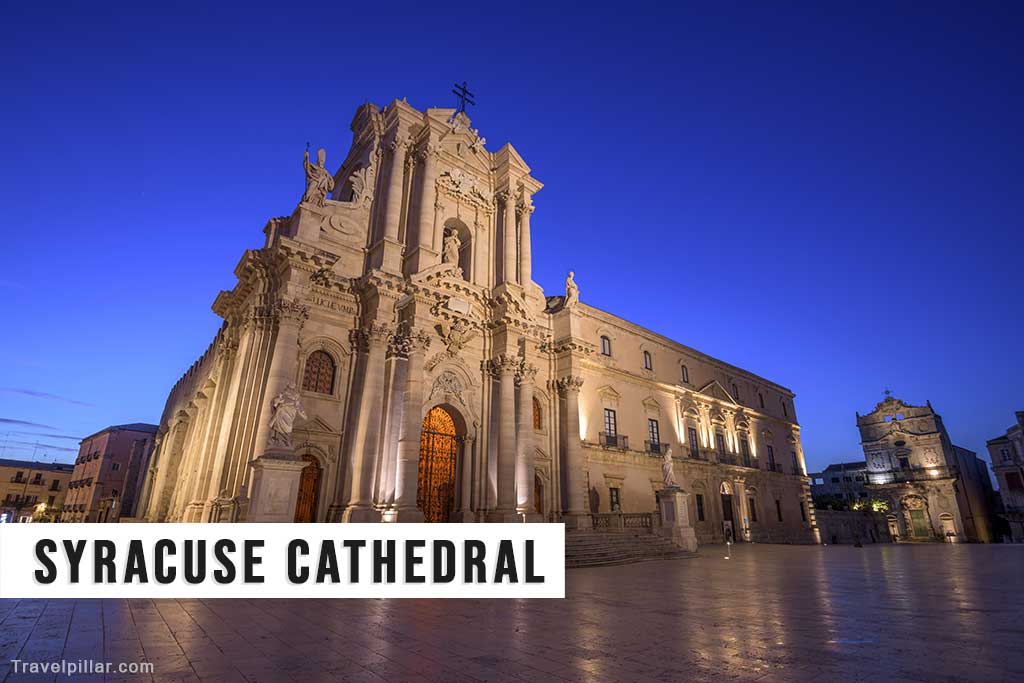
Cathedral of Syracuse (Duomo di Siracusa) is a historic church located on Ortigia Island in Syracuse, Italy. Originally an ancient Greek temple dedicated to Athena, the cathedral has been adapted over time to incorporate various architectural styles, including Baroque and Norman elements. The Cathedral of Syracuse is a must-visit attraction for those interested in art, architecture, and the city’s unique blend of ancient and Christian history.
Piazza del Duomo is a central square on Ortigia Island in Syracuse, Italy, known for its impressive Baroque architecture and lively atmosphere. The square is home to several notable buildings, including the Cathedral of Syracuse, the Archbishop’s Palace, and the Church of Santa Lucia alla Badia. Piazza del Duomo is a popular gathering spot for locals and tourists, offering a range of cafes, restaurants, and shops.
Arethusa Spring (Fonte Aretusa) is a natural freshwater spring located on Ortigia Island in Syracuse, Italy. According to Greek mythology, the nymph Arethusa sought refuge at this site after fleeing from the river god Alpheus. Today, the spring is surrounded by a picturesque park and is home to a colony of papyrus plants. Arethusa Spring is a popular attraction for visitors interested in mythology and nature.
Fountain of Diana (Fontana di Diana) is an ornate Baroque fountain situated in the heart of Ortigia Island in Syracuse, Italy. Built in the early 20th century, the fountain features a central statue of the goddess Diana, surrounded by allegorical figures representing the rivers of Syracuse. The Fountain of Diana is a popular destination for visitors seeking to appreciate the island’s rich artistic heritage.
Temple of Apollo (Tempio di Apollo) is an ancient Greek temple located on Ortigia Island in Syracuse, Italy. Dating back to the 6th century BC, the temple is one of the oldest Doric structures in Sicily. Although in ruins, the Temple of Apollo offers a fascinating glimpse into the architectural and religious history of ancient Syracuse and is a popular attraction for history enthusiasts.
Chiesa di San Biagio e San Leonardo dei Cavalieri di Malta is a historic church located in Syracuse, Italy. Established in the 14th century, the church was originally dedicated to Saint Blaise before being entrusted to the Knights of Malta in the 16th century. The church features a simple exterior and an ornate Baroque interior, adorned with religious artworks and frescoes. Chiesa di San Biagio e San Leonardo dei Cavalieri di Malta is a lesser-known but significant site for visitors interested in religious history.
Chiesa di Santa Lucia alla Badia is a Baroque church situated in Syracuse, Italy, on the picturesque Piazza del Duomo. Dedicated to Saint Lucy, the city’s patron saint, the church houses a renowned painting by Caravaggio, “The Burial of Saint Lucy.” Chiesa di Santa Lucia alla Badia is an important religious landmark and a must-visit for those interested in the artistic heritage of Syracuse.
Ear of Dionysius (Orecchio di Dionisio) is an ancient limestone cave located within the Neapolis Archaeological Park in Syracuse, Italy. Named by the painter Caravaggio, the cave is characterized by its unique S-shaped form and remarkable acoustics. According to legend, the tyrant Dionysius used the cave to eavesdrop on prisoners’ conversations. The Ear of Dionysius is a popular attraction for visitors seeking to explore the natural and historical wonders of Syracuse.
Greek Theatre of Syracuse (Teatro Greco) is a well-preserved ancient Greek theater situated in the Neapolis Archaeological Park in Syracuse, Italy. Built in the 5th century BC, the theater could accommodate up to 15,000 spectators and was used for various performances and events. Today, the Greek Theatre of Syracuse hosts the annual Greek Theatre Festival, bringing the ancient venue to life with modern productions of classical plays. The theater is a must-visit site for those interested in the history and culture of ancient Syracuse.
Archaeological Park of Neapolis is a significant historical site located in Syracuse, Italy. The park encompasses a range of ancient Greek and Roman structures, including the Greek Theatre of Syracuse, the Roman Amphitheatre, and the Ear of Dionysius. The Archaeological Park of Neapolis offers visitors the opportunity to explore the rich history and architectural heritage of Syracuse and is a must-visit attraction for those interested in ancient civilizations.
Tecnoparco Museo di Archimede is a unique interactive museum dedicated to the life and works of Archimedes, the renowned ancient Greek mathematician and inventor who was born in Syracuse. The museum features a range of exhibits and hands-on displays showcasing Archimedes’ inventions, discoveries, and contributions to the fields of mathematics, physics, and engineering. Tecnoparco Museo di Archimede is an ideal destination for visitors of all ages seeking to learn about this influential figure in a fun and engaging environment.
Church of San Giovanni alle Catacombe (Chiesa di San Giovanni) is a historic church located in Syracuse, Italy, known for its extensive network of underground catacombs. Dating back to the 6th century AD, these ancient Christian burial sites feature a labyrinth of tunnels adorned with early Christian frescoes and inscriptions. The Church of San Giovanni alle Catacombe is a fascinating destination for those interested in the early Christian history of Syracuse.
Chiesa della Santa Lucia (Church of Saint Lucy) is a small, historic church located in Syracuse, Italy. Dedicated to Saint Lucy, the patron saint of Syracuse, the church features a simple facade and a modest interior adorned with religious artworks. Chiesa della Santa Lucia is a lesser-known but important religious site in Syracuse, offering visitors a glimpse into the city’s deep devotion to its patron saint.