

Located on the southern coast of Turkey about 75 kilometers east of Antalya, Side is a coastal town renowned for its rich history and stunning beaches. Originally founded by the ancient Greeks, Side flourished as a major port city under Roman rule and later became an important center for Christianity during the Byzantine era. Today, it is a popular tourist destination known for its well-preserved ancient ruins and picturesque waterfront.
The focal point of Side is its impressive Roman theater, which dates back to the 2nd century AD and offers panoramic views of the surrounding area. Visitors can also explore the remains of the ancient agora, temples, and city walls that dot the landscape, providing insight into Side’s illustrious past. The Temple of Apollo, with its iconic Corinthian columns overlooking the sea, is a particularly striking example of the town’s ancient architecture.
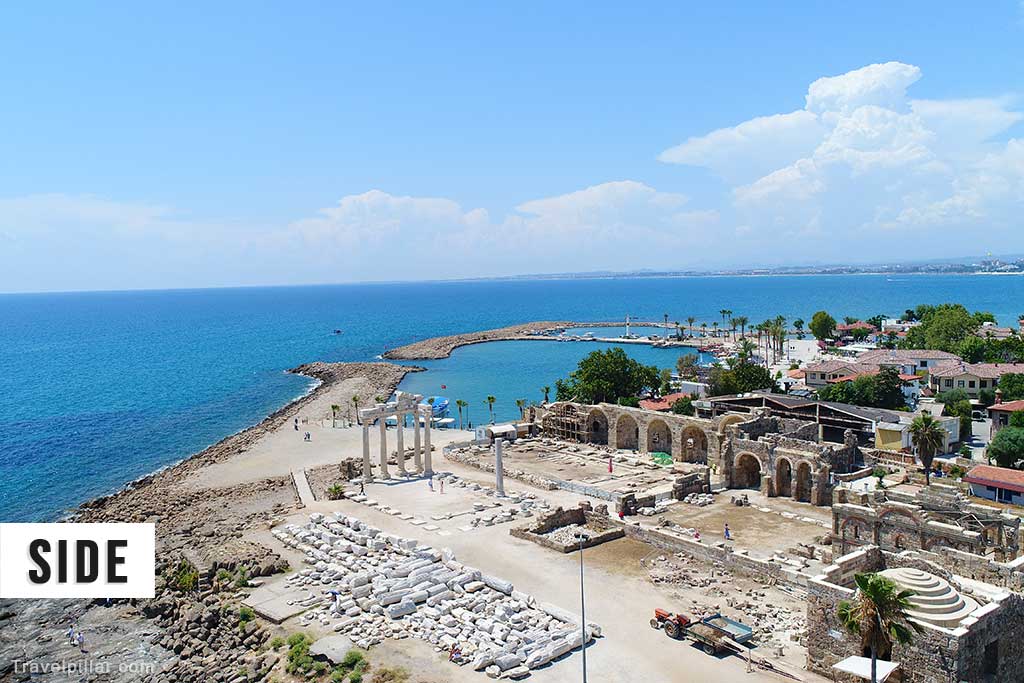
In addition to its historical attractions, Side boasts pristine beaches with golden sands and crystal-clear waters. Travelers can relax and soak up the Mediterranean sun or partake in water sports such as swimming, snorkeling, and jet skiing. The town’s bustling waterfront promenade is lined with restaurants, cafes, and shops, offering opportunities for leisurely strolls and al fresco dining.
While Side is a popular tourist destination, it still retains its charm and authenticity, with narrow cobblestone streets and traditional Turkish architecture adding to its allure. Whether exploring ancient ruins, lounging on the beach, or sampling local cuisine, Side offers a diverse range of experiences for travelers seeking a blend of history, culture, and relaxation.
The Best Things to Do in Side
Side Ancient City and Amphitheater (Antik Kenti)
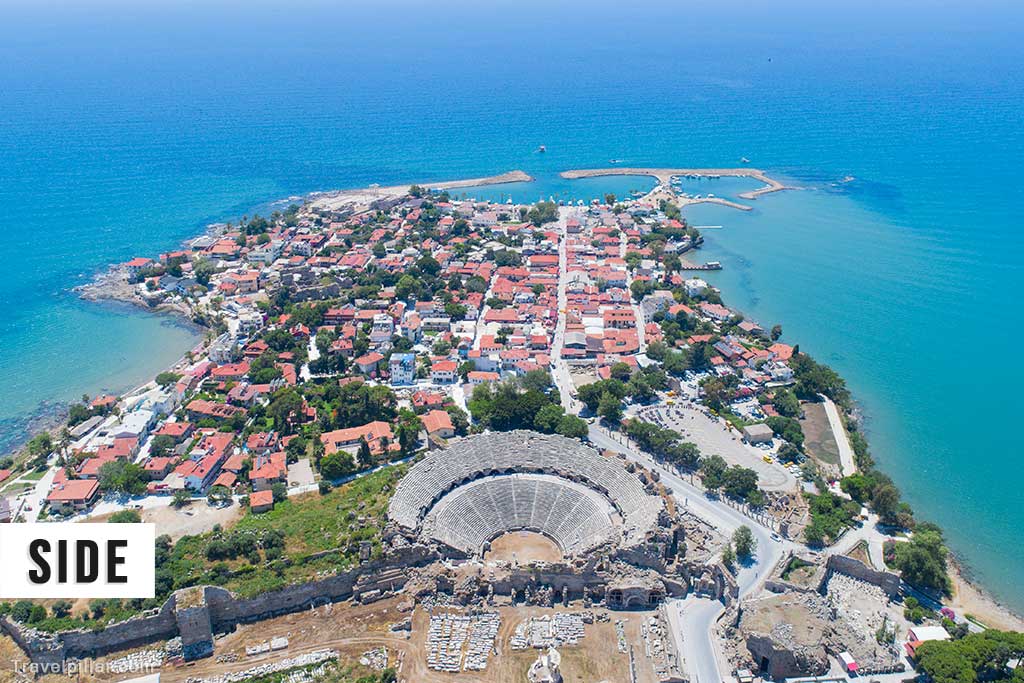
Side Ancient City (Antik Kenti), located on Turkey’s Mediterranean coast, preserves the remains of an important Greco-Roman settlement. The site includes colonnaded streets, an agora, baths, and defensive walls, reflecting its historical role as a regional port. The Roman amphitheater, dating to the 2nd century AD, is the principal monument, originally accommodating thousands of spectators. Visitors can walk freely among the ruins, many integrated into the modern town, offering direct access to Side’s layered archaeological heritage.
Google map 4.7/5
Apollon Temple (Temple of Apollo)
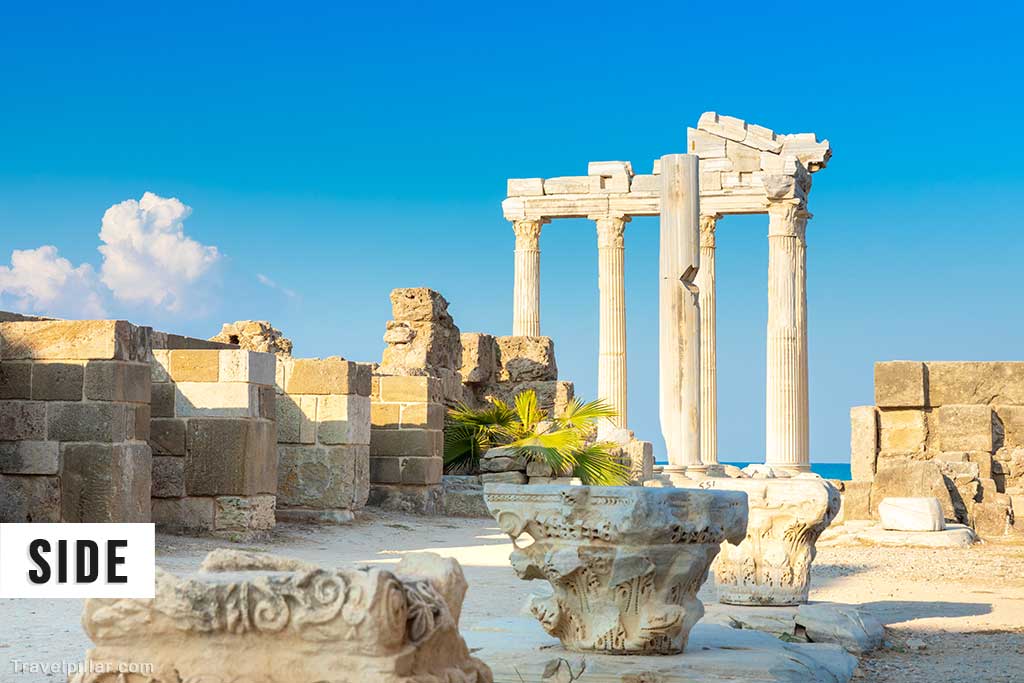
The Temple of Apollo, located within the ancient city of Side, is one of the region’s most recognisable classical monuments. Dating primarily to the Roman period, the temple reflects Side’s historical importance as a major port and trading center. Several columns remain standing, marking the structure’s original scale and layout. Positioned near the shoreline, the site is easily accessible to visitors exploring Side’s archaeological district and offers insight into the city’s religious and architectural heritage.
Google map 4.8/5
Vespasian Fountain
The Vespasian Fountain, located within the ancient city of Side, is a well-preserved Roman structure dating to the 2nd century AD. Built during the reign of Emperor Vespasian, the fountain formed part of the city’s water distribution system. Decorative reliefs and architectural details remain visible, illustrating Roman engineering and urban planning. Situated along the main colonnaded street, the fountain is easily accessible and contributes to the broader archaeological context of Side’s civic monuments.
Google map 4.8/5
Side Museum
Side Museum, located next to the Roman Amphitheatre, is housed in a restored Roman bath complex. The museum displays artifacts uncovered from local archaeological excavations, including sculptures, sarcophagi, inscriptions, and everyday objects. Exhibits primarily reflect the Roman and Hellenistic periods, providing context for the surrounding ruins. Compact and easily walkable, the museum is typically visited in conjunction with the nearby theater, agora, and Temple of Apollo.
Google map 4.7/5
Harbour
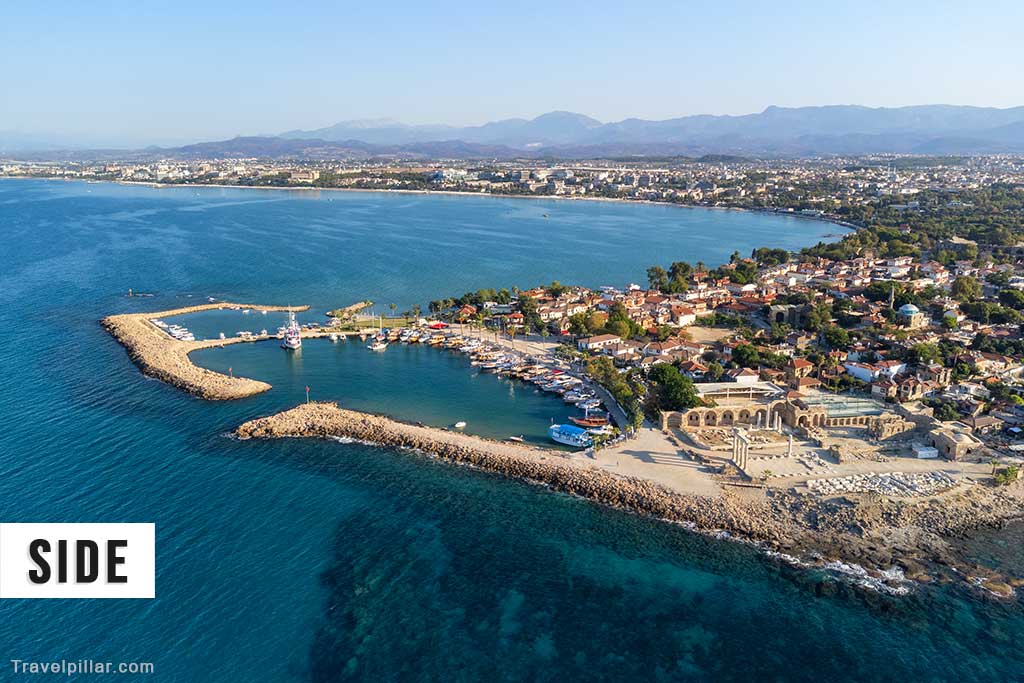
Side Harbour, located adjacent to the ancient city of Side, has historically served as a focal point for trade and maritime activity. Today, the area functions primarily as a leisure and tourism hub, with restaurants, cafes, and excursion boats lining the waterfront. Visitors can enjoy coastal views while exploring nearby archaeological landmarks, including the Temple of Apollo. The harbour remains a central gathering point, linking Side’s historical setting with its modern visitor infrastructure.
Google map 4.8/5
Beaches
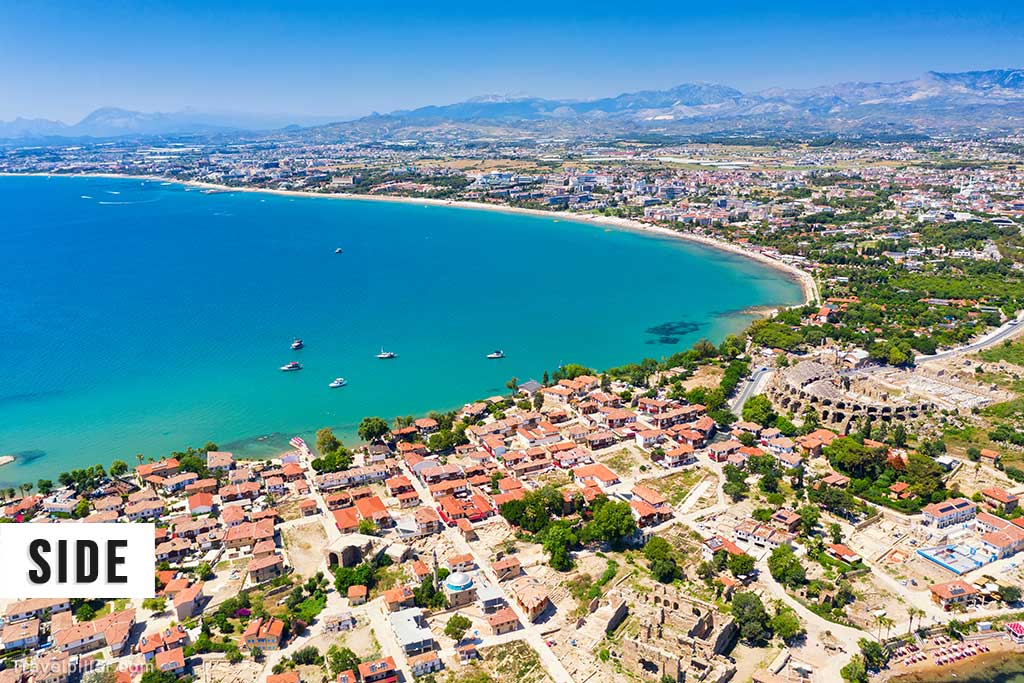
Side’s beaches stretch along Turkey’s Mediterranean coastline, offering a mix of sandy shores and well-developed resort facilities. The two main sections, commonly referred to as East Beach and West Beach, differ slightly in atmosphere, with West Beach generally calmer and more sheltered. Visitors will find sunbeds, cafes, and water sports operators widely available. The beaches are easily accessible from the ancient city, allowing for convenient combination of relaxation and archaeological sightseeing.