
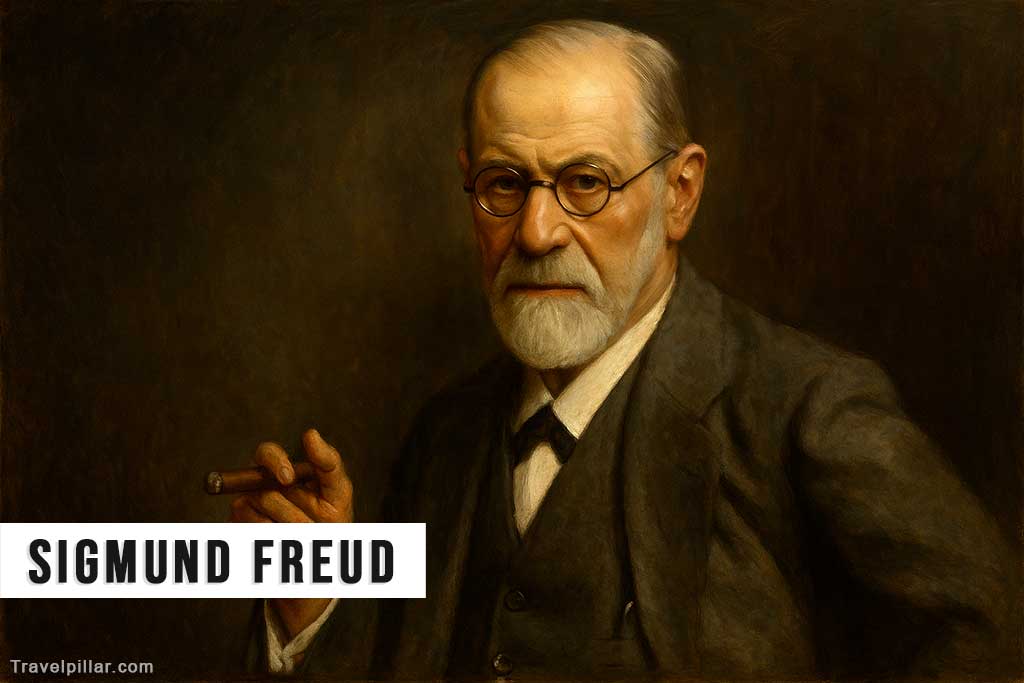
Sigmund Freud, born on May 6, 1856, in the former Austro-Hungarian Empire, now the Czech Republic, was a neurologist who is largely recognized as the father of psychoanalysis. His groundbreaking work in psychology and his controversial theories had a profound impact on a variety of fields including psychology, anthropology, literature, and art, among others.
Freud began his career as a neurologist studying the anatomy and function of the nervous system, but he later became interested in psychopathology. He was fascinated by the mental processes that lay beneath the surface of conscious awareness and believed that these unconscious processes could influence behavior.
Freud’s most significant contributions to the field of psychology are his theories of the unconscious mind, dream interpretation, and psychosexual development. He proposed that the human psyche is divided into three parts: the id, the ego, and the superego, which interact to form complex human behaviors.
His theory of psychosexual development suggested that early childhood experiences have a profound impact on adult behavior. His method of psychoanalysis, which sought to bring these unconscious fears and desires to conscious awareness, became a widely used therapeutic technique.
Freud’s ideas were controversial in his time and remain so today. Critics argue that his theories are unscientific and overly focused on sexual drive. However, even his critics acknowledge his significant influence.
Despite the controversies, Freud’s theories continue to influence the field of psychology and our understanding of the human mind. He challenged the prevailing notions of his time, causing a major shift in how we think about the human mind and behavior. Freud passed away on September 23, 1939, but his ideas continue to spark debates and inspire research in various fields of study.