

The Taj Mahal is an illustrious mausoleum located in Agra, Uttar Pradesh, India. This architectural marvel, constructed from white marble, was built under Mughal Emperor Shah Jahan’s order in memory of his beloved wife, Mumtaz Mahal. Construction began in 1632 and took about 22 years to complete, involving around 20,000 artisans and workers.
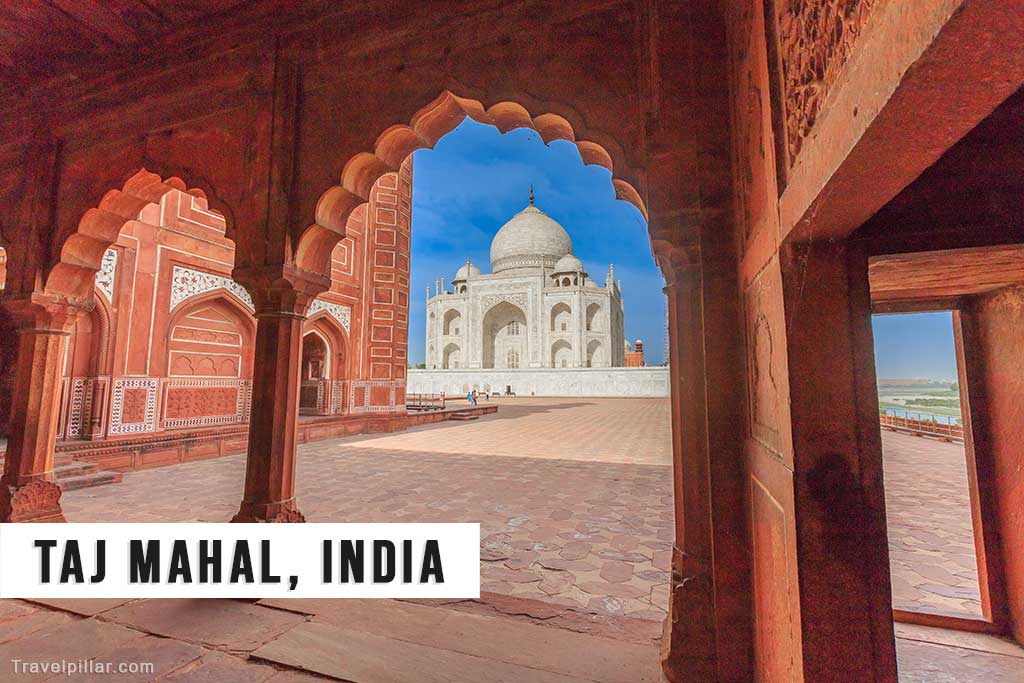
The mausoleum’s design and architecture are emblematic of the Mughal style, combining Persian, Ottoman, Indian, and Islamic influences. The primary structure of the Taj Mahal is symmetrical, with an iconic central dome, four surrounding minarets, and an intricate entrance gate. The main building is flanked by a mosque and a guest house, with formal gardens laid out in front of the complex.

The inner chamber of the Taj Mahal houses the cenotaphs of Mumtaz Mahal and Shah Jahan. The walls are adorned with semi-precious stones forming intricate designs, reflecting Persian art. The delicate marble lattice screens surrounding the cenotaphs showcase an extraordinary level of craftsmanship.
One of the most intriguing architectural features is the changing color of the Taj Mahal, reflecting the shifting moods of the day, from pinkish hues at dawn to a golden glow at sunset.
In 1983, the Taj Mahal was designated as a UNESCO World Heritage Site, cited as “the jewel of Muslim art in India and one of the universally admired masterpieces of the world’s heritage.” Despite environmental threats and the wear and tear of time, conservation efforts are continuously undertaken to maintain its magnificence.
The Taj Mahal remains a testament to the rich history and artistic traditions of India, symbolizing the profound love of a king for his queen and continuing to enchant visitors with its timeless beauty.
Official website: https://www.tajmahal.gov.in
Google map 4.6/5