
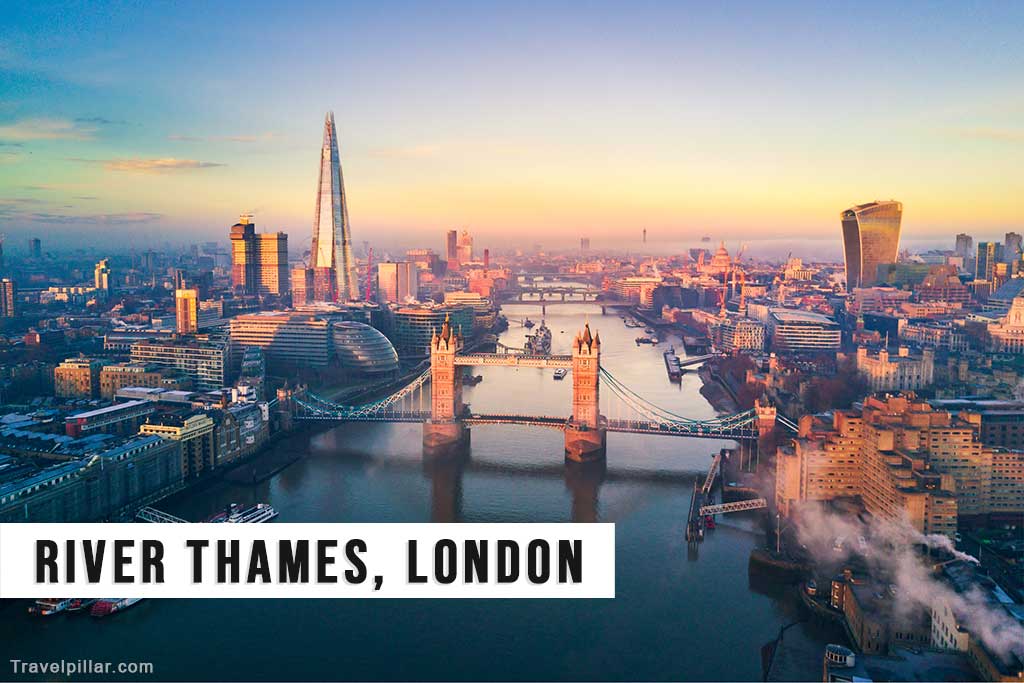
The River Thames is the longest river in England, stretching 215 miles from its source in the Cotswolds to its mouth at the North Sea. It flows through the heart of London, shaping the city’s geography, history, and development. Historically, the Thames has served as a major trade and transportation route, facilitating commerce and cultural exchange since Roman times. It remains a key feature of the city, lined with numerous landmarks and cultural sites.
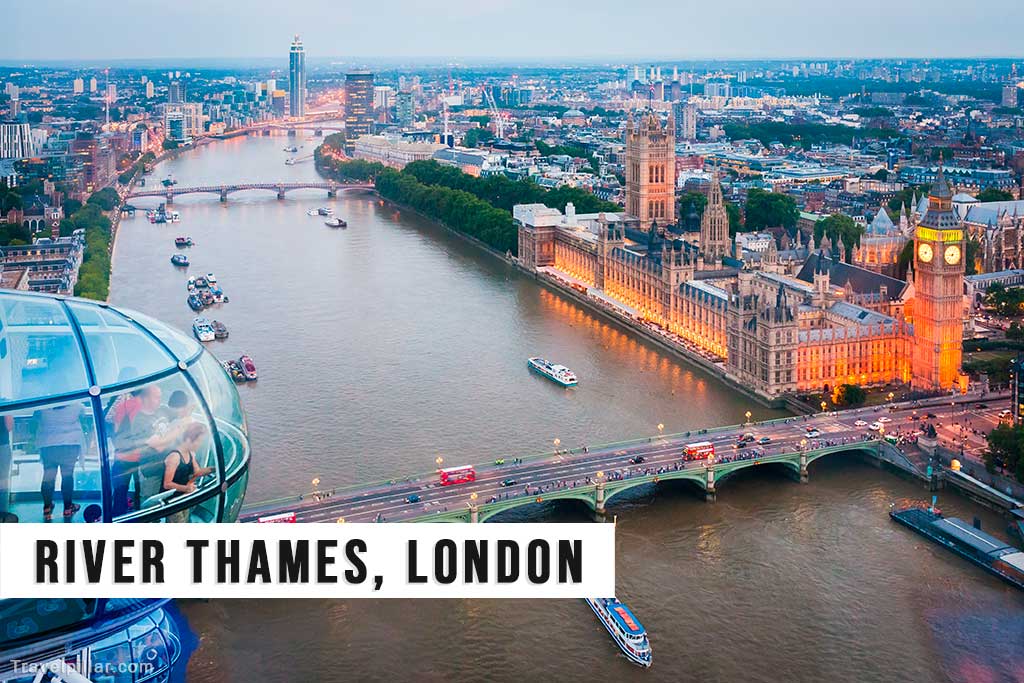
The river divides London into northern and southern sections, and many of the city’s most famous attractions lie along its banks. Iconic structures such as the Houses of Parliament, the Tower of London, and the London Eye offer views directly over the Thames. Bridges like Tower Bridge, London Bridge, and Westminster Bridge not only connect the city but have become landmarks in their own right. The Thames Embankment, constructed in the 19th century, transformed the riverbanks, providing walkways and enhancing flood defenses.
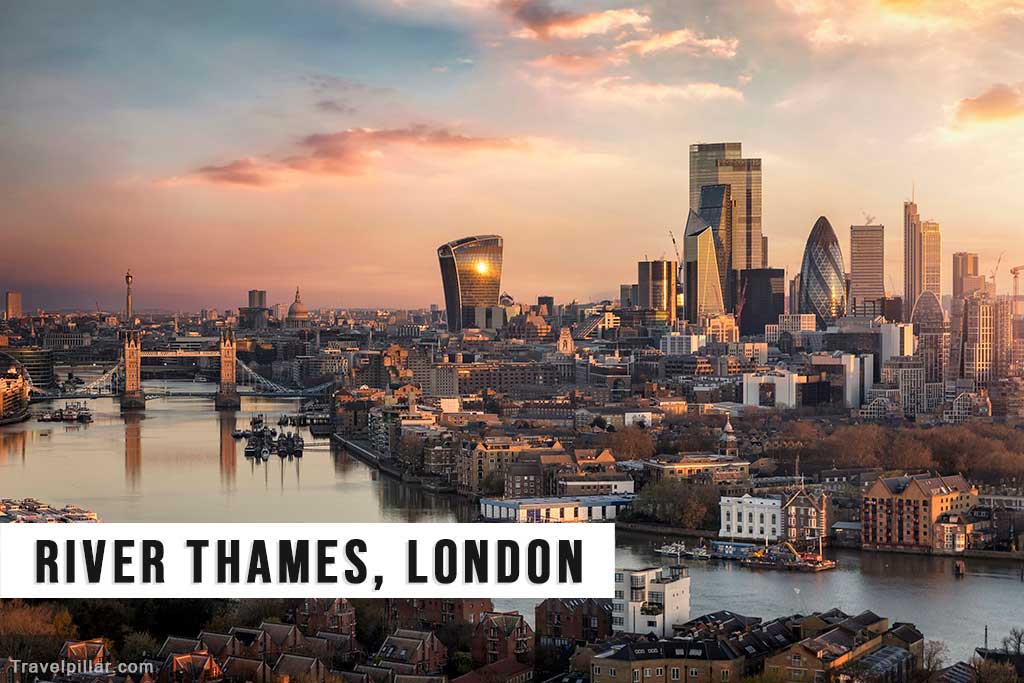
The Thames is also central to London’s cultural life. Several venues, including the Southbank Centre, Tate Modern, and Shakespeare’s Globe, are situated along its southern banks. The river’s cultural significance is further highlighted by events such as the annual Oxford and Cambridge Boat Race and the New Year’s Eve fireworks display, both of which draw large crowds.
Recreational activities on the Thames include river cruises, which offer visitors a unique perspective on London’s skyline. The river is also used for rowing, sailing, and kayaking, contributing to its role as both a working waterway and a leisure destination.
The Thames Path, a 184-mile national trail, follows the river from its source to the sea. Within London, this path provides a continuous walkway along the river, passing through diverse areas such as Richmond, Greenwich, and Canary Wharf, each with its distinct character and history.
The River Thames, with its mix of historical importance, cultural landmarks, and recreational opportunities, is an integral part of London’s identity. It continues to serve as both a functional waterway and a source of inspiration, reflecting the city’s evolving relationship with its natural environment.
Google map 4.8/5