

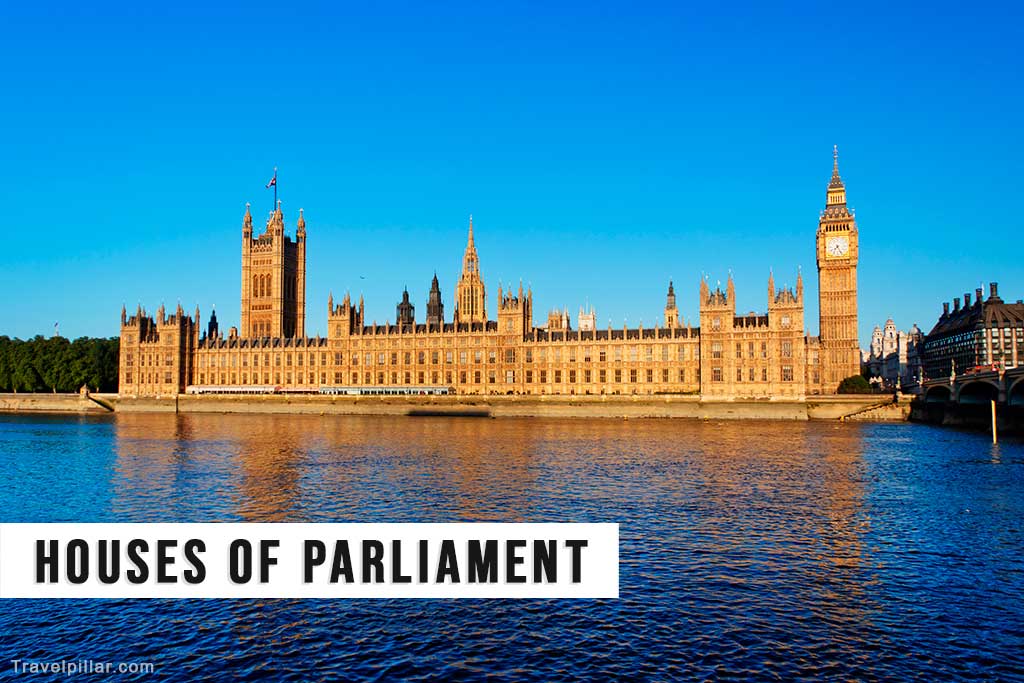
The Houses of Parliament, officially known as the Palace of Westminster, is the seat of the United Kingdom’s Parliament. Located on the north bank of the River Thames, adjacent to Westminster Bridge, it houses the two parliamentary chambers: the House of Commons and the House of Lords (for a more detailed explanation of United Kingdom’s political system see below). The current Gothic Revival building was designed by Sir Charles Barry, with detailing by Augustus Pugin, and was completed in 1870 following a fire that destroyed much of the medieval palace in 1834.
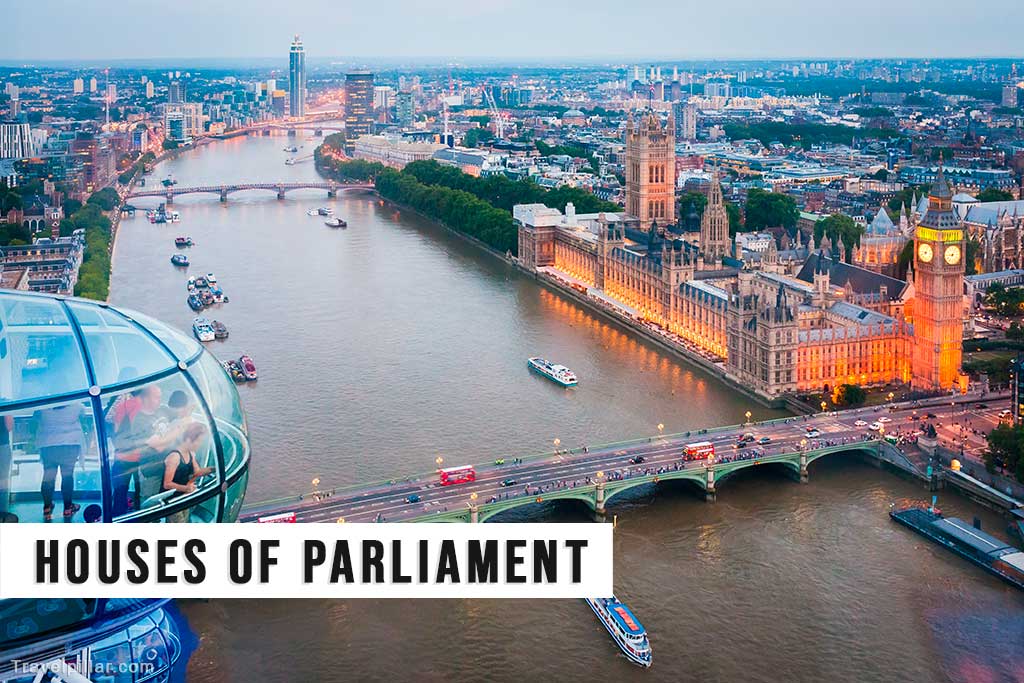
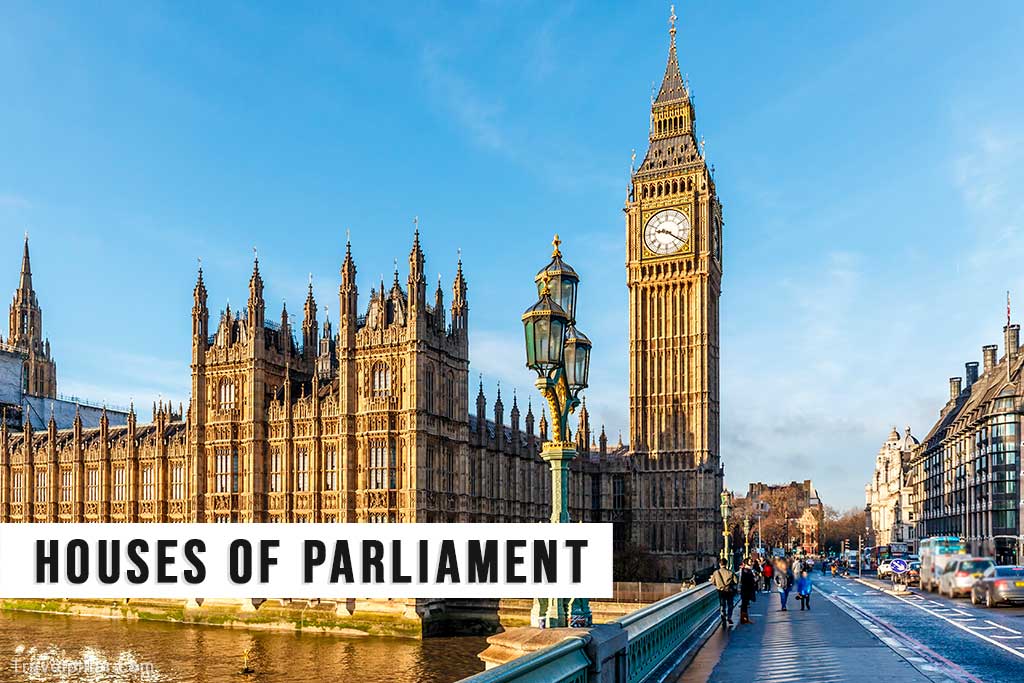
The Palace of Westminster features an elaborate façade and numerous towers, the most famous being the Elizabeth Tower, commonly known as Big Ben, although Big Ben technically refers to the Great Bell within. The Victoria Tower at the southern end houses the parliamentary archives and is slightly taller than the Elizabeth Tower. The building extends over approximately 8 acres and includes more than 1,000 rooms, corridors, libraries, and committee rooms.
The interior contains significant spaces such as the ornate House of Lords chamber, decorated with gilded carvings and red leather benches, and the House of Commons chamber, rebuilt after World War II bomb damage. Westminster Hall, dating from 1097, survived the 1834 fire and is the oldest remaining part of the original palace, used for major ceremonial occasions, lying-in-state ceremonies, and public exhibitions.
Guided tours are available to visitors when Parliament is not sitting, covering the Commons, Lords, Central Lobby, and Westminster Hall. UK residents can arrange visits through their MP to watch debates or Prime Minister’s Questions. The building also hosts educational programmes and exhibitions exploring British political history, parliamentary processes, and architecture.
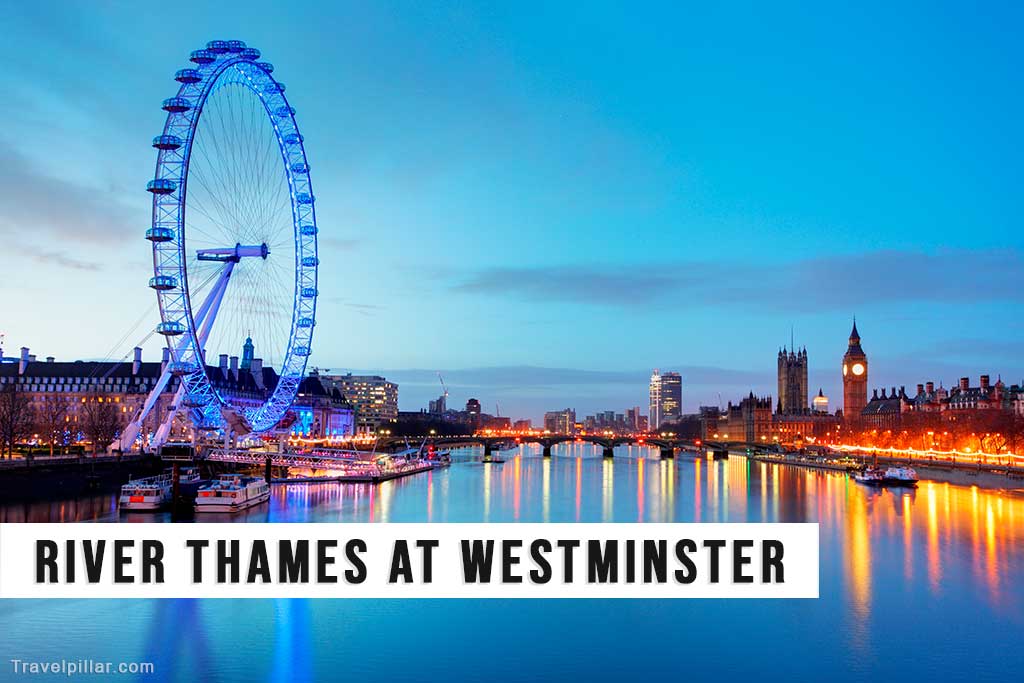
The Palace of Westminster is part of a UNESCO World Heritage Site along with Westminster Abbey and St Margaret’s Church, recognised for its architectural significance and role in British history. Restoration and maintenance works are ongoing to preserve the building’s structure and heritage features.
The Houses of Parliament remains a working institution central to British governance, while also serving as an architectural landmark and visitor attraction. Its riverside location and iconic towers form a key part of London’s skyline, symbolising the city’s political and historical identity.
Official website: https://www.parliament.uk
Google map 4.6/5
Understanding the UK’s Political System
The United Kingdom has a constitutional monarchy and a parliamentary democracy. This means it has a king or queen as Head of State (currently King Charles III), who mainly performs ceremonial duties, while the Prime Minister is Head of Government and makes political decisions.
The UK Parliament makes the country’s laws and is divided into two parts: the House of Commons and the House of Lords. The House of Commons is made up of Members of Parliament (MPs) who are elected by the public in different areas called constituencies.
The House of Lords is not elected; it includes people who have been given titles and bishops from the Church of England. The House of Lords checks and suggests changes to laws made by the House of Commons. For a more detailed explanation see below.
General elections are held about every five years, and the leader of the party with the most MPs usually becomes Prime Minister and forms the government to run the country.
The House of Commons
The House of Commons is the main legislative body in the United Kingdom. It is made up of Members of Parliament (MPs) who are elected by the public in general elections, usually held every five years. There are 650 constituencies in the UK, and each elects one MP to represent its local area.
The House of Commons is responsible for proposing, debating, and passing new laws. It also controls public spending and holds the government to account through questions and debates. The political party with the most MPs usually forms the government, and its leader becomes the Prime Minister.
The Speaker of the House of Commons is an MP elected by other MPs to chair debates and maintain order. Meetings take place in the Palace of Westminster in London. The House of Commons chamber is known for its green benches and its layout facing each side, reflecting the adversarial nature of British politics.
The House of Lords
The House of Lords is the second chamber of the United Kingdom Parliament. Unlike the House of Commons, it is not elected by the public. Its members are appointed and include life peers, bishops of the Church of England, and a small number of hereditary peers. Life peers are appointed for their lifetime due to their expertise or public service and cannot pass their titles to their children.
The main role of the House of Lords is to review, amend, and scrutinise legislation passed by the House of Commons. It can suggest changes to laws but cannot block bills indefinitely. The House of Lords also examines public policy issues through its committees and holds the government to account.
Meetings take place in the Palace of Westminster in London. The chamber is known for its red benches and formal atmosphere. The Lord Speaker chairs its sessions and represents the House of Lords to the public.
Understanding the Main Political Parties in the UK
Info updated July 2025 and liable to change.
The United Kingdom has several political parties, with Labour currently forming the government under Prime Minister Sir Keir Starmer following its victory in the 2024 general election. Labour is a centre-left party focusing on public services, workers’ rights, and social equality. The Conservative Party is the main opposition and is centre-right, supporting free market policies and traditional institutions. It is led by Kemi Badenoch as of late 2024.
Reform UK has gained support since the 2024 election and currently holds a small number of seats, promoting policies focused on immigration control and national sovereignty. The Liberal Democrats remain a smaller centrist party, supporting civil liberties and constitutional reform. In Scotland, the Scottish National Party (SNP) continues to advocate for Scottish independence, although it has recently lost seats to Labour. In Northern Ireland, politics is dominated by the Democratic Unionist Party (DUP), supporting union with the UK, and Sinn Féin, seeking Irish reunification.