
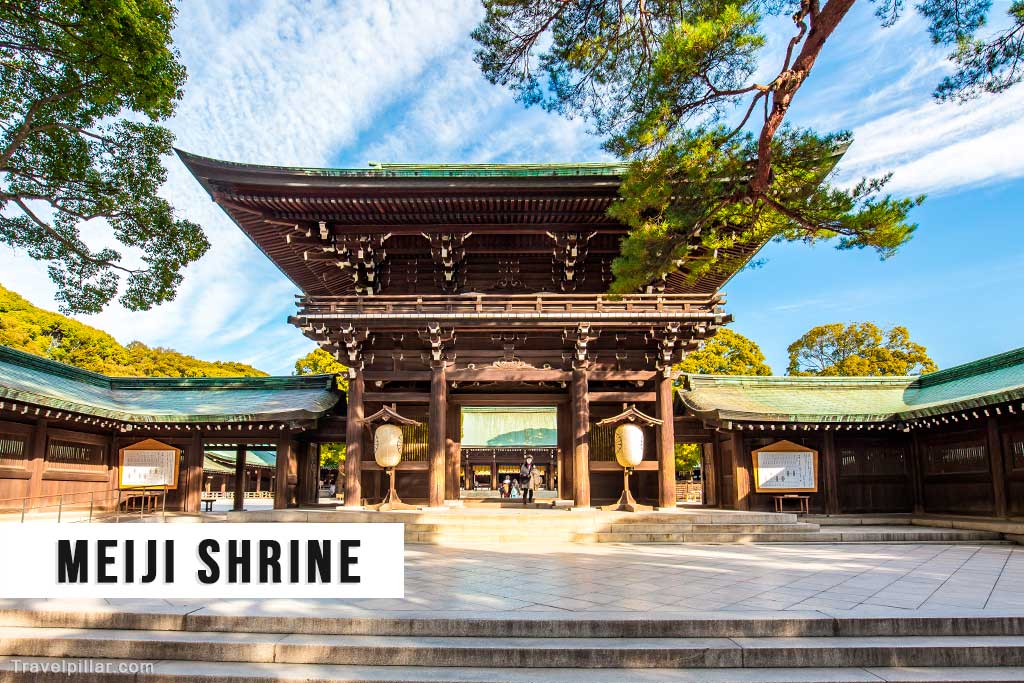
Meiji Jingu Shrine is a prominent Shinto shrine located in Shibuya, Tokyo. Dedicated to Emperor Meiji and Empress Shoken, it was completed in 1920, eight years after the emperor’s death. The shrine honors the emperor’s role in Japan’s modernization during the Meiji Restoration and the empress’s commitment to charitable works and cultural development.
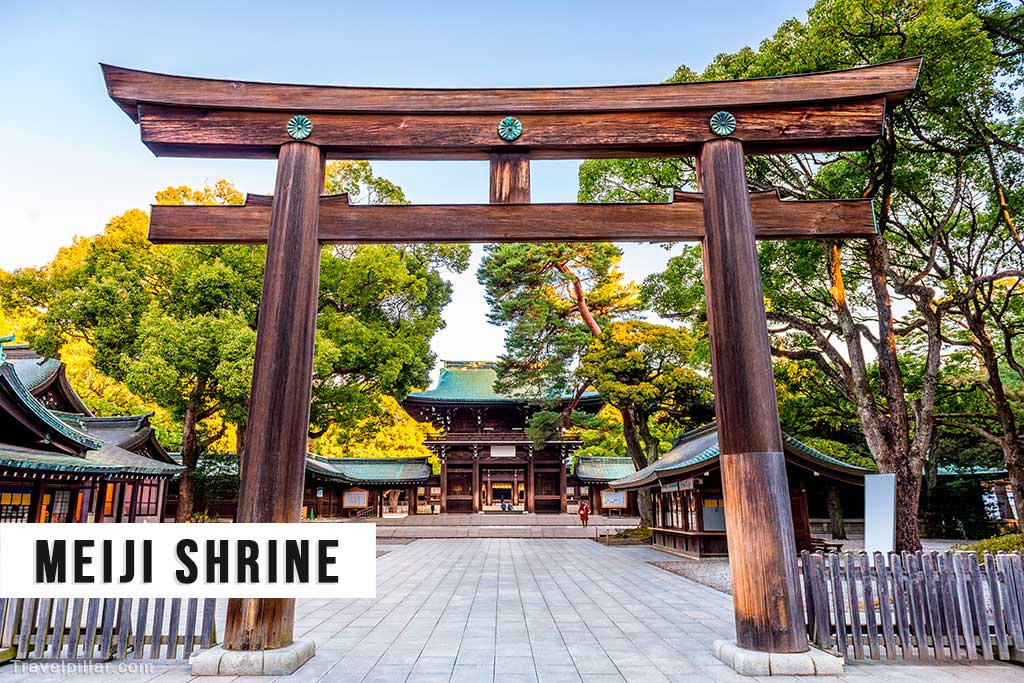
Surrounded by a lush forest of over 100,000 trees donated from across Japan, the shrine offers a tranquil retreat from Tokyo’s bustling urban environment. The forest, spanning 70 hectares, was designed to grow naturally over time, creating a serene and sacred atmosphere. Visitors approach the shrine through massive torii gates, symbolizing the transition from the ordinary to the sacred.
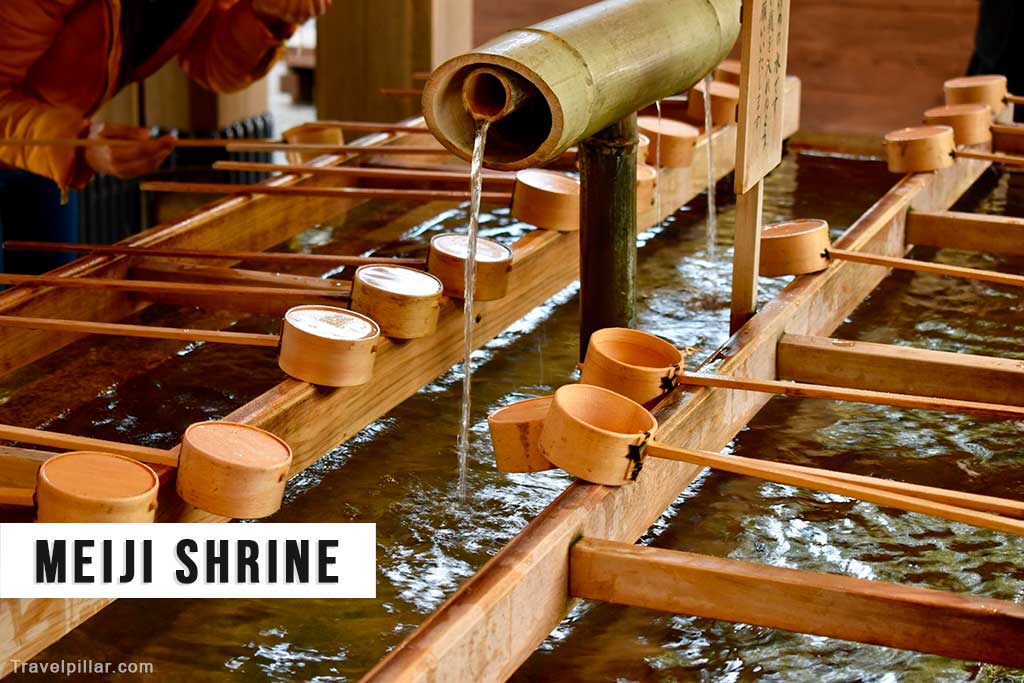
The shrine complex includes the main hall (honden), which houses the deities’ spirits. Although the original structure was destroyed during World War II, it was rebuilt in 1958 with contributions from across Japan. The architecture reflects traditional Japanese Shinto design, characterized by simplicity and harmony with nature.
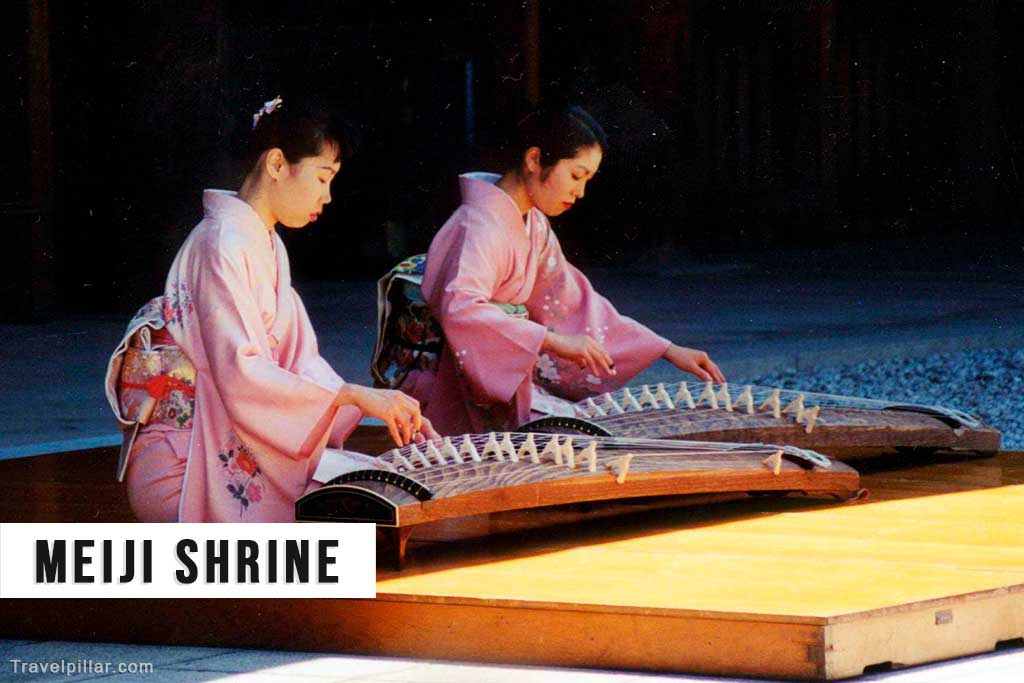
Meiji Jingu Shrine is a center for Shinto rituals and celebrations. It hosts numerous events throughout the year, including weddings, New Year’s ceremonies, and festivals such as the Meiji Jingu Spring Grand Festival. During Hatsumode, the first shrine visit of the year, millions of people gather to pray for good fortune.
Adjacent to the shrine is the Meiji Jingu Museum, which displays artifacts related to Emperor Meiji and Empress Shoken, including personal belongings, historical documents, and artworks. The museum provides deeper insight into their lives and the era they influenced.
Visitors can also explore the Inner Garden, a scenic area featuring seasonal flowers, including iris blooms in June. The garden’s highlight is Kiyomasa’s Well, a natural spring considered a spiritual power spot.
Meiji Jingu Shrine stands as a significant cultural and spiritual landmark, reflecting Japan’s historical and religious traditions while offering a peaceful environment in the heart of Tokyo.
Official website:
https://www.meijijingu.or.jp/
Google map 4.6/5