
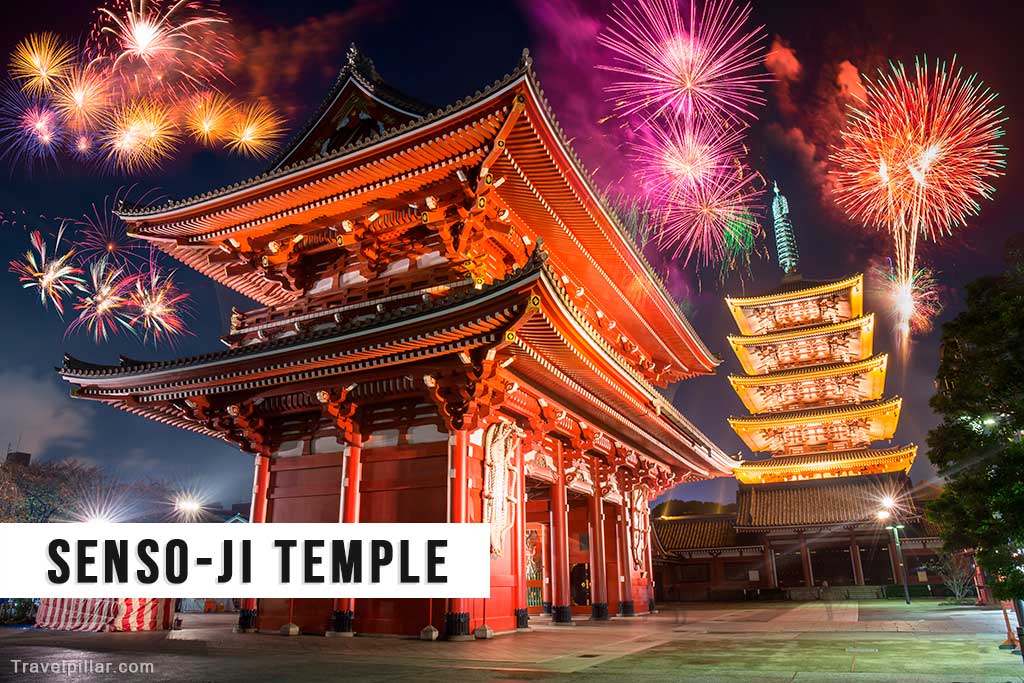
Senso-ji Temple, located in the Asakusa district of Tokyo, is the oldest and one of the most significant Buddhist temples in Japan. Founded in 645 AD, it is dedicated to Kannon, the Bodhisattva of Compassion. The temple’s history and cultural importance make it a major attraction for both domestic and international visitors.
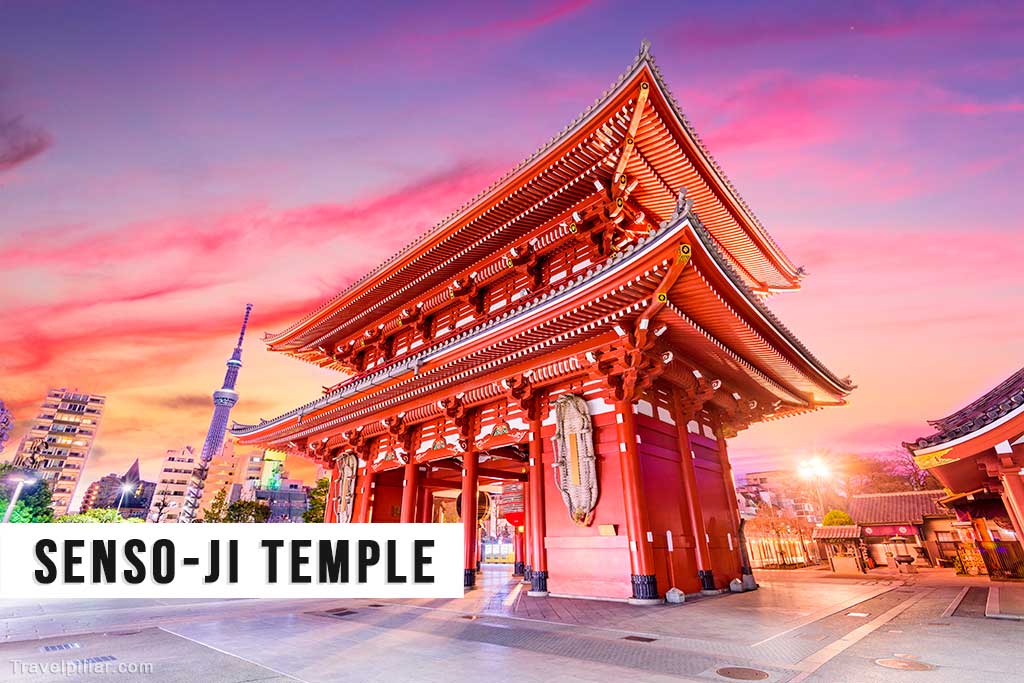
The approach to Senso-ji is marked by the iconic Kaminarimon, or Thunder Gate, which features a massive red lantern and two guardian statues representing the gods of wind and thunder. Beyond the gate lies Nakamise-dori, a bustling shopping street that dates back centuries. Lined with traditional shops and stalls, Nakamise-dori offers a variety of snacks, souvenirs, and crafts, reflecting Asakusa’s historical charm.
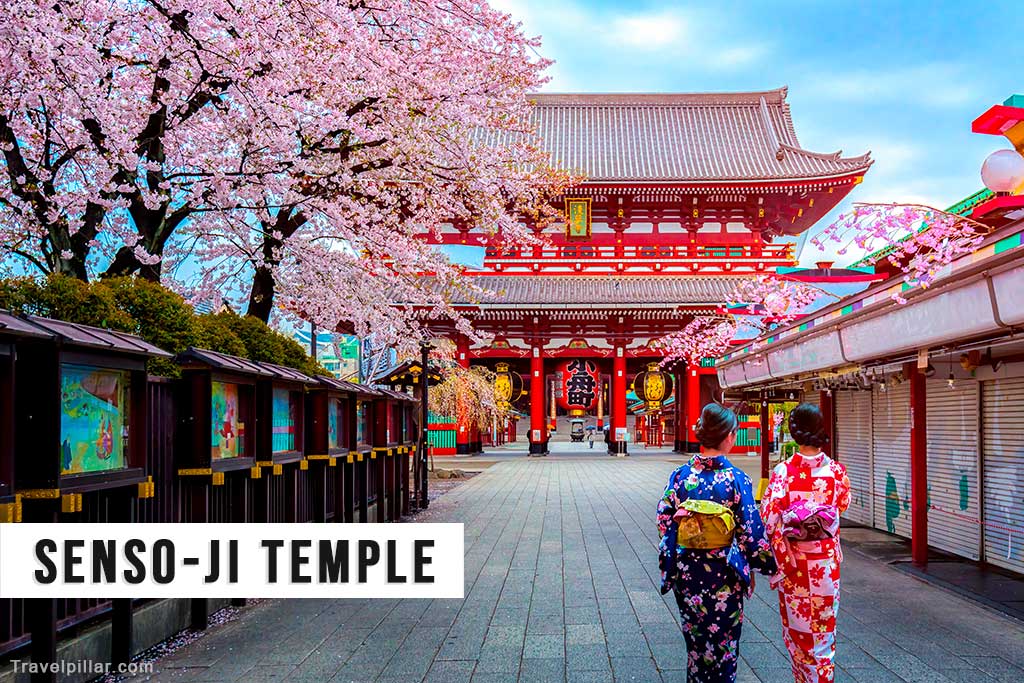
At the end of Nakamise-dori is the Hozomon Gate, leading to the temple’s main hall. The main hall, or Hondo, houses the sacred statue of Kannon, said to have been discovered in the nearby Sumida River by two fishermen in 628 AD. While the statue is not visible to the public, the temple’s architecture and serene atmosphere provide a space for prayer and reflection.
Adjacent to the main hall is the five-story pagoda, an iconic structure symbolizing the temple’s historical significance. The pagoda is a repository for sacred Buddhist relics and serves as a spiritual landmark in the Asakusa area. Surrounding the temple are various smaller shrines, including the Asakusa Shrine, which honors the fishermen who discovered the Kannon statue.
Senso-ji Temple is a hub for cultural activities and festivals, most notably the Sanja Matsuri held in May. This event attracts large crowds and features traditional music, parades, and mikoshi (portable shrine) processions.
Despite being rebuilt after World War II, Senso-ji retains its historical essence, blending ancient traditions with modern Tokyo’s vibrant energy. It remains a symbol of resilience and spirituality, offering visitors a glimpse into Japan’s rich cultural heritage. The temple’s accessibility and cultural significance make it a must-visit destination in Tokyo.
Official website:
https://www.senso-ji.jp/english/
Google map 4.5/5