
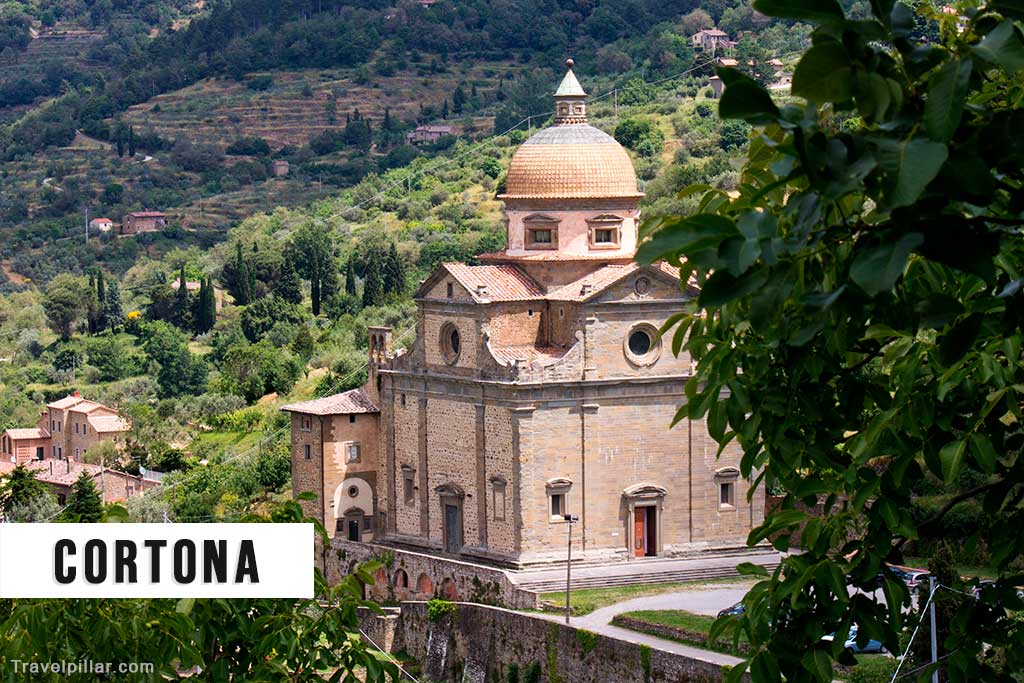
Perched atop a hill overlooking the picturesque Val di Chiana, Cortona is a charming town in Tuscany that combines a rich history with breathtaking scenery. Its well-preserved medieval streets and structures offer visitors an immersive experience in a tranquil and captivating setting.
Cortona’s historical center is characterized by narrow cobblestone streets, lined with centuries-old buildings. The town’s main square, Piazza della Repubblica, is surrounded by architectural gems such as the Palazzo Comunale and Palazzo Casali. The former, dating back to the 13th century, houses Cortona’s town hall, while the latter is home to the Museo dell’Accademia Etrusca, a museum dedicated to the town’s Etruscan heritage. The museum’s collection includes the renowned Etruscan chandelier, the “lampadario di Cortona,” and other artifacts that shed light on the area’s ancient civilization.
Just a short walk from the town center, visitors will find the imposing Basilica di Santa Margherita. This 13th-century church, situated on the highest point of the hill, offers stunning views of the surrounding valley and pays homage to Cortona’s patron saint, Saint Margaret of Cortona.
Another noteworthy site is the Diocesan Museum, which houses an impressive collection of religious art. Among its many treasures are works by Luca Signorelli, a native of Cortona, and Fra Angelico, whose masterpiece, the “Annunciation,” is a highlight of the collection.
Cortona’s appeal extends beyond its historical sites, with the surrounding countryside providing ample opportunities for outdoor enthusiasts. The nearby Lake Trasimeno, the largest lake in central Italy, offers a picturesque setting for boating, fishing, and birdwatching.
In conclusion, Cortona’s enchanting atmosphere and wealth of historical and cultural attractions make it a must-visit destination for travelers exploring the beauty of Tuscany.
Cortona Highlights
Piazza della Repubblica
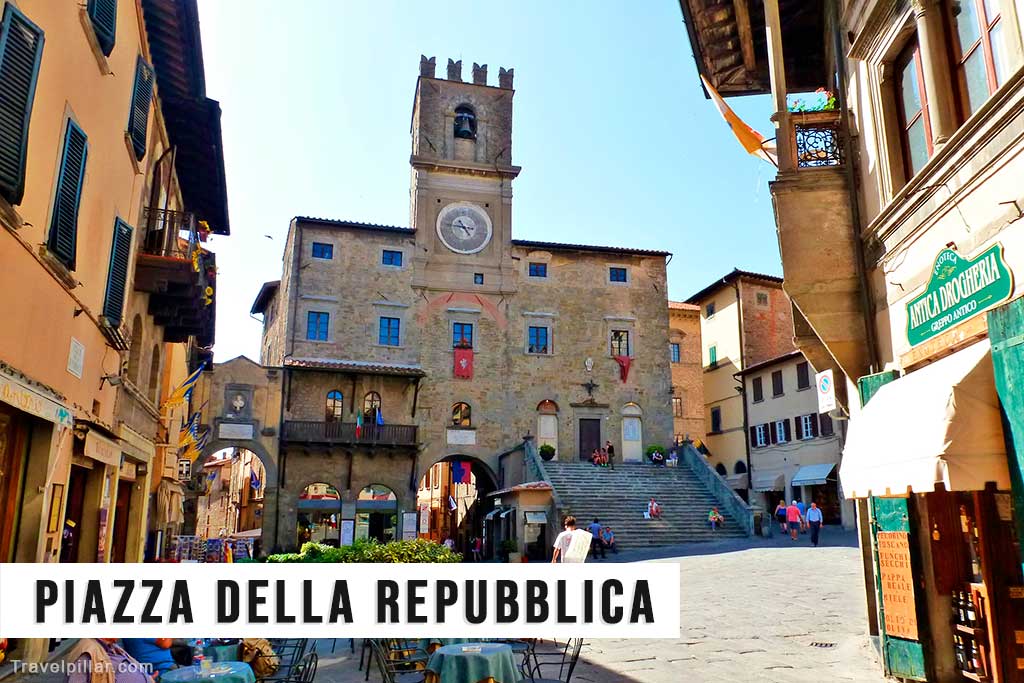
Piazza della Repubblica is the historic civic center, featuring the 13th-century Palazzo Comunale with its clock tower and stone staircase. The square is surrounded by medieval and Renaissance buildings, housing shops, cafés, and municipal offices. It serves as a central gathering place and hosts events throughout the year. The piazza’s irregular shape and elevation reflect the town’s medieval urban layout and its ongoing role in local administrative and social life.
Google map 4.7/5
Hermitage Eremo Francescano “Le Celle”
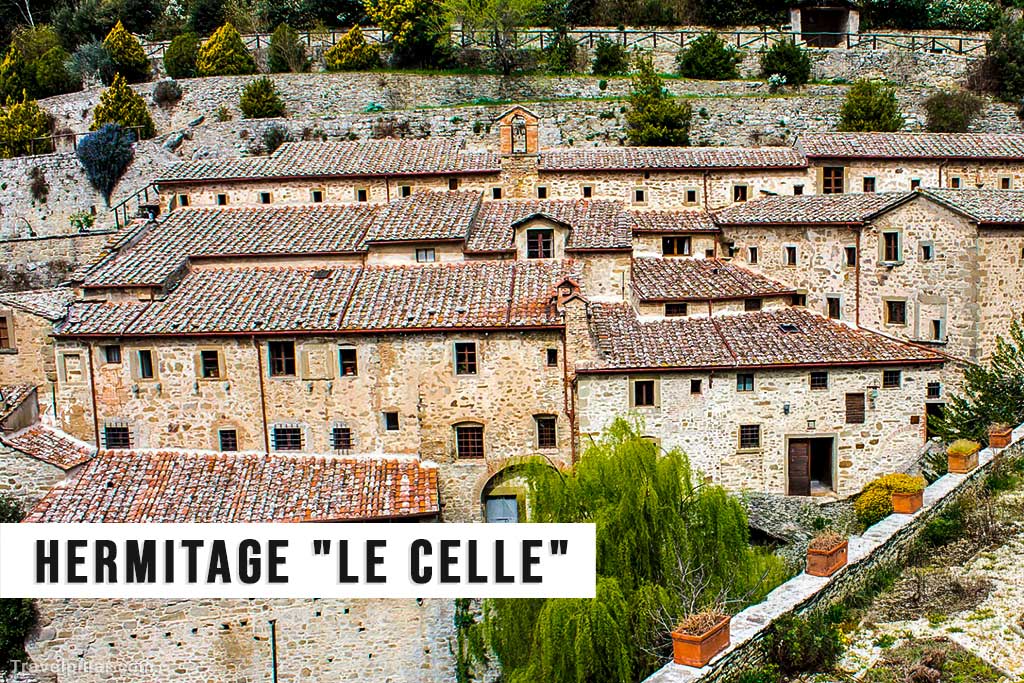
The Hermitage Eremo Francescano “Le Celle” is a Franciscan monastery founded by Saint Francis of Assisi in 1211. Located in a wooded valley, it consists of stone buildings integrated into the natural landscape. The complex includes a small chapel, monastic quarters, and the original cell used by Saint Francis. Still inhabited by friars, it remains a site of religious retreat, reflecting the order’s values of simplicity, contemplation, and connection with nature.
Google map 4.8/5
Basilica of Santa Margherita
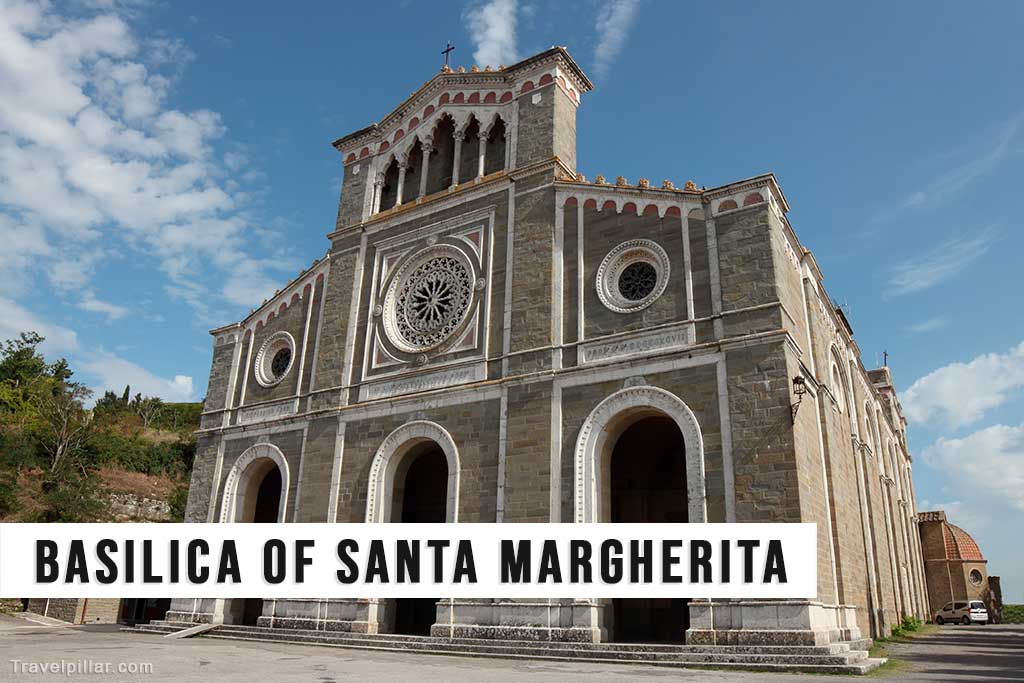
The Basilica of Santa Margherita is a neo-Gothic church dedicated to Saint Margaret of Cortona, the town’s patron saint. Rebuilt in the 19th century on earlier foundations, it houses the saint’s preserved remains in a silver urn. The interior features marble altars, frescoes, and a decorated dome. Positioned on a hill above the town, the basilica also offers views of the surrounding landscape and serves as a pilgrimage and devotional site.
Google map 4.6/5
Cortona Cathedral (Duomo di Cortona)
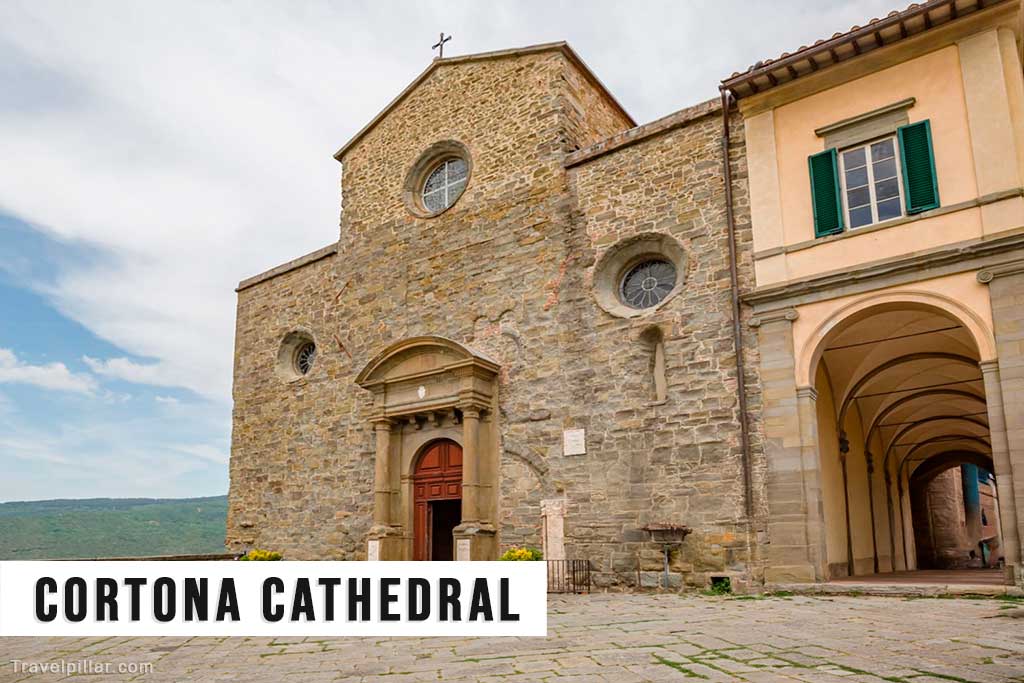
The Concattedrale di Santa Maria Assunta (Co-Cathedral of Saint Mary of the Assumption), commonly known as Cortona Cathedral, is a Renaissance church with earlier Romanesque foundations. Remodelled in the late 15th century, it features a simple façade and a Baroque interior with chapels, frescoes, and altarpieces by regional artists. The structure stands on the site of a former Roman temple. It remains an active place of worship and forms part of the Diocese of Arezzo-Cortona-Sansepolcro.
Google map 4.5/5
Church of Santa Maria delle Grazie al Calcinaio
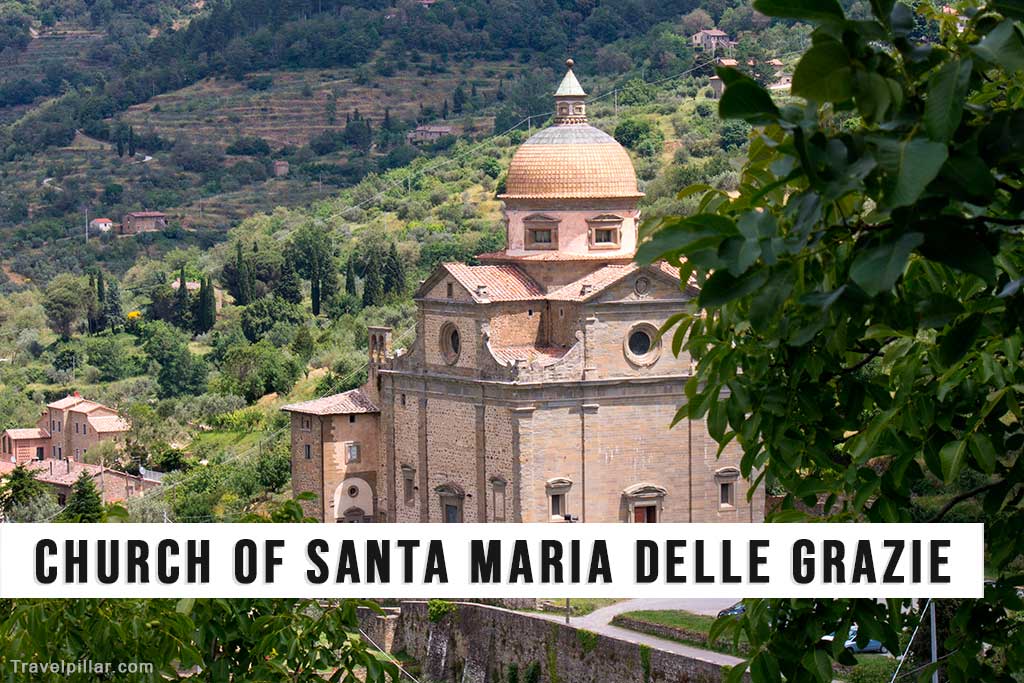
The Church of Santa Maria delle Grazie al Calcinaio is a Renaissance structure designed by Francesco di Giorgio Martini in the late 15th century. Built to enshrine a miraculous image of the Virgin Mary, it features a Greek-cross plan and a large central dome. The church stands below the town walls and is noted for its harmonious proportions and use of pietra serena. It remains a significant example of early Tuscan Renaissance architecture.
Google map 4.5/5
Wineries and Vineyards in and around Cortona
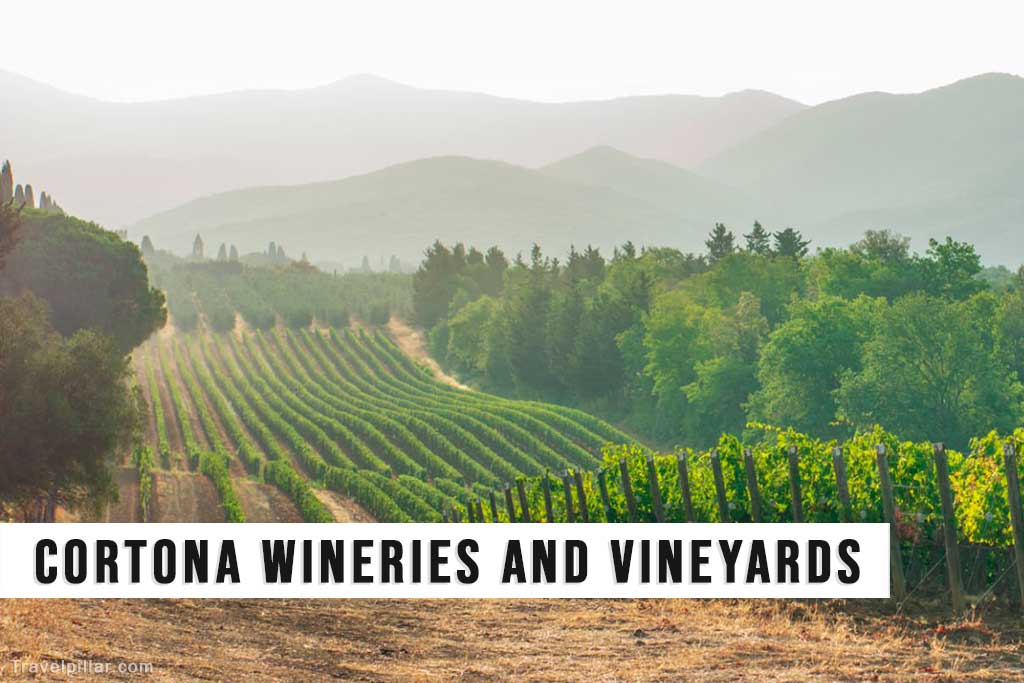
The area features numerous wineries and vineyards producing red and white wines, notably Syrah and Sangiovese, under the Cortona DOC designation. Many estates offer guided tours, tastings, and direct sales. Viticulture benefits from the region’s elevation, soil composition, and climate. Several producers combine traditional methods with modern techniques. Wine production plays a central role in the local economy, attracting visitors interested in enology, gastronomy, and rural Tuscan landscapes.
Diocesan Museum (Museo Diocesano del Capitolo)
The Diocesan Museum is located near the cathedral and displays religious art and artifacts from the surrounding area. Housed in the former Church of Gesù, the collection includes works by Luca Signorelli, Fra Angelico, and Pietro da Cortona. Highlights include Signorelli’s Deposition and Fra Angelico’s Annunciation. The museum also features liturgical objects, manuscripts, and vestments, offering insight into the region’s religious history and artistic heritage from the medieval to Baroque periods.
Google map 4.6/5
MAEC – Museo dell’Accademia Etrusca
MAEC – Museo dell’Accademia Etrusca is housed in Palazzo Casali and presents a collection spanning Etruscan, Roman, and Renaissance periods. Founded in the 18th century, it includes artifacts such as the Etruscan bronze lamp known as the Lampadario and inscriptions from nearby archaeological sites. The museum also displays paintings, manuscripts, and decorative arts, reflecting the cultural and intellectual history of the region from antiquity through the modern era.
Google map 4.6/5