
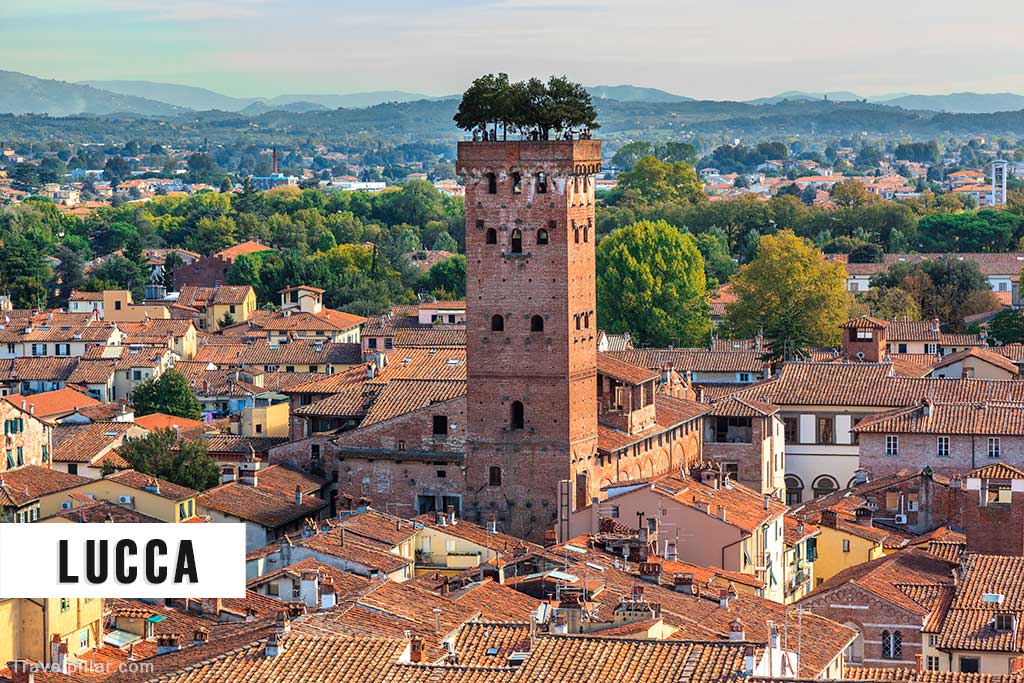
Nestled in the picturesque Serchio Valley, Lucca is a charming Tuscan city known for its remarkably preserved historic center and imposing city walls. Rich in history, art, and culture, Lucca offers a captivating experience for visitors seeking to explore the authentic side of Tuscany.
One of Lucca’s most distinctive features is its impressive city walls, which date back to the 16th and 17th centuries. These well-preserved walls, now converted into a pedestrian promenade, provide a unique opportunity to stroll or cycle around the city while enjoying panoramic views of the historic center and surrounding landscape.
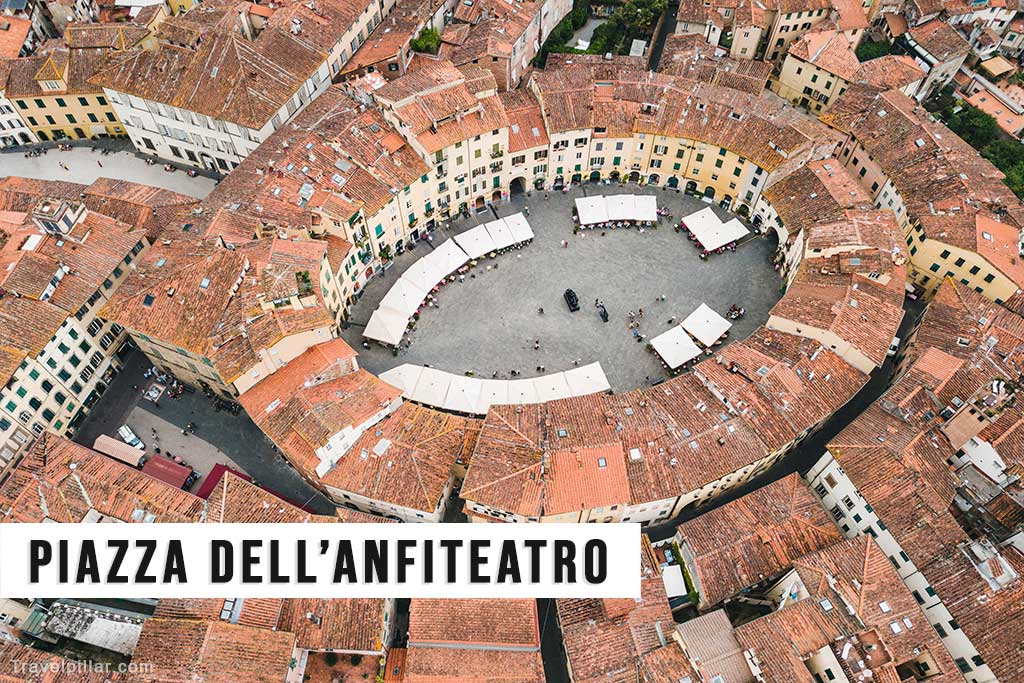
At the heart of Lucca lies the Piazza dell’Anfiteatro, a circular square built on the site of a former Roman amphitheater. This architectural marvel, characterized by its distinctive oval shape and multicolored facades, is now a lively hub of shops, restaurants, and cafes.
The city is also home to numerous churches, earning it the nickname “the city of a hundred churches.” Among them, the Lucca Cathedral, dedicated to Saint Martin, is an exceptional example of Romanesque architecture. Inside, visitors can admire the magnificent Tomb of Ilaria del Carretto, sculpted by Jacopo della Quercia, and the intricately carved façade featuring stories from the Old and New Testaments.
Another noteworthy site is the Torre Guinigi, a 14th-century tower that offers stunning views of Lucca’s skyline. The tower is easily recognizable by its rooftop garden, which features ancient holm oaks and provides a serene oasis above the bustling city streets.
Official tourism website: https://www.italia.it/en/tuscany/lucca
Lucca Highlights
Lucca City Walls
Lucca’s Renaissance city walls, built in the 16th and 17th centuries, completely encircle the old town for over four kilometres. Preserved intact, they were never breached in conflict and later repurposed as a tree-lined promenade. Today, the walls function as a public space for walking and cycling, offering views over the historic centre and surrounding countryside, making them one of Lucca’s most distinctive architectural and urban features.
Google map 4.8/5 City Walls
Porta Sant’Anna 4.5/5
Porta San Donato 4.5/5
Porta Santa Maria 4.5/5
Porta di San Jacopo 4.4/5
Porta Elisa 4.5/5
Porta San Pietro 4.5/5
Piazza dell’Anfiteatro
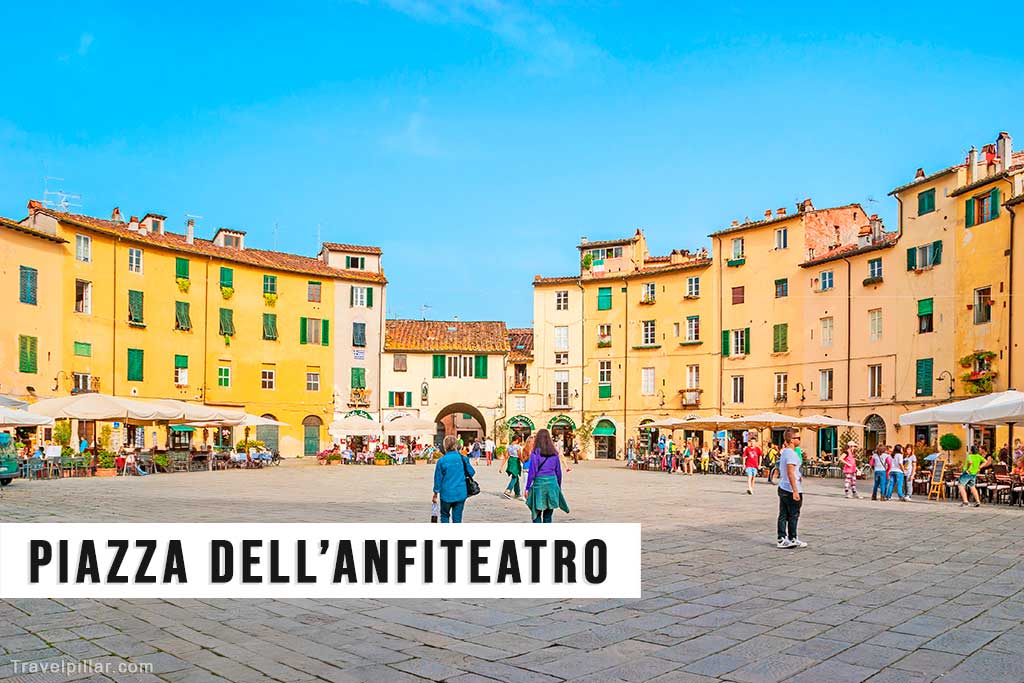
Piazza dell’Anfiteatro occupies the site of Lucca’s Roman amphitheatre. The oval layout of the original structure is preserved in the curve of the surrounding medieval buildings, creating a unique enclosed square. Once used for markets and public gatherings, it is now filled with cafés, shops, and restaurants, retaining its central role as a social and commercial hub within Lucca’s historic centre while reflecting the town’s Roman origins.
Google map 4.6/5
Lucca Cathedral (Duomo di San Martino)
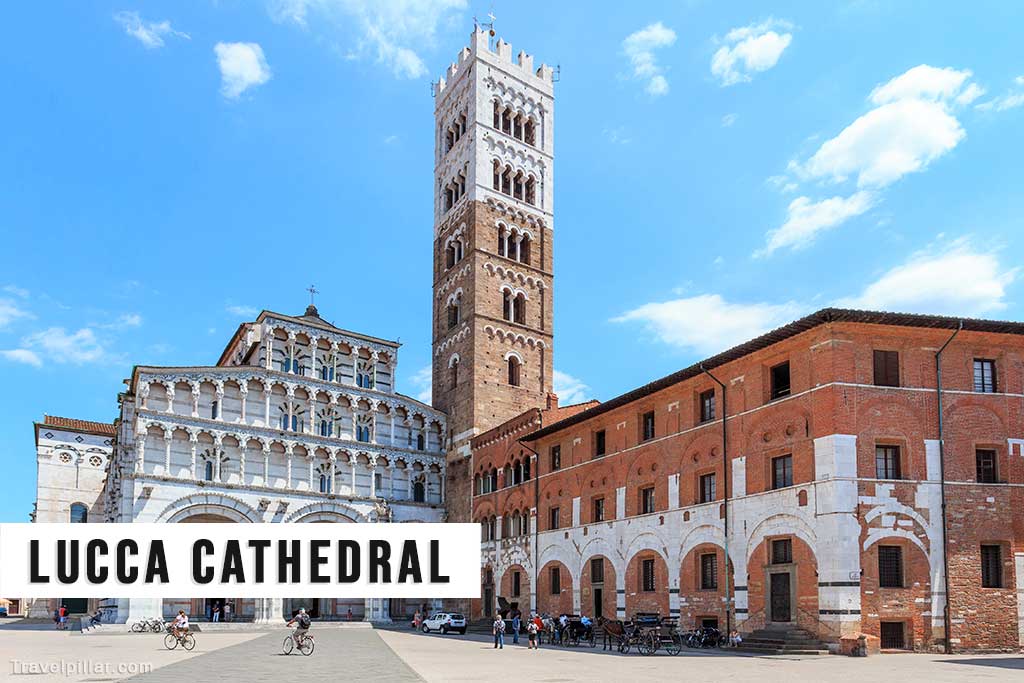
Lucca Cathedral, founded in the 11th century and rebuilt in later centuries, combines Romanesque and Gothic styles. The façade features ornate arcades, while the interior contains significant artworks, including the tomb of Ilaria del Carretto by Jacopo della Quercia. Its most important relic is the Volto Santo, a wooden crucifix venerated since the Middle Ages, making the cathedral both a religious and artistic landmark of Lucca.
Google map 4.6/5
San Michele in Foro Church
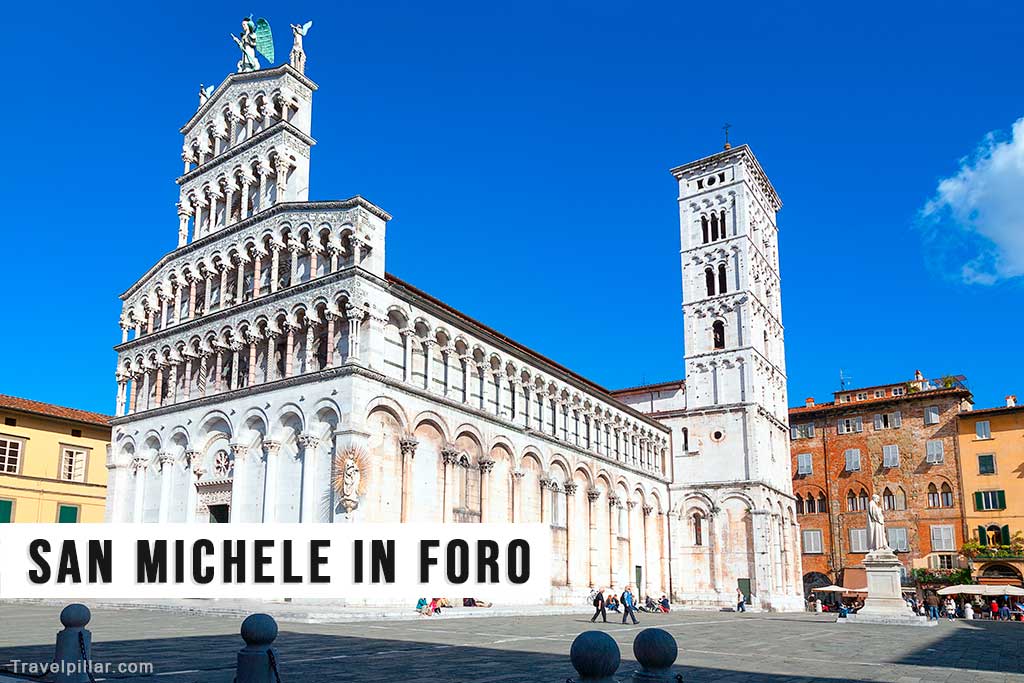
San Michele in Foro stands on the site of Lucca’s Roman forum and is one of the city’s major Romanesque churches. Constructed between the 11th and 14th centuries, it is distinguished by its elaborate marble façade, crowned with a statue of Saint Michael. The interior contains medieval artworks and chapels. The church illustrates Lucca’s medieval prosperity and the continuation of civic and religious life on ancient foundations.
Google map 4.6/5
San Frediano Basilica
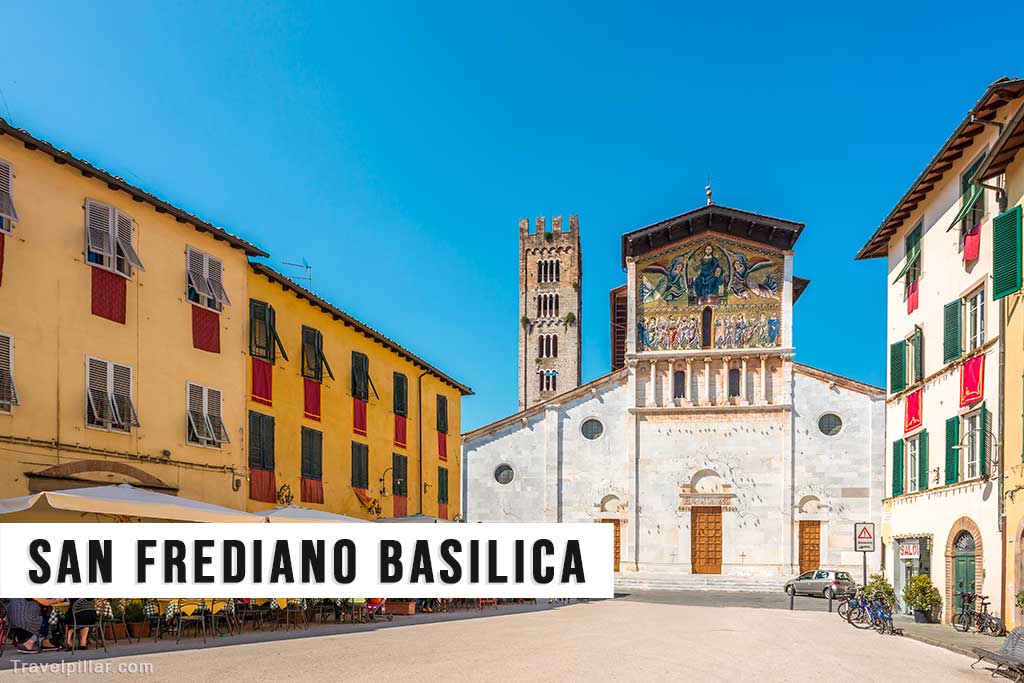
San Frediano Basilica, dating from the 6th century and rebuilt in Romanesque style in the 12th century, is known for its striking golden mosaic on the façade. The interior features wide aisles, decorated chapels, and notable frescoes. The church is dedicated to Saint Fridianus, an Irish bishop of Lucca, and remains an important example of the city’s early Christian and medieval architectural heritage.
Google map 4.5/5
Torre Guinigi
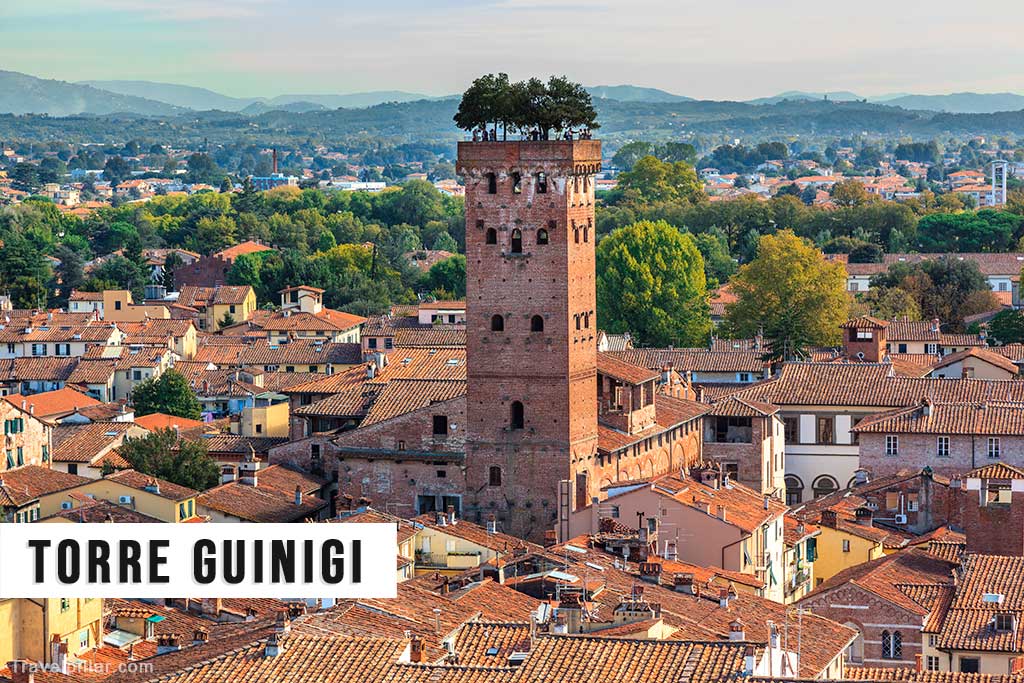
Torre Guinigi, built in the 14th century by the wealthy Guinigi family, is one of Lucca’s best-preserved medieval towers. Rising to 45 metres, it is unique for the oak trees planted on its summit, symbolising rebirth and stability. Visitors can climb the tower’s internal stairway for panoramic views over Lucca’s historic centre and surrounding landscape, making it both a historic landmark and a popular vantage point.
Google map 4.6/5
Torre delle Ore
Torre delle Ore, Lucca’s tallest medieval tower, dates to the 13th century and houses a historic clock mechanism still in operation. The tower can be climbed via a wooden staircase, offering elevated views across the city’s rooftops and squares. Its long-standing role as Lucca’s official clocktower made it central to civic life, while today it remains a prominent architectural feature within the old town.
Google map 4.5/5
Palazzo Pfanner
Palazzo Pfanner, built in the 17th century, combines baroque architecture with formal gardens featuring statues, fountains, and landscaped terraces. Originally a noble residence, it later became associated with beer production in the 19th century. The interior preserves period furnishings and artworks, offering a glimpse into aristocratic domestic life. The palace and its gardens remain open to visitors, reflecting Lucca’s social history and architectural heritage.
Google map 4.4/5
Puccini Museum
The Puccini Museum in Lucca is housed in the birthplace of composer Giacomo Puccini, born in 1858. The collection includes original manuscripts, musical instruments, costumes, and personal objects that illustrate his career and legacy. The museum preserves the atmosphere of a 19th-century home while presenting the cultural impact of Puccini’s operas, making it a central destination for those interested in music history and Lucca’s artistic heritage.
Google map 4.5/5
Via Fillungo Street
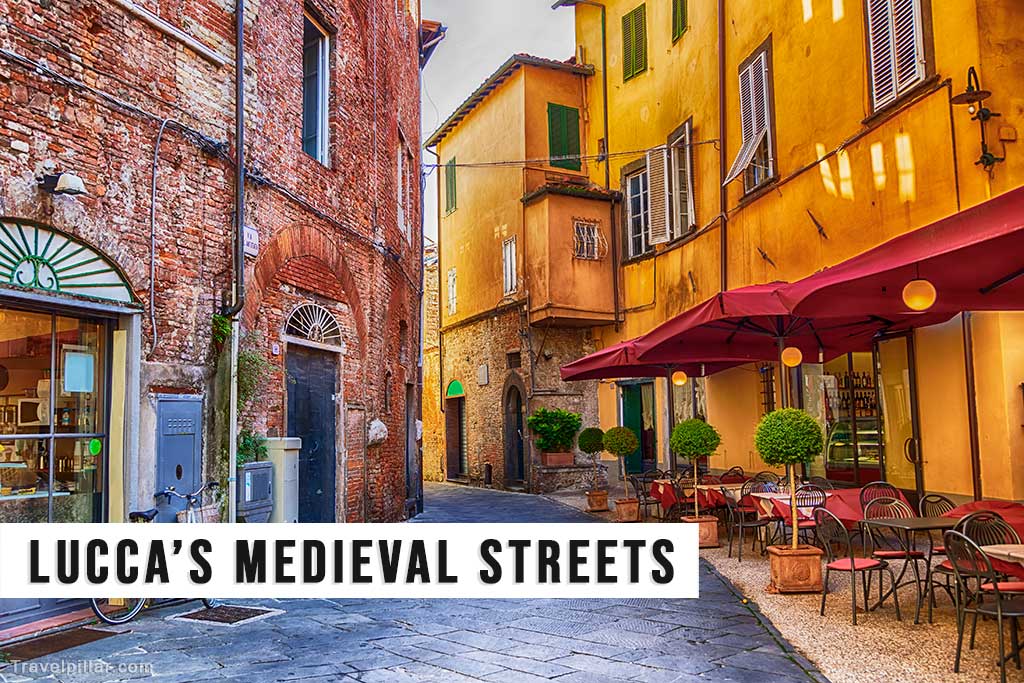
Via Fillungo is Lucca’s principal shopping street, running through the historic centre with a mix of medieval and Renaissance buildings. The narrow, lively street contains boutiques, cafés, and traditional shops, making it the commercial artery of the old town. Retaining its role as a thoroughfare since medieval times, it provides a link between major piazzas and landmarks, combining everyday activity with architectural continuity in Lucca.
Google map 4.6/5