
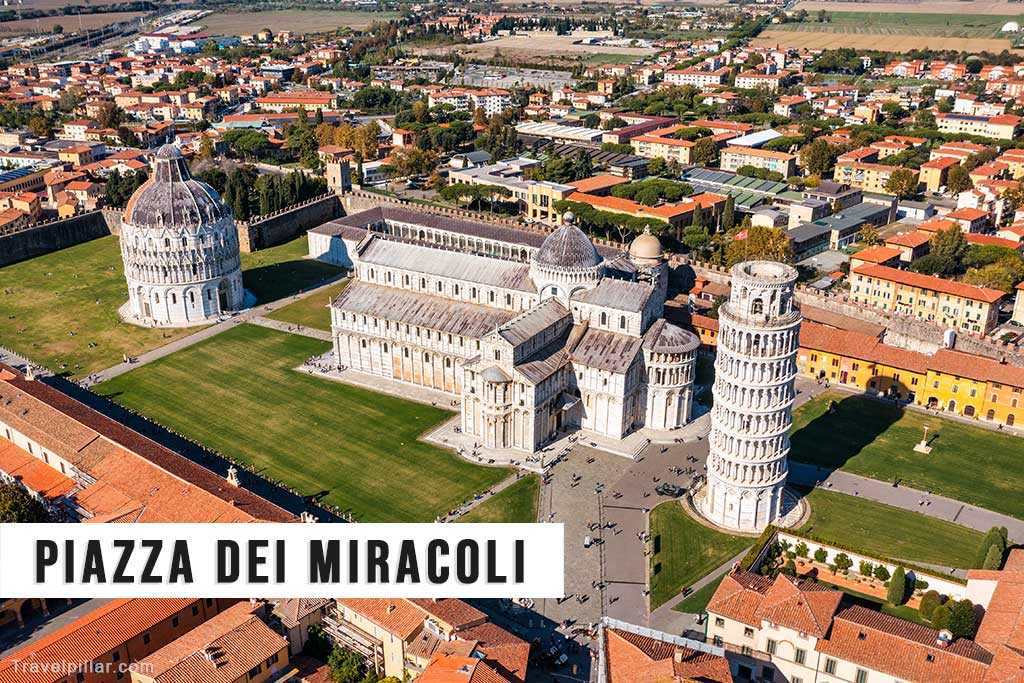
The Piazza dei Miracoli, or Square of Miracles, is a significant center of religious significance and architectural magnificence located in the heart of Pisa, Italy. A UNESCO World Heritage Site, this walled square houses four principal structures: the Leaning Tower of Pisa, the Pisa Cathedral (Duomo di Pisa), the Baptistery of St. John, and the Camposanto Monumentale.
The square is a culmination of the city’s architectural progression, showcasing the distinctive Pisan Romanesque style. The term “Square of Miracles” was coined by the Italian writer and poet Gabriele D’Annunzio, who referred to the square as a “prato dei Miracoli,” or “meadow of miracles” in his novel Forse che sì forse che no (1910). The lush lawns that contrast against the white marble structures indeed give the place a dreamlike, miraculous aura.
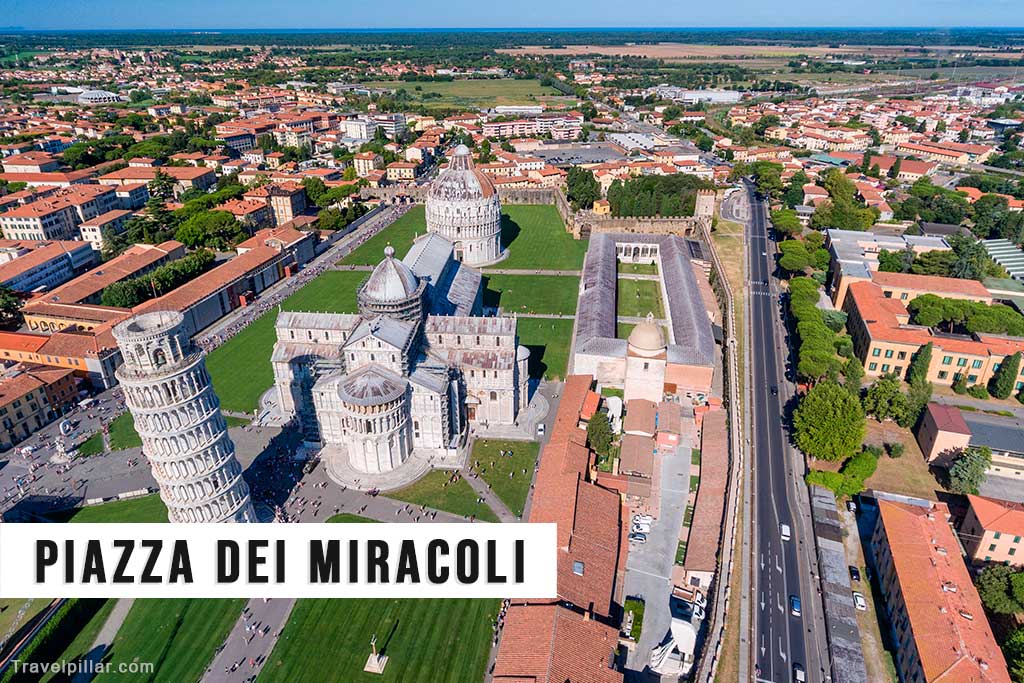
The Pisa Cathedral, built between 1063 and 1118, serves as the centerpiece of the square. With its impressive bronze doors, striking façade laden with mosaics and intricate sculptural elements, and the beautifully decorated three-nave interior, the cathedral epitomizes Pisan Romanesque architecture.
Adjacent to the cathedral is the largest baptistery in Italy, the Baptistery of St. John. A blend of Romanesque and Gothic styles, it’s renowned for its unique acoustics and the pulpit designed by Nicola Pisano.
The Leaning Tower, the square’s most iconic structure, provides a remarkable sight with its unintended tilt. Initially designed as the cathedral’s bell tower, the Leaning Tower has now become a symbol of the city and one of Italy’s prime tourist attractions.
The Camposanto Monumentale, or the monumental cemetery, provides the square’s northern boundary. Legend has it that it encloses soil brought from the Golgotha, where Christ was crucified, making it a sacred burial ground.
Today, the Piazza dei Miracoli stands as a testament to Pisa’s rich historical, architectural, and cultural heritage, inviting visitors worldwide to witness its timeless beauty and spiritual ambiance.