
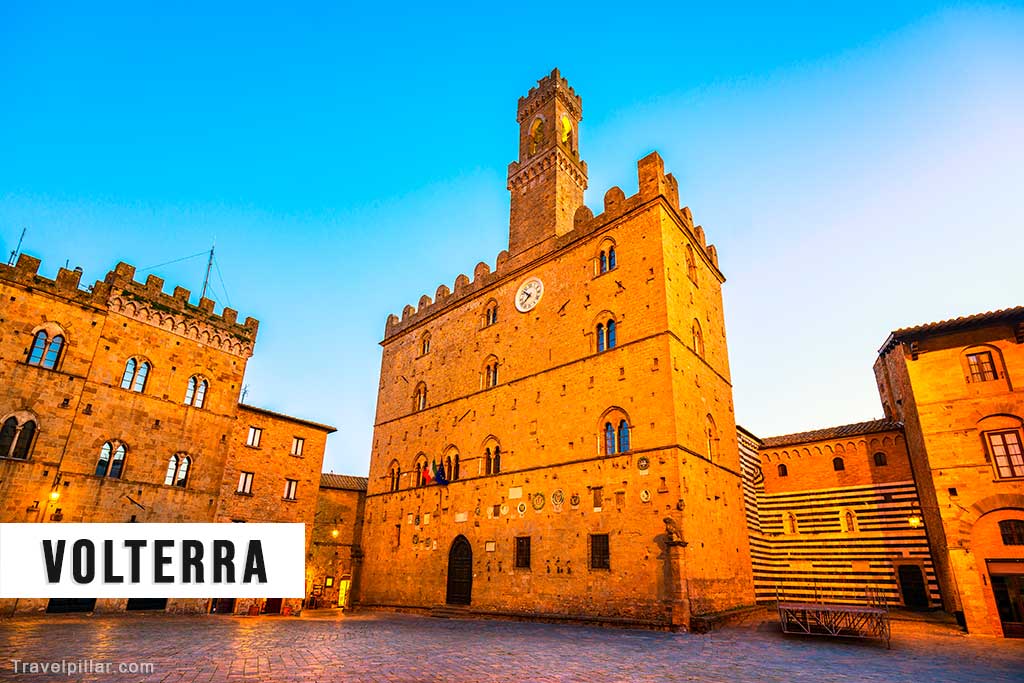
Nestled in the heart of Tuscany, Volterra is a captivating hilltop town that boasts a rich history spanning over three millennia. With its well-preserved architectural treasures and stunning natural surroundings, Volterra offers an unforgettable experience for history buffs and nature lovers alike.
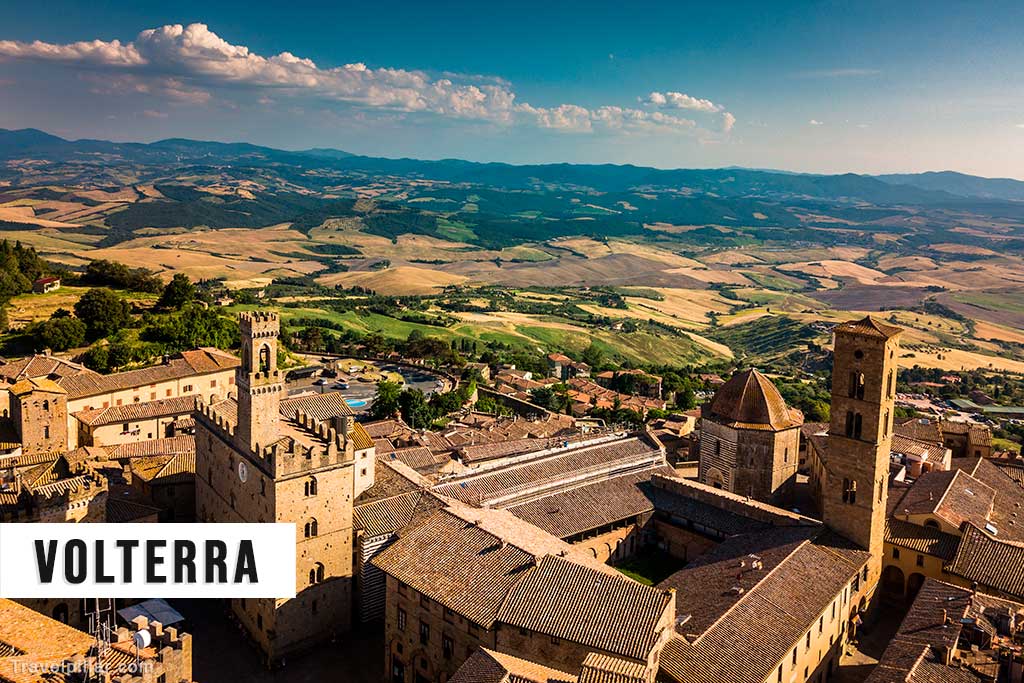
Volterra’s ancient roots can be traced back to the Etruscan era, and the town’s historic center is a testament to its long and varied past. The Porta all’Arco, an impressive Etruscan gate dating back to the 4th century BCE, stands as a symbol of Volterra’s ancient beginnings. Not far from the gate, visitors can explore the remains of the Etruscan Acropolis, which offers panoramic views of the surrounding countryside.
The town is also home to several notable Roman ruins, including the well-preserved Roman Theatre. Built in the 1st century BCE, this archaeological site showcases the ingenuity of Roman engineering and offers a glimpse into the town’s vibrant past.
Volterra’s medieval history is evident in the Palazzo dei Priori, the oldest town hall in Tuscany. Constructed in the 13th century, the building features a distinctive bell tower and houses several works of art, including frescoes by Benozzo Gozzoli.
For a deeper understanding of the town’s Etruscan heritage, visit the Guarnacci Etruscan Museum. This comprehensive museum features an extensive collection of artifacts, including intricately carved funerary urns and the famous bronze statue, the “Shadow of the Evening.”
In summary, Volterra offers an unparalleled journey through time, with its well-preserved historical sites and captivating landscapes. A visit to this enchanting Tuscan town is an essential addition to any Italian itinerary, providing a unique opportunity to immerse oneself in the region’s rich cultural heritage.
Volterra Highlights
Piazza dei Priori – Main Square
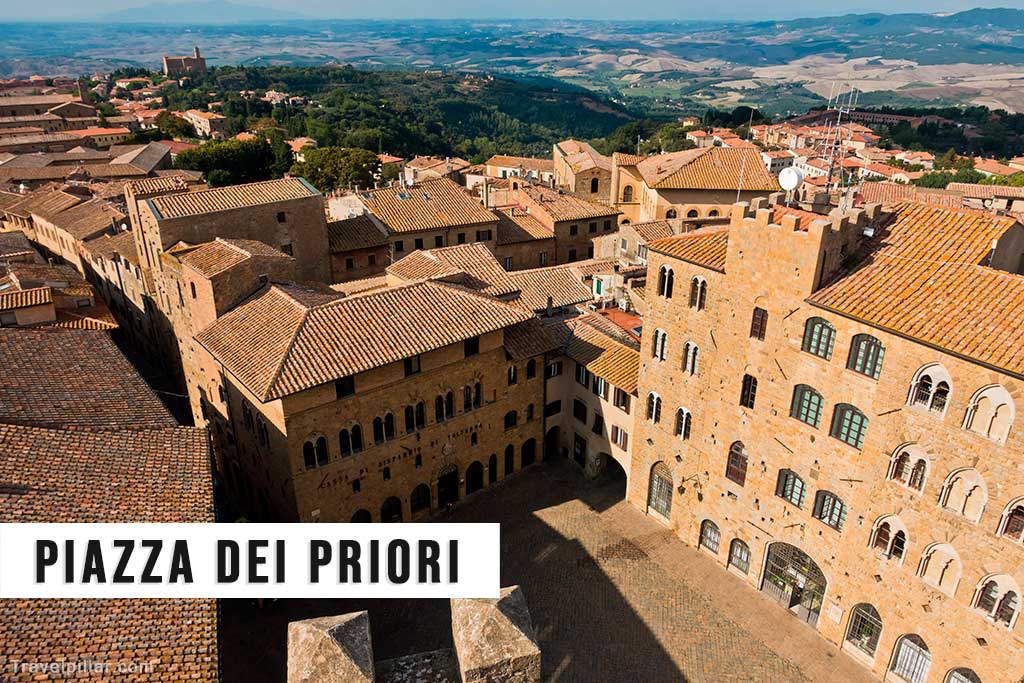
Piazza dei Priori is a medieval square surrounded by historic buildings, including the 13th-century Palazzo dei Priori. The square has served as a civic and political center since the Middle Ages and retains its original layout. Architectural styles from different periods are visible in the surrounding palaces. The square also features coats of arms and decorative elements reflecting Volterra’s governance and alliances. It remains a central point for public gatherings and events.
Palace of the Priors (Palazzo dei Priori)
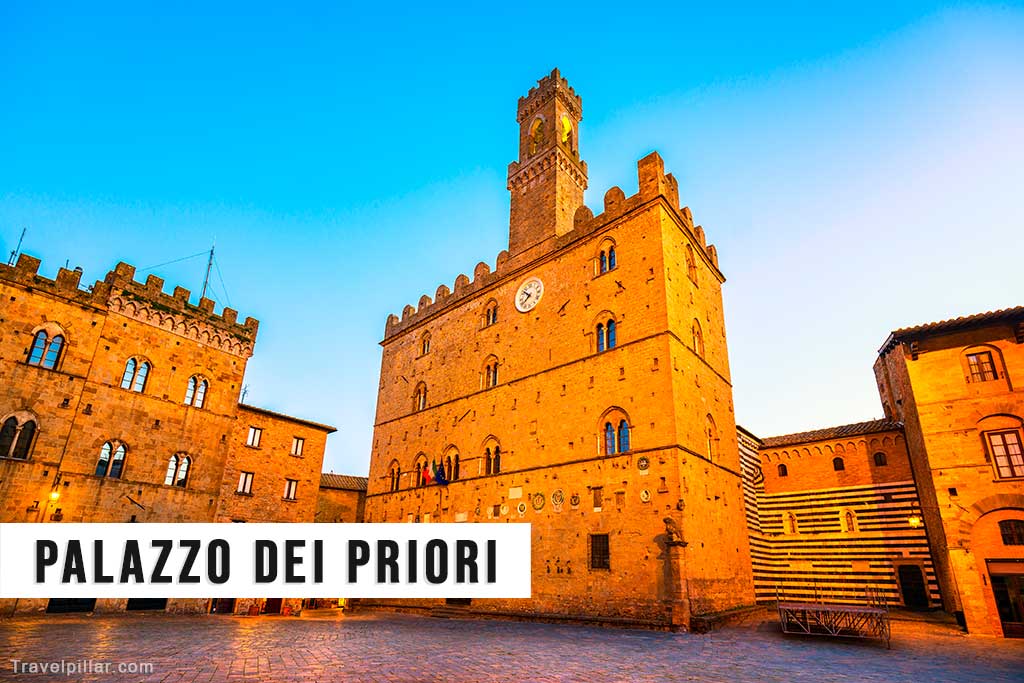
Palazzo dei Priori is a 13th-century civic building and one of the oldest town halls in Tuscany. It features a tall clock tower and a façade decorated with coats of arms representing past city magistrates. The interior includes frescoed rooms and council chambers used for municipal purposes. The structure reflects Gothic architectural elements and offers access to the tower, which provides panoramic views of the surrounding area and historical town layout.
Google map 4.5/5
Etruscan Museum (Museo Etrusco Mario Guarnacci)
The Museo Etrusco Mario Guarnacci houses one of Italy’s most important collections of Etruscan artifacts. Founded in the 18th century, it includes funerary urns, bronzes, inscriptions, and the notable “Ombra della Sera,” a slender bronze figure. The museum is located in a historic palace and presents material culture from the 8th to 2nd centuries BC. Its holdings provide significant insight into Etruscan society, religion, and funerary practices.
Google map 4.5/5
Volterra Cathedral (Duomo) and Baptistery
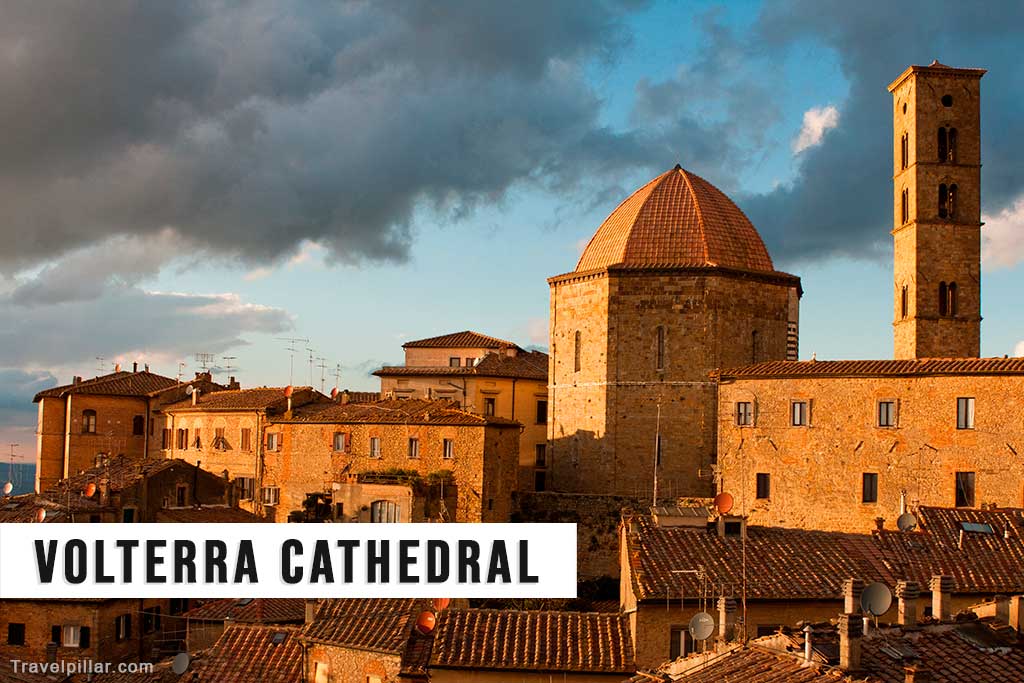
Volterra Cathedral (Cattedrale di Santa Maria Assunta) is a Romanesque structure rebuilt in the 12th century and modified in later periods. The interior features a coffered ceiling, Renaissance chapels, and artworks by local and Florentine artists. The high altar and pulpit are notable for their craftsmanship. The cathedral’s layout follows a Latin cross plan, and it remains an active place of worship. Adjacent to the cathedral is the Baptistery, distinguished by its octagonal shape and marble façade.
Google map 4.4/5
Volterra’s Medieval Streets
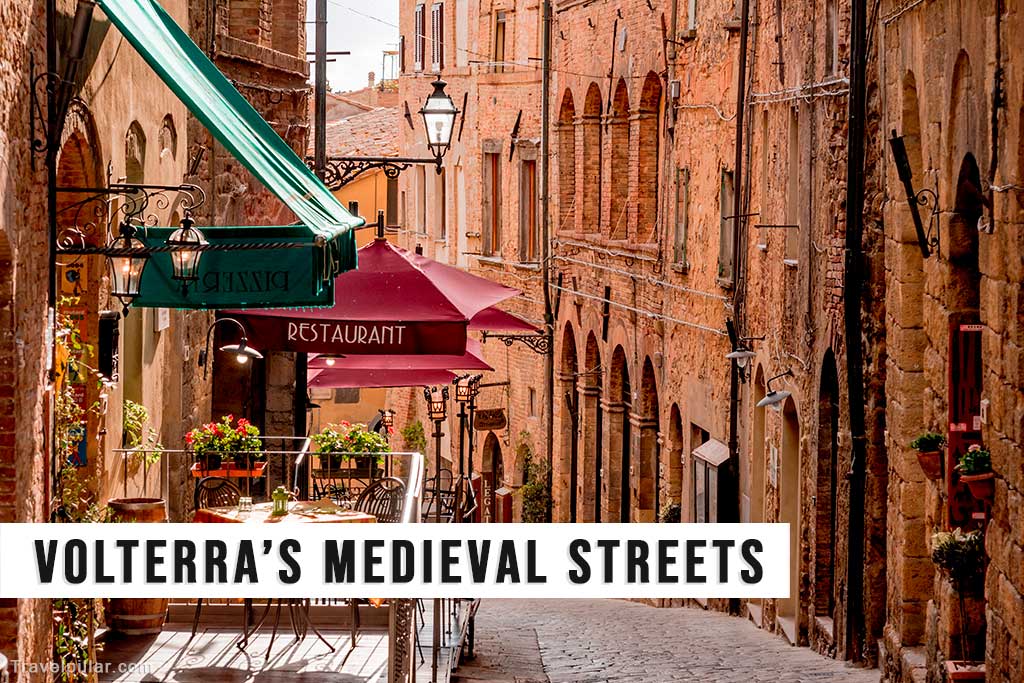
Volterra’s medieval streets retain their original urban layout, characterized by narrow alleys, stone buildings, and arched doorways. The streets follow the contours of the hilltop site and reflect centuries of architectural development. Many façades feature Gothic and Renaissance elements, while ground-level spaces house shops, workshops, and residences. Key thoroughfares include Via Giacomo Matteotti and Via Porta all’Arco, which connect important civic and religious landmarks and illustrate the town’s historical continuity.
Porta all’Arco and Etruscan City Walls
Porta all’Arco is a well-preserved Etruscan gate dating to the 4th century BC, incorporated into later medieval fortifications. It features three weathered stone heads embedded in the arch, believed to have symbolic or protective significance. The surrounding Etruscan city walls, constructed with large stone blocks, originally enclosed the ancient settlement. These fortifications demonstrate advanced Etruscan engineering and provide archaeological insight into pre-Roman urban planning and defensive architecture.
Google map Porta all’Arco 4.7/5
Diocesan Museum of Sacred Art
The Diocesan Museum of Sacred Art (Museo Diocesano d’Arte Sacra Volterra – Chiesa di S. Agostino) displays religious artworks and liturgical objects from the local cathedral and surrounding churches. Housed in a former episcopal residence, the collection includes paintings, sculptures, textiles, and goldwork dating from the Middle Ages to the Baroque period. Notable pieces include works by Taddeo di Bartolo and Fra Bartolomeo. The museum provides historical context for ecclesiastical art and illustrates the region’s religious and artistic development over several centuries.
Google map 4.6/5
Palazzo Viti
Palazzo Viti is a 16th-century noble residence known for its preserved interiors and private art collection. Built by the Viti family, who were alabaster merchants, the palazzo features rooms decorated with period furniture, paintings, and Asian and European artifacts. The building also includes alabaster works produced in local workshops. It serves as both a museum and a historical residence, offering insight into aristocratic life and international trade connections during the Renaissance.
Google map 4.6/5
Alabaster Workshops
Alabaster workshops preserve a local craft tradition dating back to Etruscan times. Artisans work with soft, translucent stone extracted from nearby quarries, producing decorative and functional objects. Techniques are often passed down through generations and include both hand-carving and lathe work. Workshops typically serve as both studios and retail spaces, allowing visitors to observe the production process. The craft remains a significant aspect of local cultural and economic identity.
Google map Alab’ Arte Snc Di Chiti Roberto E Finazzo Giorgio 4.7/5
Google map Rossi Alabaster Volterra 4.4/5
Volterra City Museum and Art Gallery
The Volterra City Museum and Art Gallery (Pinacoteca e Museo Civico) is located in Palazzo Minucci-Solaini and houses a collection of paintings, sculptures, and decorative arts. Highlights include Rosso Fiorentino’s Deposition, a key Mannerist work, and religious panels from the 14th to 17th centuries. The museum also exhibits archaeological artifacts and items related to civic history. The building itself, a Renaissance palace, contributes to the historical and architectural value of the museum experience.
Google map 4.5/5
Roman Theatre
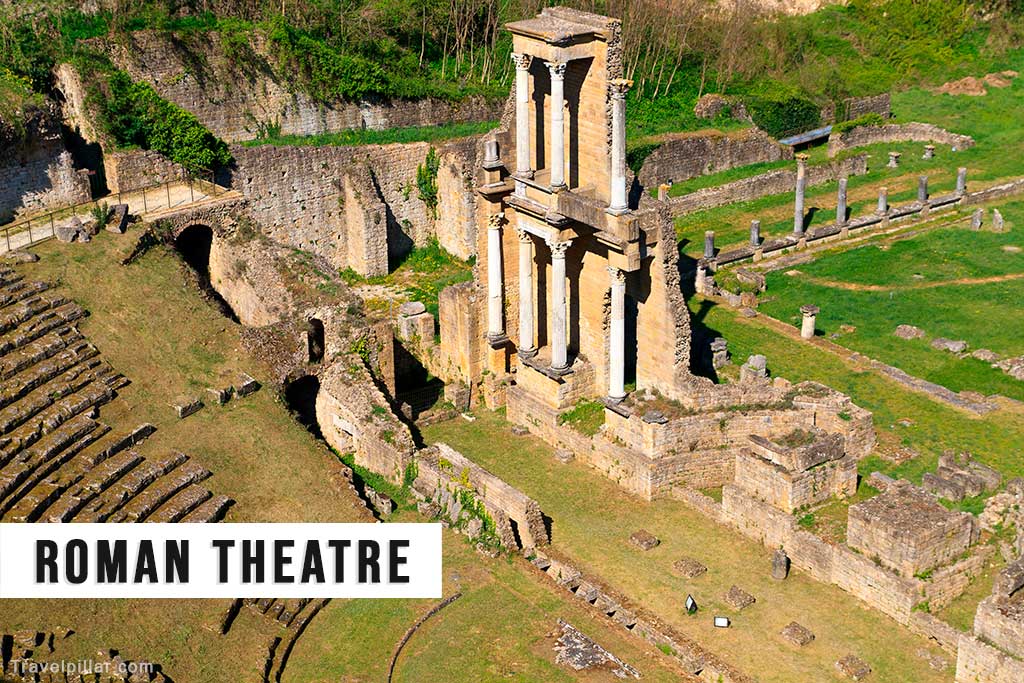
The Roman Theatre dates to the late 1st century BC and was uncovered in the 1950s. Built into a natural slope, it features a semicircular cavea, orchestra, and remnants of the stage structure. Behind the theatre are remains of Roman baths, added in the 3rd century AD. The site reflects typical Roman urban planning and construction techniques. It served as a venue for public performances and remains a key archaeological landmark.
Google map 4.4/5
Church of San Giusto (Chiesa dei Santi Giusto e Clemente)
The Church of San Giusto (Saint Justus) is a 17th-century Baroque structure situated near the edge of the Balze cliffs. It was built on the site of an earlier Romanesque church and features a single nave, stucco decorations, and side chapels. The façade is plain, while the interior includes altarpieces and devotional artworks. Its elevated position provides views over the surrounding countryside, and the adjacent convent complex is partially preserved.
Google map 4.4/5
Parco Archeologico “Enrico Fiumi”
Parco Archeologico “Enrico Fiumi” is located on the site of the ancient acropolis and contains remains from Etruscan, Roman, and medieval periods. Excavations have revealed temple foundations, cisterns, and other civic structures. The park is named after the archaeologist who conducted extensive work there in the 20th century. It also serves as a public green space, offering views of the surrounding countryside and insight into the town’s historical development.
Google map 4.3/5
Medicean Fortress (Fortezza Medicea)
The Medicean Fortress was constructed in the 15th century under Lorenzo de’ Medici to secure control over the city. It consists of two connected structures: the older Rocca Vecchia and the later Rocca Nuova. The complex served both military and administrative functions. Today, it operates as a high-security prison and is not generally open to the public. Its imposing form remains a prominent feature of the town’s skyline and fortification system.
Google map 3.9/5