
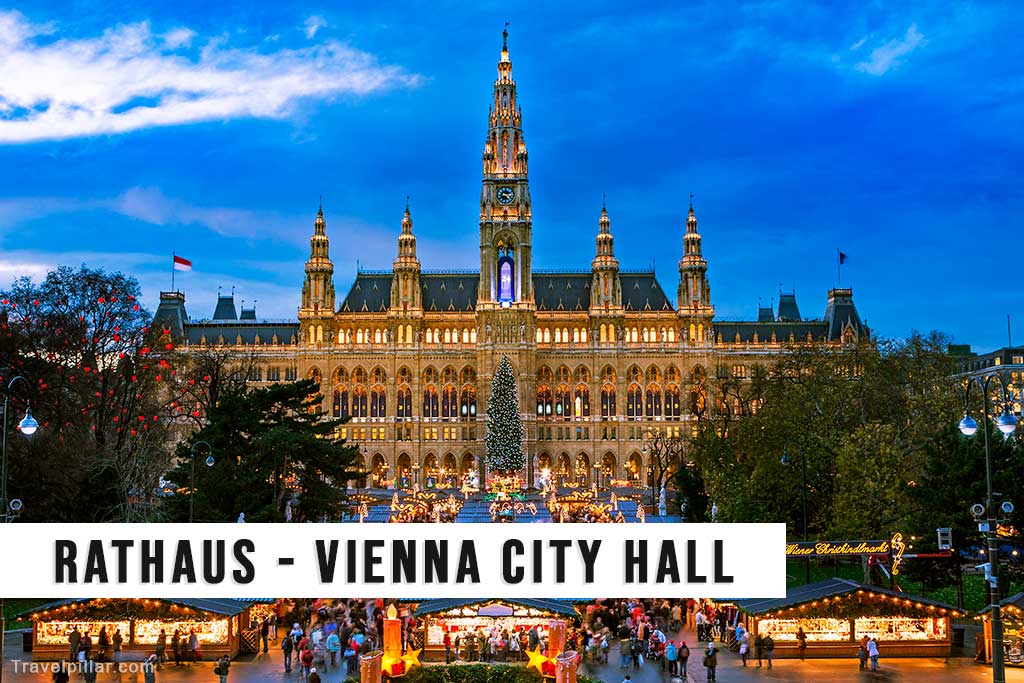
The Vienna City Hall, or Rathaus, is one of the most significant civic buildings in the Austrian capital. Located on the Ringstrasse, it serves as the administrative centre of the city and the seat of both the mayor and the municipal council. Constructed between 1872 and 1883, the building was designed by architect Friedrich von Schmidt in a Neo-Gothic style inspired by Flemish and German town halls of the Middle Ages.
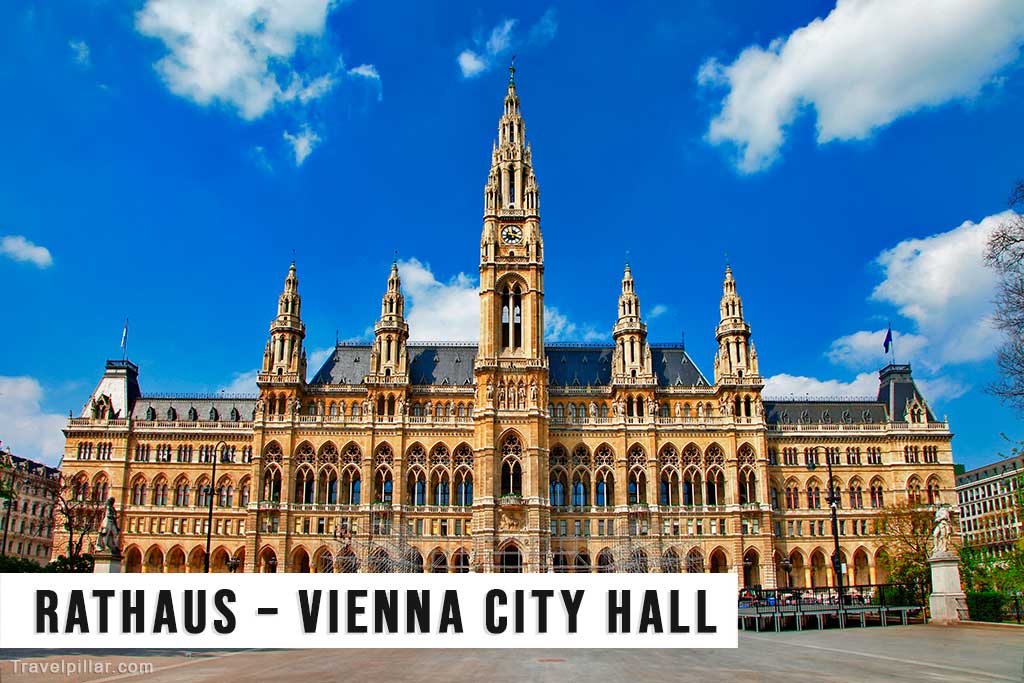
The structure is characterised by its symmetrical layout, pointed arches, ornate façades, and a central tower that rises to a height of 98 metres. At the top of this tower is the “Rathausmann,” a 3.4-metre-tall statue of a standard-bearer that has become one of the symbols of Vienna. The building features five main wings arranged around seven internal courtyards, housing over 1,500 rooms used for various administrative functions.
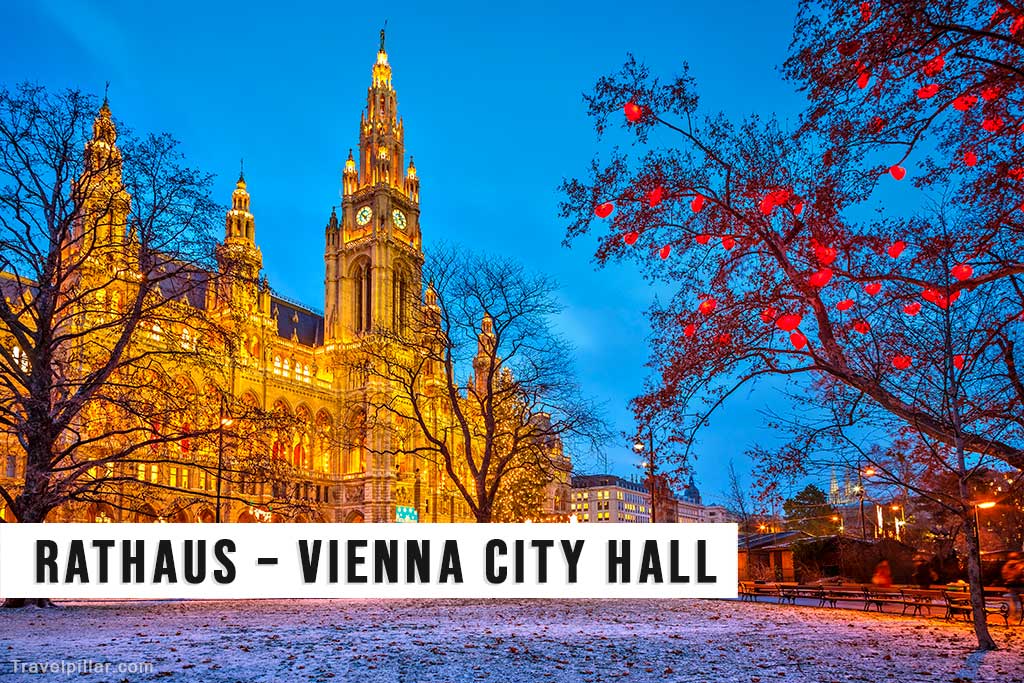
The main façade opens onto Rathausplatz, a public square that frequently hosts events, markets, and festivals throughout the year. The surrounding park, Rathauspark, enhances the setting and offers green space in the heart of the city. The building’s grand staircase, columned arcades, and ceremonial rooms, including the Festsaal (Festival Hall), are notable for their decorative detail and scale.
Although it is a functioning government building, parts of the Rathaus are open to the public. Guided tours provide access to selected rooms and offer historical background on the city’s political and architectural development. The building is also used as a venue for cultural events, including concerts, exhibitions, and the annual Life Ball.
Located near other major landmarks such as the Burgtheater, Parliament Building, and University of Vienna, the Rathaus is a prominent feature of Vienna’s urban landscape. Its architectural style, civic function, and continued role in public life make it one of the key attractions in the city.
Google map 4.7/5