
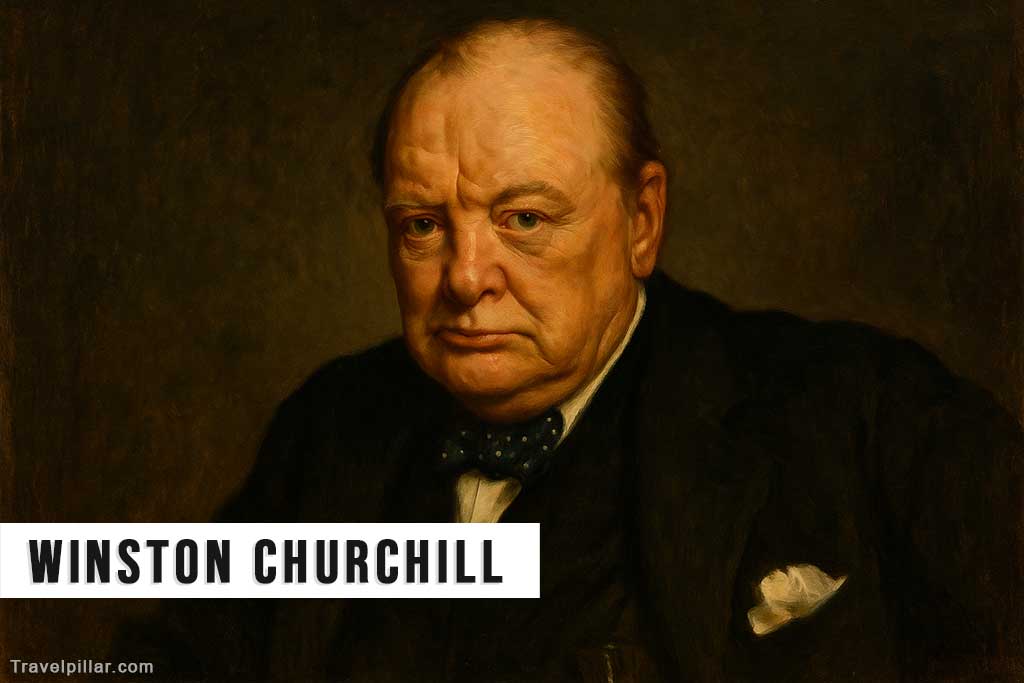
Winston Churchill, born on November 30, 1874, in Woodstock, England, was a British statesman, orator, and author who is best known for his leadership as Prime Minister of the United Kingdom during World War II.
Churchill’s political career began in 1900 when he became a member of the House of Commons as a Conservative. However, he later switched to the Liberal Party before rejoining the Conservatives in the 1920s. He held various key government positions, including First Lord of the Admiralty, Minister of Munitions, and Chancellor of the Exchequer.
Despite a period of political isolation in the 1930s, often referred to as his ‘wilderness years’, Churchill was appointed Prime Minister in 1940 following Neville Chamberlain’s resignation. His inspirational speeches and indomitable spirit during the critical early days of World War II rallied the British people and maintained morale during the Blitz.
Under Churchill’s leadership, Britain, in alliance with the United States and the Soviet Union, was able to turn the tide of the war against Nazi Germany. His strategic vision and diplomatic skills played a vital role in shaping the post-war world order.
After the war, Churchill lost the 1945 election but returned to the office of Prime Minister in 1951 and served until his resignation in 1955. In addition to his political career, he was an accomplished writer and historian, receiving the Nobel Prize in Literature in 1953.
Churchill died on January 24, 1965. His contributions to British and world history, his ability to inspire during moments of national crisis, and his far-reaching influence on the course of World War II have solidified his status as one of the most significant and iconic figures of the 20th century. However, his legacy also includes controversies regarding his views on race and decisions that led to significant civilian casualties during the war.