

Gibbon Falls is a roadside waterfall located along the Grand Loop Road between Norris Geyser Basin and Madison Junction in Yellowstone National Park. The falls are situated on the Gibbon River and drop approximately 84 feet (26 metres) in a broad, fan-shaped cascade. Their position along a main park route makes them easily accessible to visitors travelling between the park’s central and western regions.
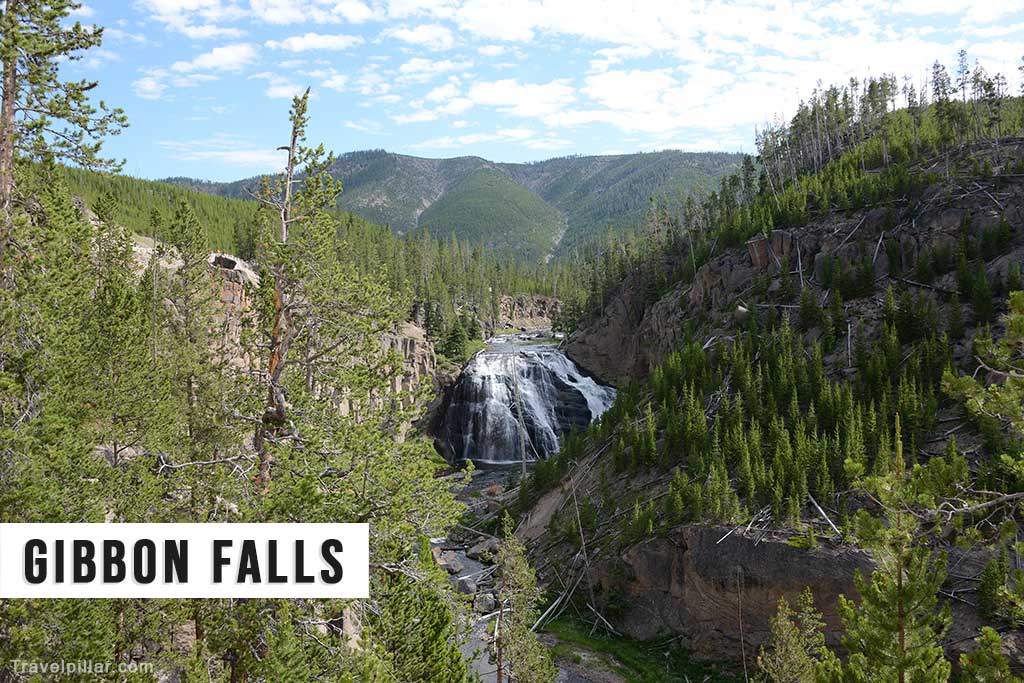
The waterfall is the result of geological processes associated with Yellowstone’s volcanic history. Gibbon Falls formed where the Gibbon River flows over the edge of the caldera rim created by a volcanic eruption approximately 640,000 years ago. Over time, erosion has shaped the falls into their present form, with the river spilling over a resistant layer of rhyolite lava before continuing downstream toward the Madison River.
A designated parking area adjacent to the falls provides safe access for viewing. From the lot, a short, paved path leads to an overlook offering unobstructed views of the cascade and the river valley below. The surrounding area includes interpretive signs explaining the geologic history of the falls and the formation of the Yellowstone Caldera.
The Gibbon River is a popular habitat for trout, and anglers often fish in its calmer stretches both upstream and downstream from the falls. However, the immediate area at the base of the falls is inaccessible due to steep terrain. The river corridor is also frequented by wildlife, including waterfowl, beavers, and occasionally larger mammals such as elk and bison in the nearby meadows.
Because of its location along a busy travel corridor, Gibbon Falls is often visited as part of a driving itinerary through the park rather than a stand-alone destination. It serves as a convenient stop for photography and a brief introduction to Yellowstone’s combination of volcanic geology and riverine landscapes.
While not as large as some of the park’s other waterfalls, Gibbon Falls remains a notable feature due to its accessibility, geological significance, and scenic setting within the Gibbon River canyon. Its combination of natural beauty and interpretive context makes it a worthwhile stop for visitors exploring the central and western portions of Yellowstone National Park.
Google map 4.8/5