
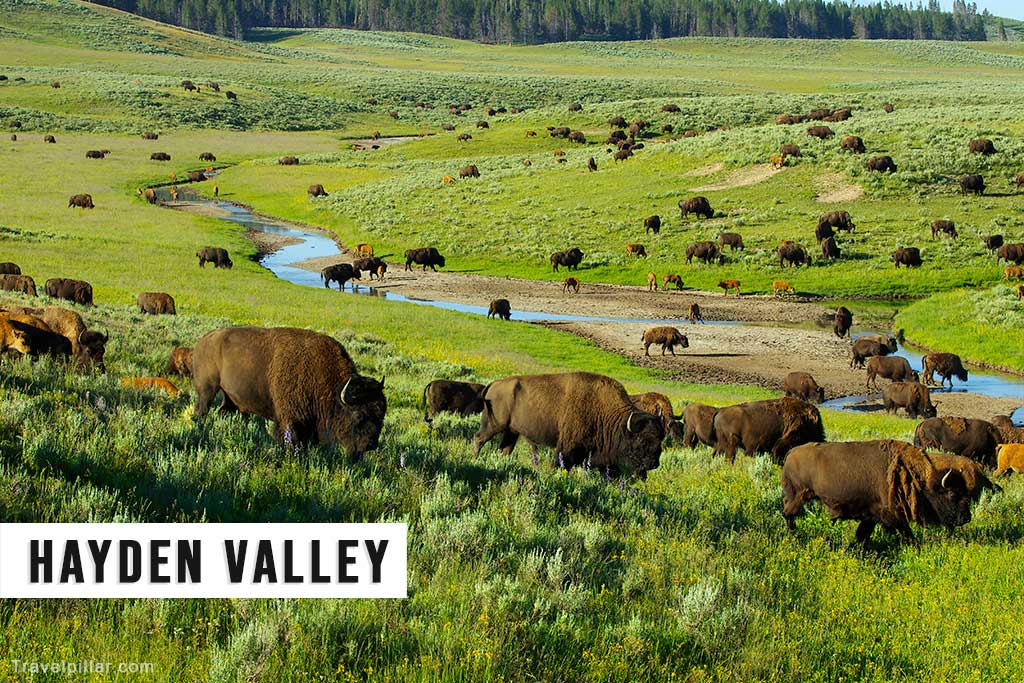
Hayden Valley is a broad, glacially formed valley located in the central region of Yellowstone National Park, north of Yellowstone Lake and south of the Grand Canyon of the Yellowstone. Covering approximately 50 square miles (129 square kilometres), it is a mix of rolling meadows, wetlands, and river corridors, with the Yellowstone River flowing through its centre. The valley was shaped during the last Ice Age by glacial activity, which left behind fertile soils and a relatively flat terrain.
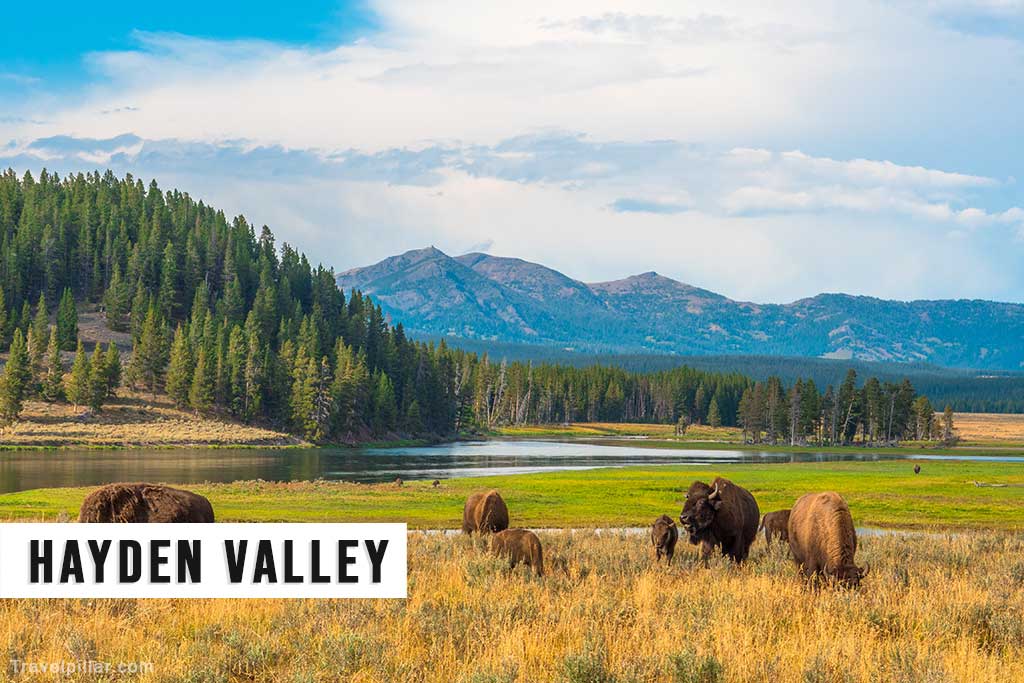
The area is best known for its abundant wildlife and is one of the park’s premier locations for viewing large mammals. Bison are commonly seen grazing in the meadows, often in large herds, while elk, pronghorn, and mule deer are also frequent inhabitants. Grizzly bears, black bears, and gray wolves are occasionally observed, particularly during early morning and evening hours. The wetlands and riverbanks attract a variety of bird species, including sandhill cranes, American white pelicans, bald eagles, and ospreys.

Hayden Valley’s open landscape provides unobstructed viewing opportunities from pullouts along the Grand Loop Road, which runs along its eastern edge. These roadside areas allow visitors to safely observe wildlife without disturbing the animals. In summer, the valley’s grasslands turn green and lush, supporting peak grazing activity, while in autumn the grasses dry and wildlife behaviour shifts toward seasonal migration and mating rituals.
From an ecological standpoint, Hayden Valley is an important habitat for both terrestrial and aquatic species. The Yellowstone River, one of the longest undammed rivers in the continental United States, supports native fish populations and influences the valley’s plant communities. Seasonal flooding helps maintain wetland ecosystems that are critical for nesting and feeding wildlife.
Historically, the valley was used by Indigenous peoples for hunting and travel long before the establishment of Yellowstone as a national park. Today, it remains largely undeveloped, with no hiking trails crossing the central meadows to minimise human disturbance to wildlife.
Hayden Valley’s combination of accessible wildlife viewing, open scenery, and ecological significance makes it a central location for understanding Yellowstone’s natural systems. It offers visitors a representative example of the park’s diverse habitats and the interdependence of its species and landscapes.
Google map 4.8/5