
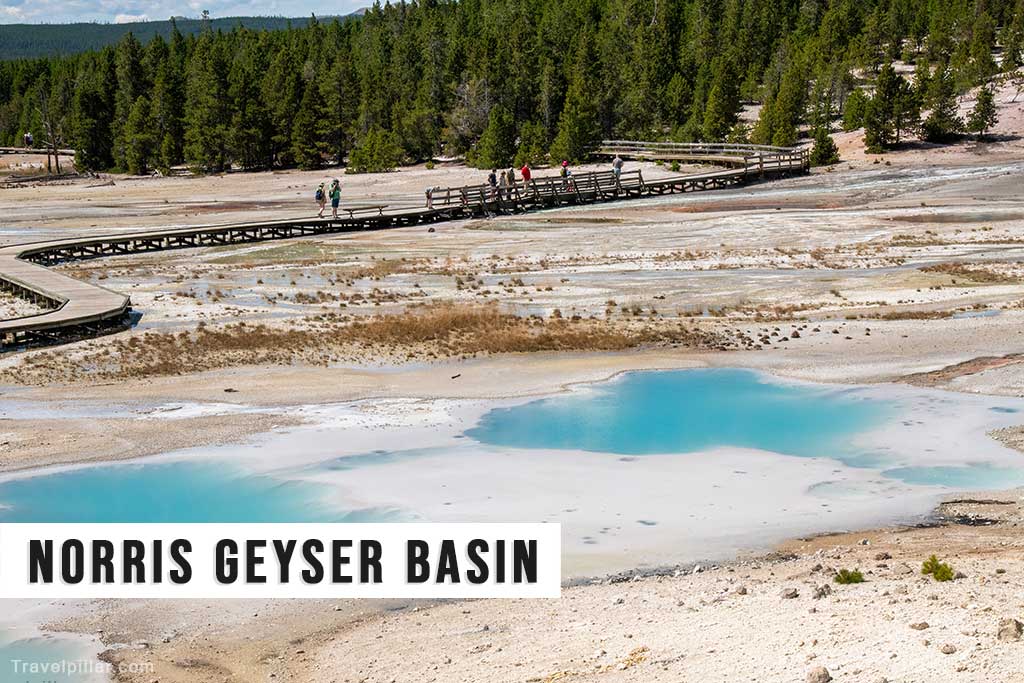
Norris Geyser Basin is the hottest and most geologically active geyser basin in Yellowstone National Park, located near the intersection of the park’s northwestern roads, approximately 21 miles (34 kilometres) from the park’s West Entrance. It is divided into two main areas: Porcelain Basin and Back Basin, each offering distinct geothermal features. The basin’s activity is driven by heat from the Yellowstone Caldera’s underlying magma chamber, with underground water temperatures recorded above 400°F (204°C).
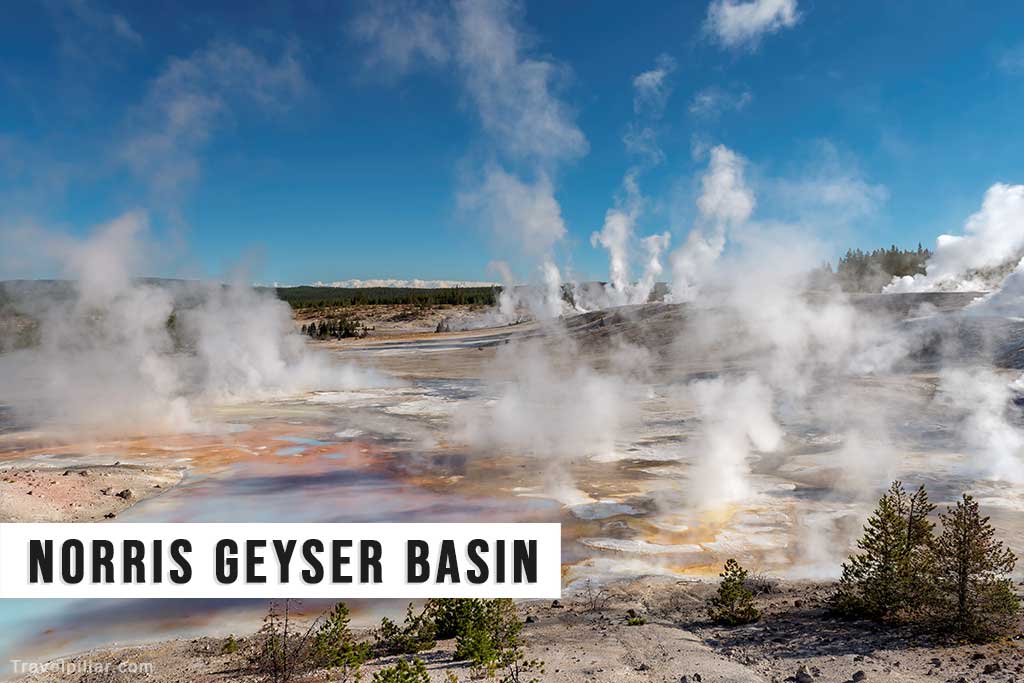
Porcelain Basin is characterised by a relatively open landscape with light-coloured sinter deposits, numerous steaming vents, and small geysers. The high acidity and extreme heat in this area limit microbial growth, giving it a stark, mineral-dominated appearance. Boardwalks allow visitors to view features such as Crackling Lake, Ledge Geyser, and the constantly steaming Whirligig Geyser.
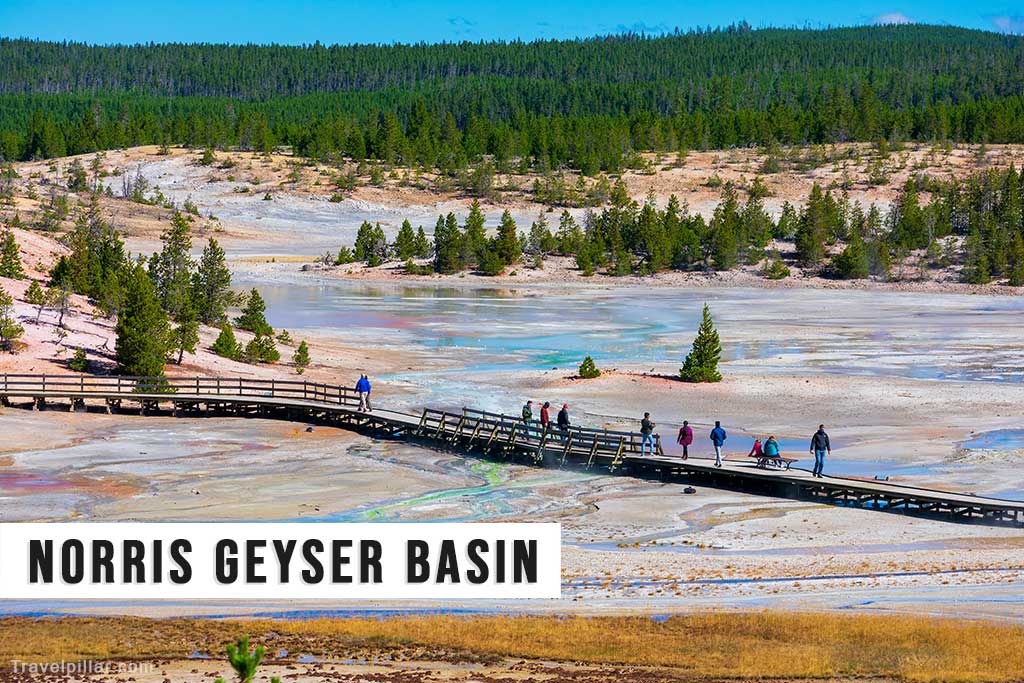
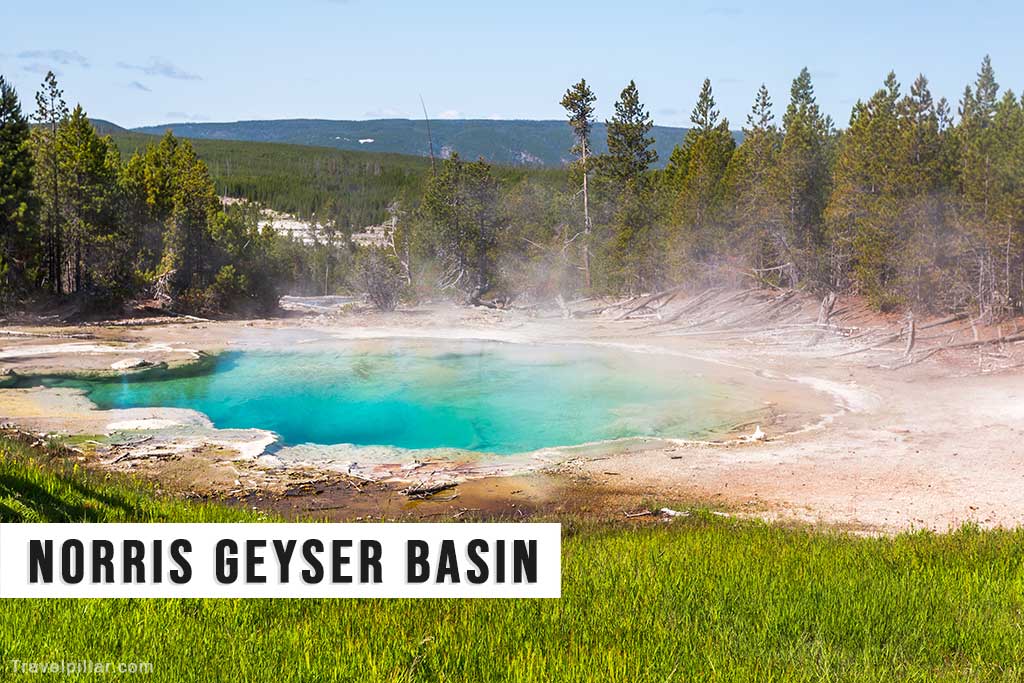
Back Basin is more forested and contains widely spaced geothermal features set among trees and hills. This section is home to Steamboat Geyser, the world’s tallest active geyser, capable of erupting to heights of over 300 feet (91 metres). Steamboat eruptions are irregular, occurring anywhere from days to years apart, but minor eruptions and frequent steam venting are common. Other notable features include Cistern Spring, Emerald Spring, and Echinus Geyser, the latter notable for its acidic water.
The basin’s high temperatures and chemical composition create an environment that is constantly changing. New vents can open, old ones can become inactive, and features can shift in appearance over short periods. The thermal ground is unstable, and visitors are required to remain on designated boardwalks for safety and preservation.
Norris Geyser Basin is also an important location for scientific research, particularly in studying extremophiles – microorganisms that thrive in extreme heat and acidity. These organisms contribute to the basin’s range of colours and offer insights into the potential for life in similar environments elsewhere in the solar system.
Accessible from late spring through autumn, with limited winter access via guided tours, Norris Geyser Basin provides an opportunity to observe Yellowstone’s most intense geothermal activity. Its combination of geological variety, scientific interest, and unique thermal landscapes makes it a significant destination within the park.
Google map 4.8/5