

Old Faithful is the most famous geyser in Yellowstone National Park and one of the most predictable geothermal features in the world. Located in the Upper Geyser Basin, it erupts at regular intervals, typically every 90 minutes, with variations ranging from 60 to 110 minutes. Each eruption lasts between 1.5 and 5 minutes, ejecting 3,700 to 8,400 gallons (14,000 to 32,000 litres) of water to heights between 106 and 184 feet (32 to 56 metres). The water temperature at the vent is approximately 204°F (95.6°C).
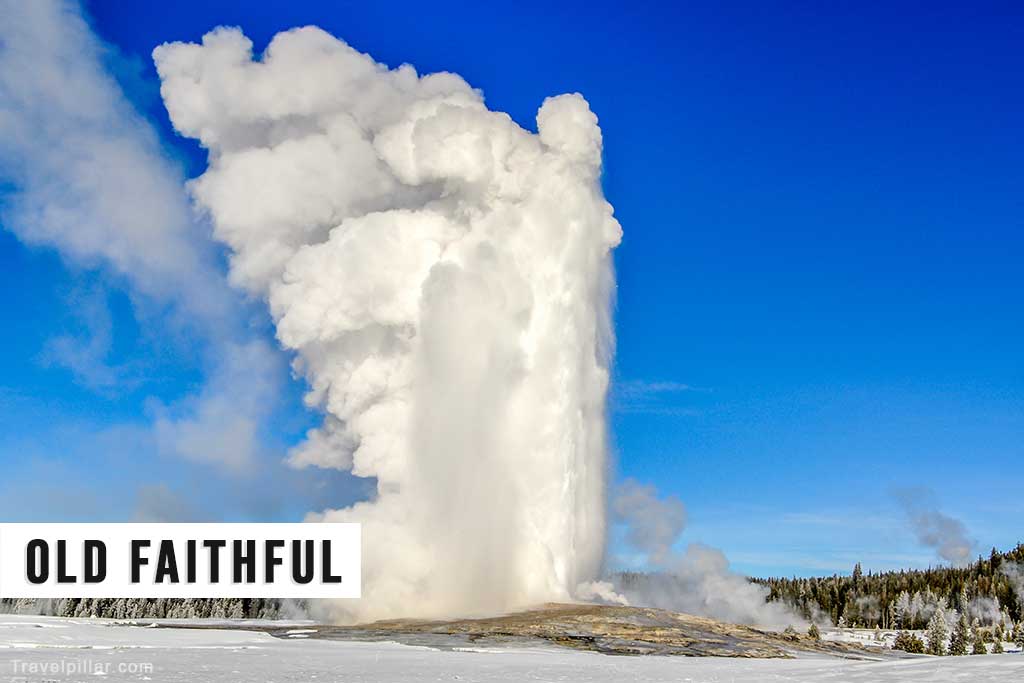
The geyser was named in 1870 by members of the Washburn–Langford–Doane Expedition, who were impressed by the regularity and reliability of its eruptions. Since that time, Old Faithful has remained a central symbol of the park, attracting visitors year-round. Eruption predictions are made by park rangers and posted at the nearby visitor centre, allowing visitors to plan their viewing.
Old Faithful is part of a complex hydrothermal system powered by the Yellowstone Caldera’s underlying magma chamber. Water from rain and snowmelt seeps into the ground, is heated by geothermal energy, and builds up pressure in underground chambers. When the pressure exceeds a critical point, it forces the water upward in a steam-driven eruption. The regularity of Old Faithful’s activity is due to the relatively simple structure of its underground plumbing compared to other geysers in the park.
The surrounding area includes boardwalks and viewing areas that allow visitors to watch eruptions safely. The Old Faithful Visitor Education Center offers exhibits on Yellowstone’s geothermal features, geology, and wildlife. Nearby, the historic Old Faithful Inn, built in 1904, is one of the largest log structures in the world and a significant example of National Park Service rustic architecture.
Old Faithful is accessible throughout the year, with peak visitation in summer. Winter visits, often combined with snowcoach or cross-country ski tours, provide a different viewing experience. The geyser’s combination of accessibility, reliability, and dramatic eruptions makes it one of the most visited and photographed attractions in Yellowstone National Park, as well as an important location for studying geothermal processes in an active volcanic environment.
Google map 4.7/5