
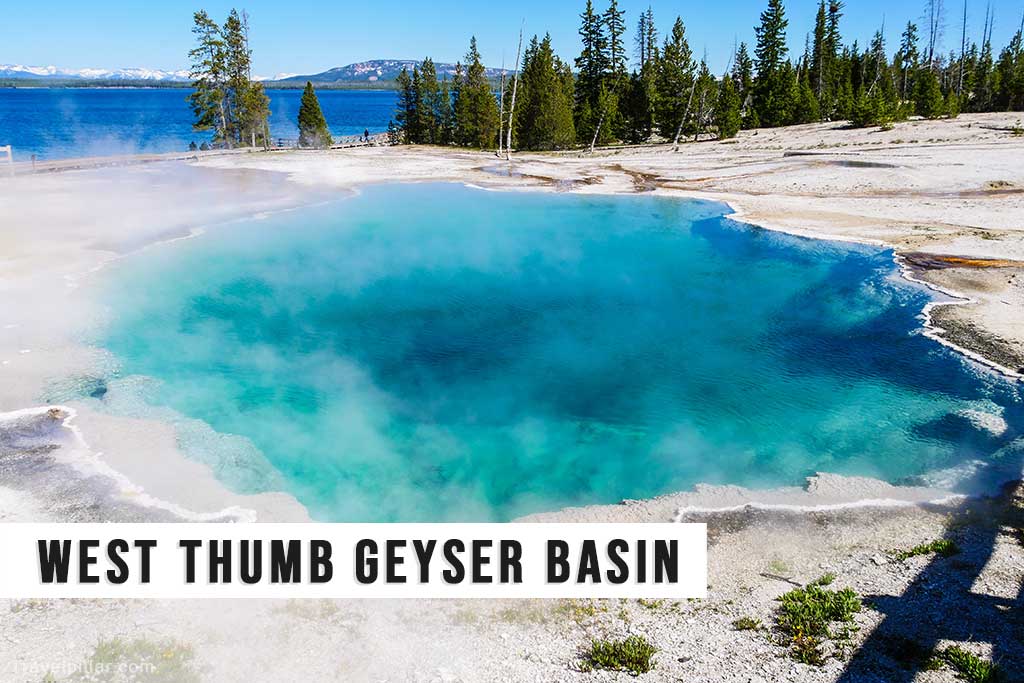
West Thumb Geyser Basin is a hydrothermal area located along the western shore of Yellowstone Lake in Yellowstone National Park. It is the largest geyser basin on the lake and contains a variety of geothermal features, including hot springs, geysers, mud pots, and fumaroles. The basin lies within the West Thumb caldera, a smaller volcanic depression formed by an eruption approximately 150,000 years ago. This caldera is part of the larger Yellowstone volcanic system, and the geothermal activity is fueled by heat from the underlying magma chamber.

Covering a compact area, West Thumb Geyser Basin can be explored via a network of boardwalks and paved paths totaling about half a mile (0.8 kilometres). These routes provide safe access to view hydrothermal features both on land and extending beneath the surface of Yellowstone Lake. One of the basin’s notable features is Fishing Cone, a hot spring located in the shallow waters of the lake. In the late 19th and early 20th centuries, anglers reportedly cooked their catch in the cone’s boiling water immediately after pulling it from the lake, though such practices are now prohibited for safety and conservation reasons.

Other significant features include Abyss Pool, one of the park’s deepest hot springs at over 50 feet (15 metres) deep, known for its clear blue water and occasional eruptions. Lakeshore Geyser and other subaqueous vents release steam and bubbles directly into Yellowstone Lake, illustrating the interaction between geothermal and aquatic environments.
The basin’s location on the shore provides expansive views across Yellowstone Lake to the Absaroka Range. The combination of steaming vents and the lake’s cold waters creates striking visual contrasts, particularly in winter when snow and ice frame the thermal features.
West Thumb Geyser Basin is accessible by car year-round, though services in the immediate area are limited outside the summer season. Interpretive signs along the boardwalks explain the geological history, hydrothermal processes, and ecological significance of the basin. Its blend of varied geothermal features, scenic lakefront setting, and relatively compact layout make West Thumb a notable stop for understanding both Yellowstone’s volcanic origins and its diverse hydrothermal activity.
Google map (West Thumb Geyser Basin) 4.9/5
Google map (Black Pool) 4.8/5