
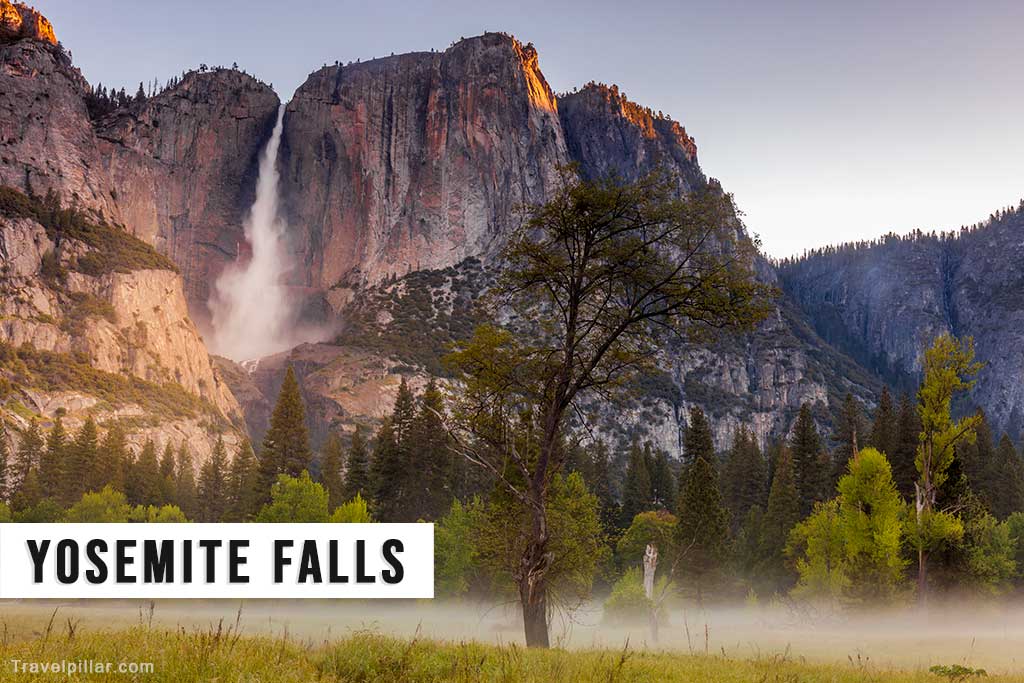
Yosemite Falls is one of the most prominent natural features in Yosemite National Park and is among the tallest waterfalls in North America, with a total drop of 2,425 feet (739 metres). It is composed of three distinct sections: Upper Yosemite Fall, the Middle Cascades, and Lower Yosemite Fall. The Upper Fall accounts for the majority of the height at 1,430 feet (436 metres), followed by the Middle Cascades at 675 feet (206 metres) and the Lower Fall at 320 feet (98 metres). Together, they create a continuous vertical drop that is visible from numerous points within Yosemite Valley.
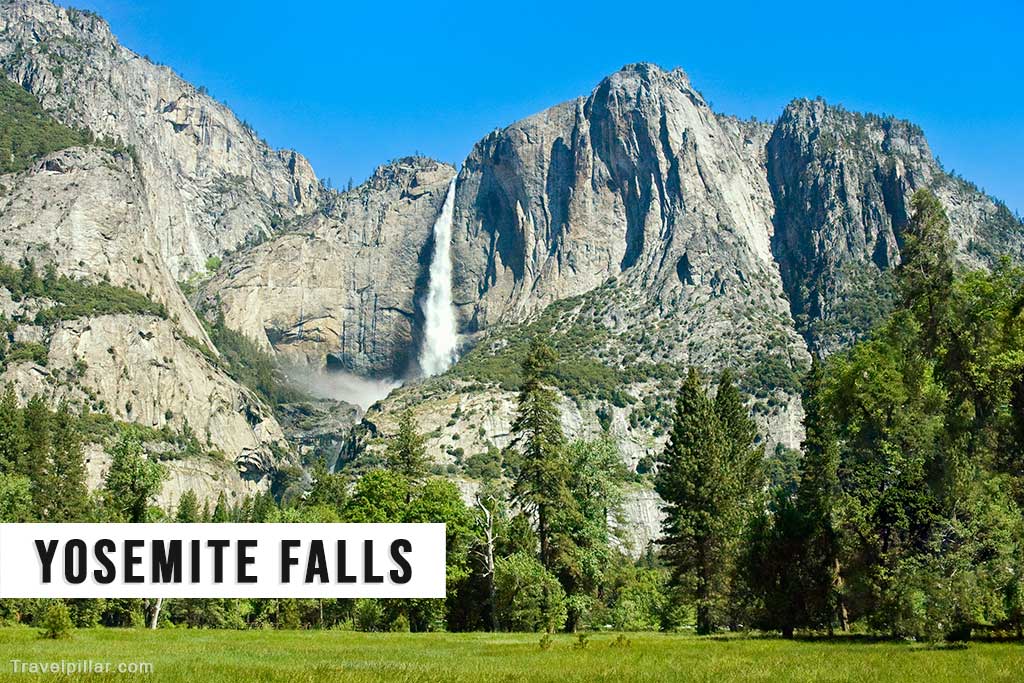
The falls are fed primarily by snowmelt, and their flow varies significantly with the seasons. Peak flow typically occurs in late spring, particularly in May, when melting snow from the Sierra Nevada is at its highest. By late summer, the volume of water can diminish considerably, and in some years, the falls may dry up entirely until the next snowmelt season. This seasonal variability is a notable characteristic and affects both the visual impact and the surrounding mist conditions.
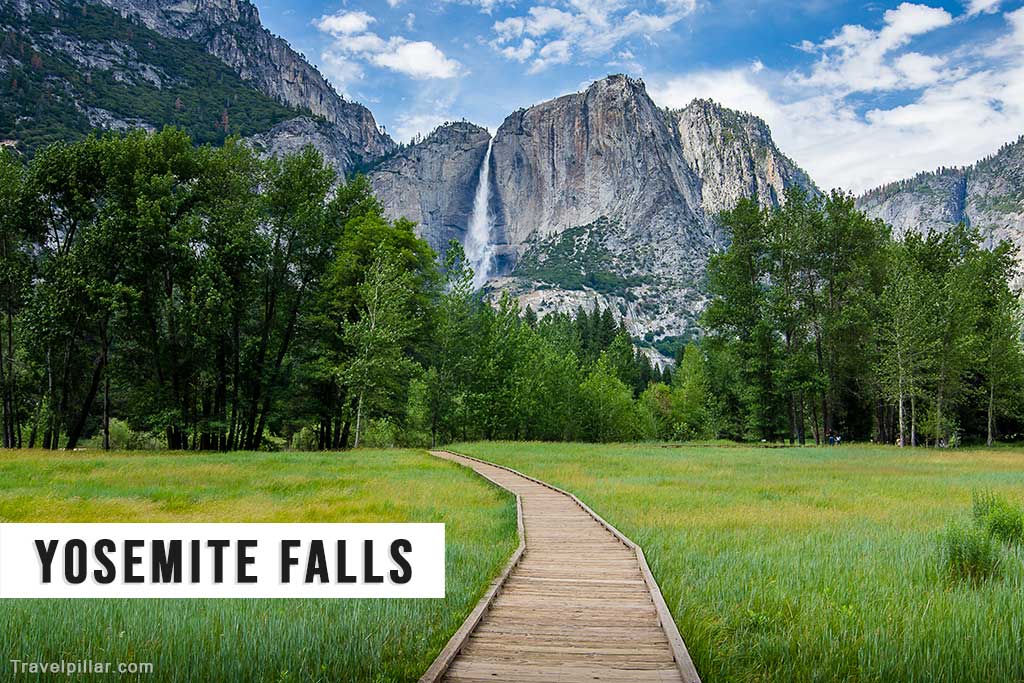
Visitors can access various viewpoints of Yosemite Falls. The Lower Yosemite Fall Trail is a short, accessible loop of approximately one mile (1.6 kilometres) that provides close-up views of the base. For more extensive views and a challenging hike, the Yosemite Falls Trail ascends 3.6 miles (5.8 kilometres) to the top of Upper Yosemite Fall, gaining over 2,700 feet (823 metres) in elevation. This trail offers multiple vantage points over Yosemite Valley, including Columbia Rock, before reaching the summit overlook.
From a geological perspective, the falls are the result of glacial activity that carved Yosemite Valley and left hanging tributary valleys whose streams now drop sharply to meet the main valley floor. The surrounding rock formations, composed primarily of granite, create a steep and resistant channel for the watercourse.
Yosemite Falls holds cultural significance for the Ahwahneechee people, who inhabited the Yosemite Valley for centuries. It remains one of the most visited and photographed features in the park due to its height, accessibility, and visibility from many areas within the valley. Its prominence makes it a central element of Yosemite’s natural landscape and visitor experience.
Google map 4.9/5
Google map (Yosemite Falls Trailhead) 4.9/5