
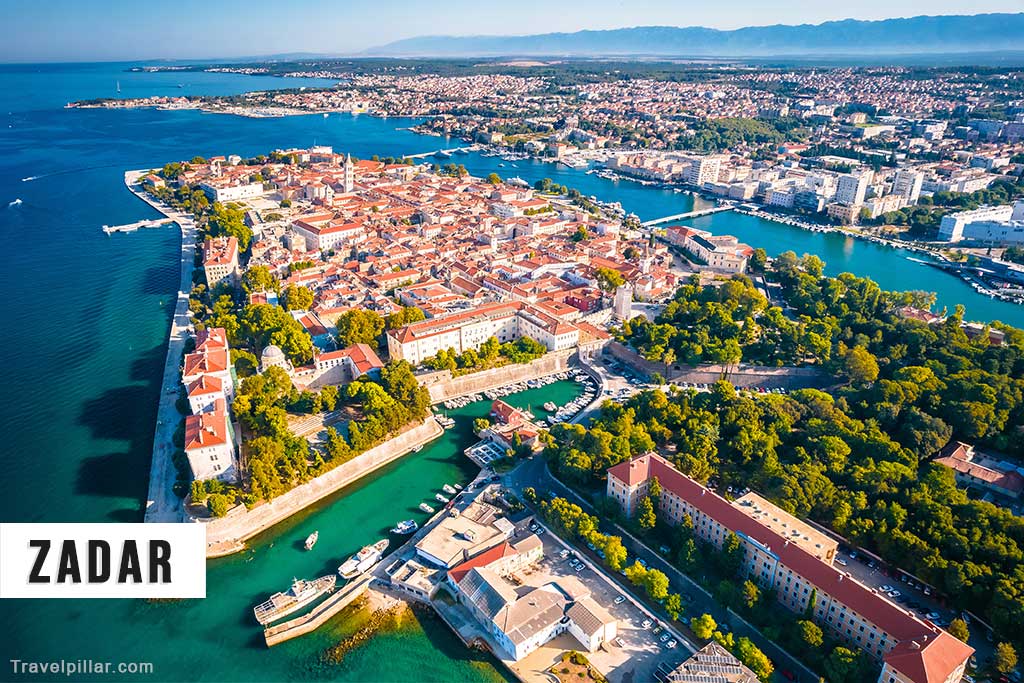
Zadar is a coastal city in northern Dalmatia, Croatia, with a history spanning more than two millennia. Originally a settlement of the Illyrians, it later became a Roman colony and an important centre on the eastern Adriatic. Over centuries, it came under Byzantine, Venetian, and Austro-Hungarian rule, each leaving its mark on the city’s architecture and urban development. Today, Zadar combines ancient heritage with modern cultural features.
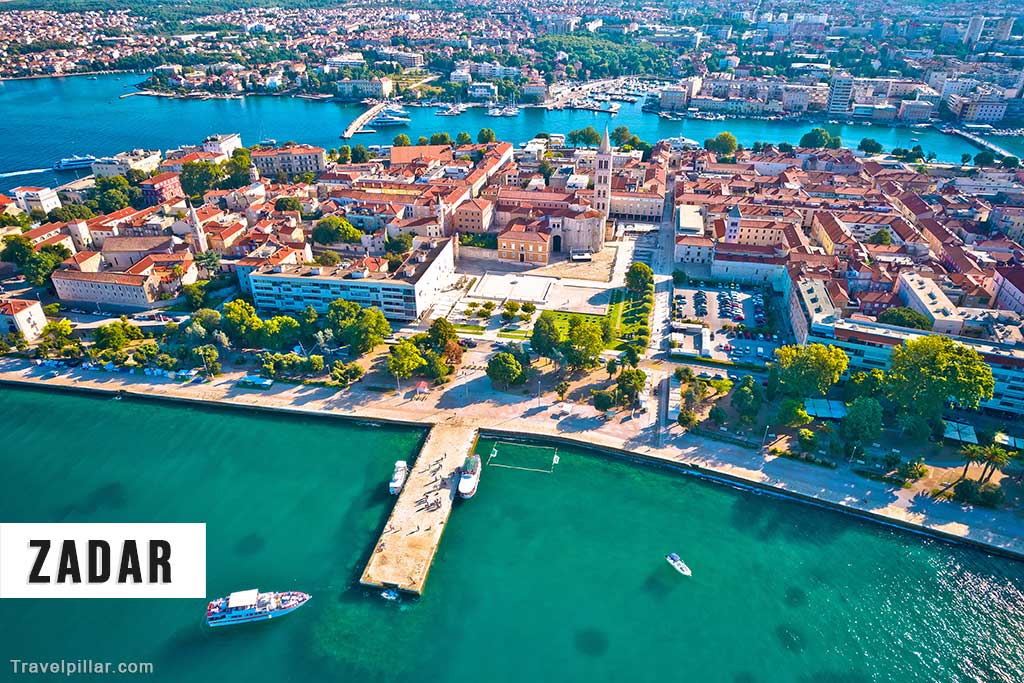
The old town occupies a peninsula and is surrounded by historic fortifications, some of which form part of the UNESCO World Heritage listing of Venetian defences. Roman remains include a forum, columns, and fragments of temples, while medieval buildings illustrate the city’s development through the Middle Ages. Narrow streets, squares, and stone houses preserve Zadar’s historic urban character.
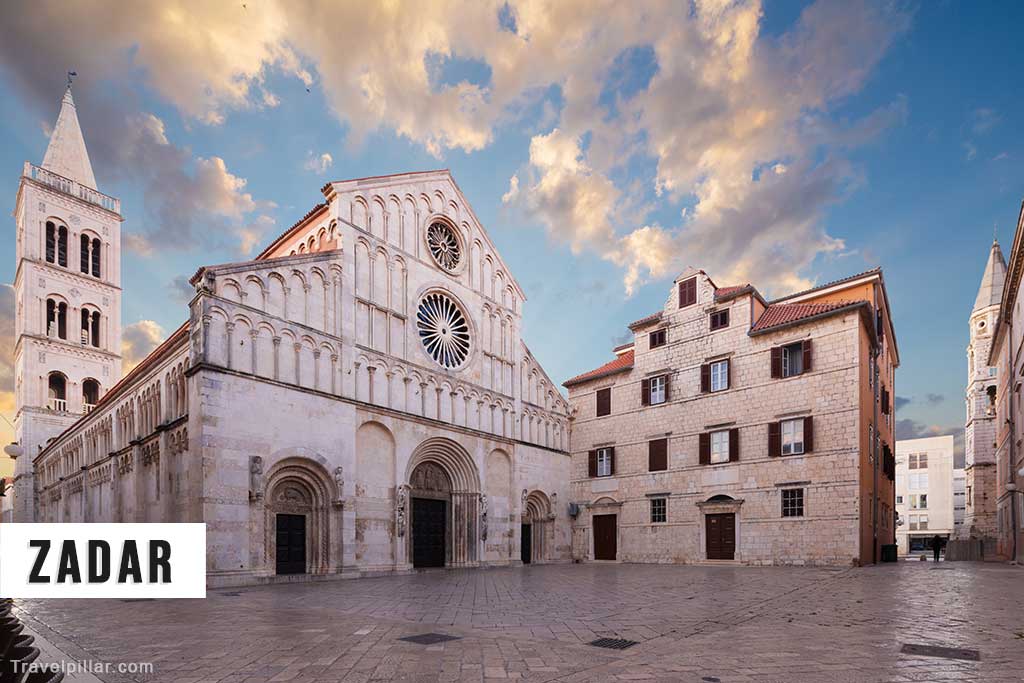
One of the city’s most important monuments is the Church of St. Donatus, a circular structure from the 9th century built on the remains of the Roman forum. It is one of the best-preserved examples of early medieval architecture in Croatia. The nearby Cathedral of St. Anastasia, dating from the 12th and 13th centuries, is the largest church in Dalmatia and a significant example of Romanesque design.
Zadar also highlights the interaction of old and new. The Sea Organ, completed in 2005, uses underwater pipes and the motion of waves to produce sound, while the nearby Greeting to the Sun installation features solar-powered lights embedded in the pavement. Together, they illustrate contemporary creativity within the historic setting of the Adriatic coast.
The city’s museums and collections include the Archaeological Museum, founded in the 19th century, and the Museum of Ancient Glass, which displays Roman artefacts. Zadar’s role as a cultural and educational centre continues with festivals, concerts, and academic institutions. Its location along the Adriatic ensures access to nearby islands and national parks, broadening its appeal for visitors.
Zadar’s mixture of Roman ruins, medieval churches, Venetian fortifications, and modern art installations makes it a distinctive destination in Dalmatia. It reflects both historical continuity and cultural innovation, ensuring its position as one of Croatia’s most significant coastal cities.
Official tourism website: https://zadar.travel/