
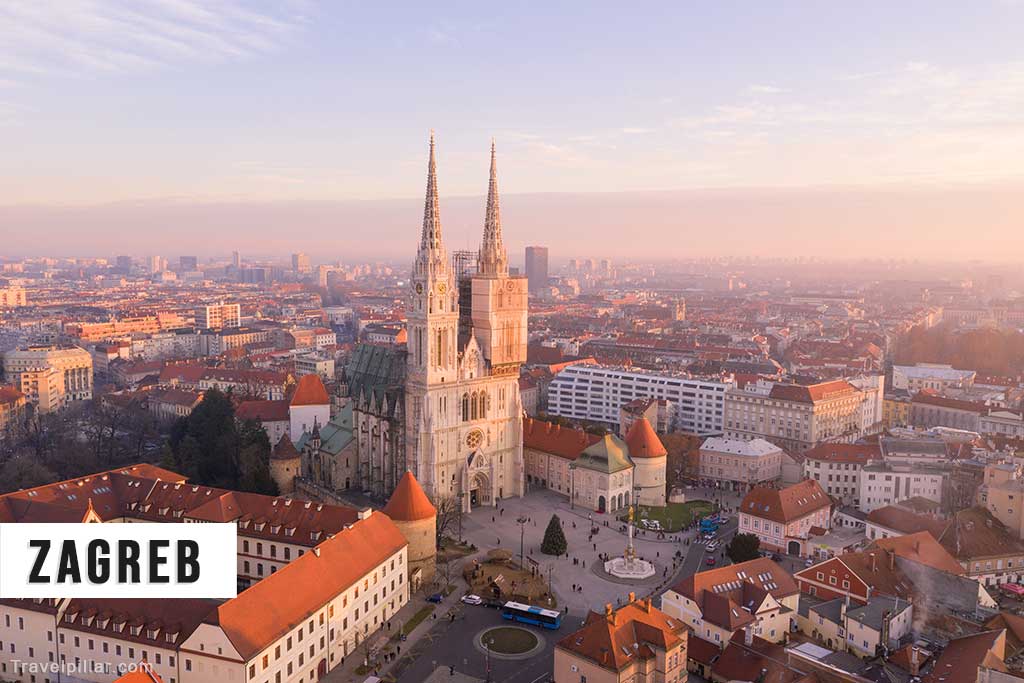
Zagreb, the capital of Croatia, is located on the southern slopes of Mount Medvednica along the River Sava. As the country’s largest city, it serves as its political, cultural, and economic centre. Its history stretches back to the Middle Ages, when the settlements of Gradec and Kaptol developed on neighbouring hills. These two centres, one secular and the other ecclesiastical, eventually merged, forming the historic nucleus of modern Zagreb.
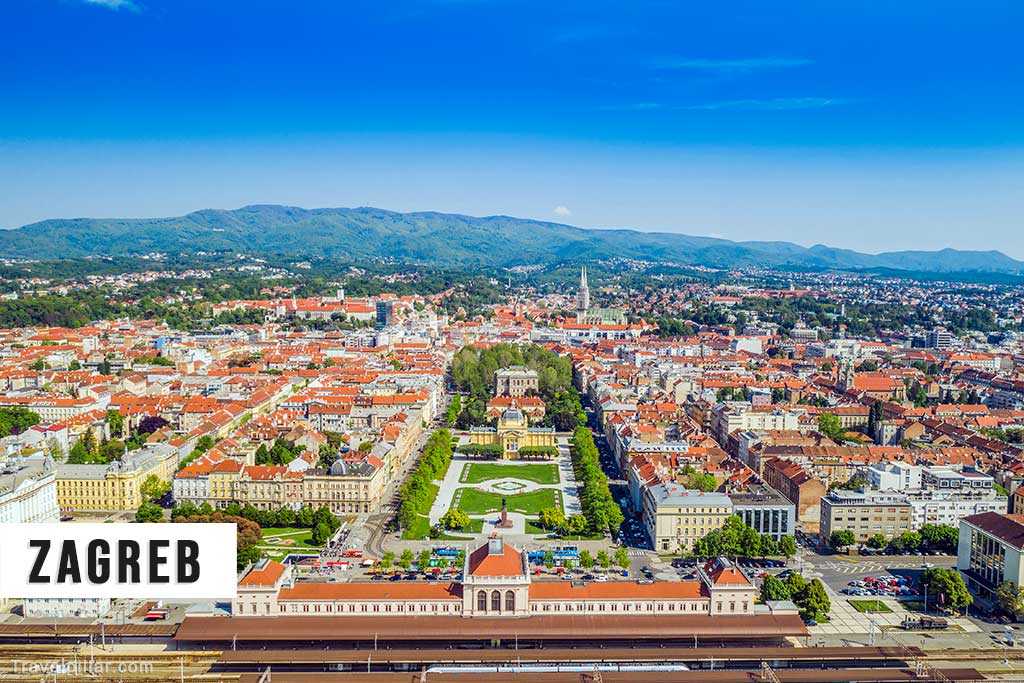
The Upper Town, or Gornji Grad, retains a medieval character with narrow streets, churches, and civic buildings. Landmarks include St. Mark’s Church, with its tiled roof, and the Lotrščak Tower, which still fires a cannon daily at noon. The area also houses museums, galleries, and the seat of government. The Lower Town, or Donji Grad, developed in the 19th century, and is characterised by wide boulevards, squares, and public parks. Ban Jelačić Square forms the central point of the modern city.
Zagreb is known for its cultural institutions and events. The Croatian National Theatre, opened in 1895, remains a leading venue for opera, ballet, and drama. Museums such as the Archaeological Museum and the Museum of Broken Relationships illustrate both history and contemporary themes. Mirogoj Cemetery, designed in the late 19th century, is notable for its arcades and monuments, making it both a functioning burial ground and a landscaped memorial.
Public spaces contribute significantly to Zagreb’s character. Maksimir Park, established in the late 18th century, offers extensive green areas, lakes, and a zoo. Dolac Market, located near the main square, continues a long tradition of regional trade, with farmers selling fresh produce and goods daily. Tkalčićeva Street, once a watercourse, is now a lively pedestrian area lined with cafes and restaurants, illustrating the blending of historic and modern urban life.
Zagreb’s position as a Central European capital with Mediterranean influences makes it distinctive within the Balkans. Its layered history, architectural variety, and cultural life ensure its status as both a national centre and an increasingly popular destination for international visitors.
Official tourism website: https://www.infozagreb.hr/en/