
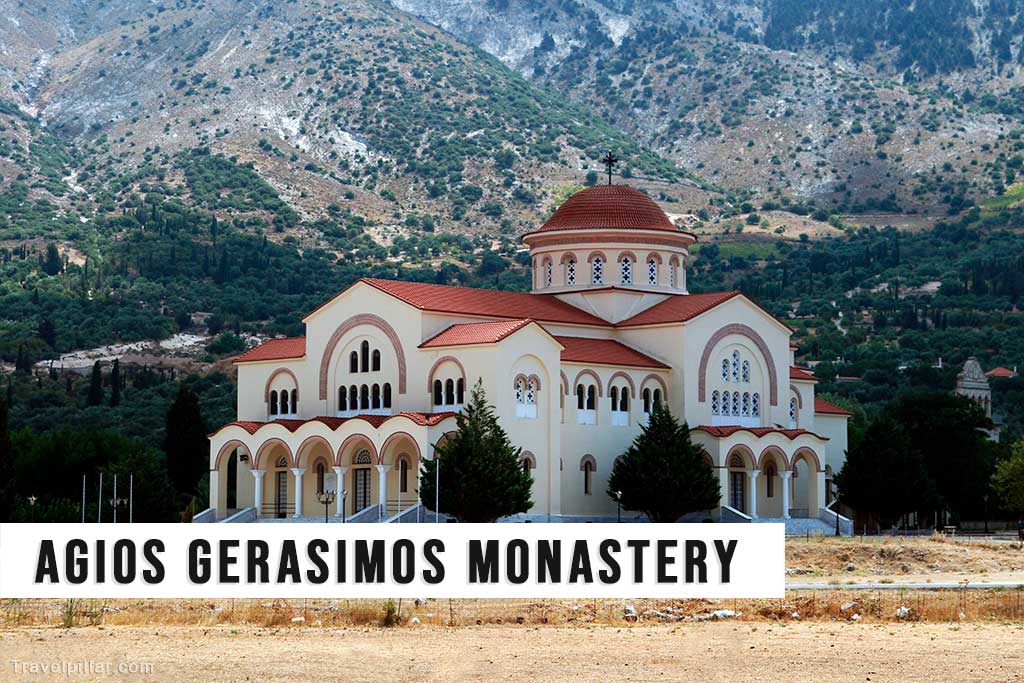
The Agios Gerasimos Monastery, located in the Omala Valley of Kefalonia, Greece, is one of the island’s most important religious sites. Dedicated to Saint Gerasimos, the patron saint of Kefalonia, the monastery holds significant spiritual and historical value. Saint Gerasimos, a 16th-century Orthodox monk, is revered for his healing powers and for the monastic community he established in the area.
The monastery complex consists of two main sections. The original, smaller church was built by Saint Gerasimos himself, while the larger church was constructed in the 20th century to accommodate the growing number of pilgrims. The monastery grounds also feature an underground cave where Saint Gerasimos lived and practiced asceticism for many years. Pilgrims can visit this cave, descending through a narrow passage to experience the saint’s humble living quarters.
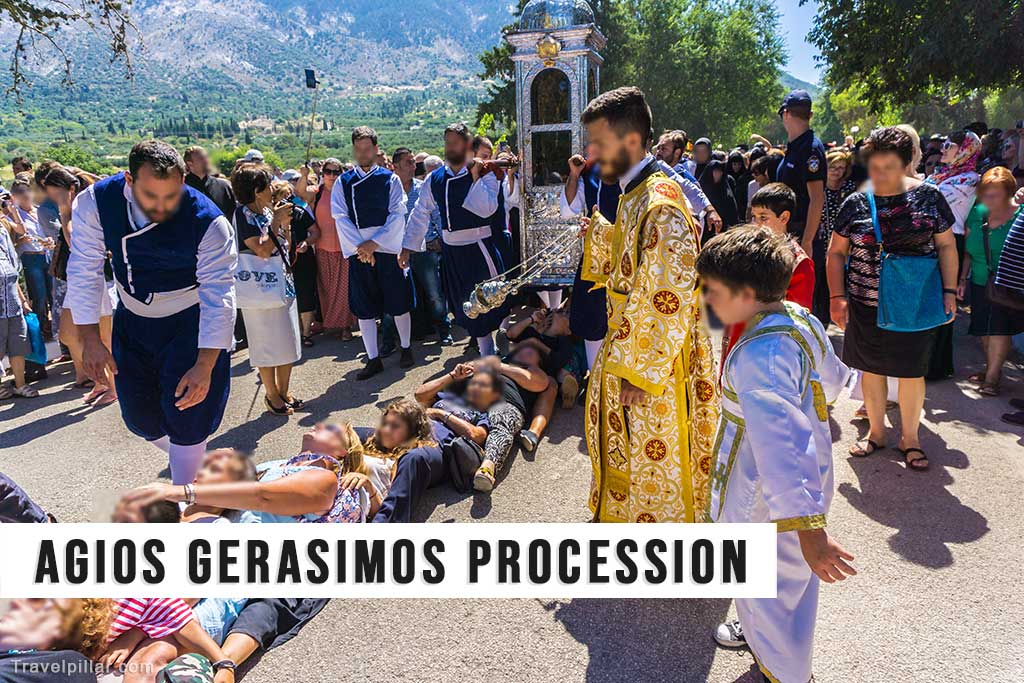
Saint Gerasimos’ remains are housed in a silver reliquary within the larger church, and his feast days are celebrated on August 16 and October 20, attracting visitors and worshippers from across Greece. These celebrations feature processions in which the saint’s relics are paraded through the monastery grounds, reinforcing his importance to the local community.
The Agios Gerasimos Monastery is surrounded by vineyards, as Saint Gerasimos is also associated with viticulture. The area produces Robola wine, a well-known product of Kefalonia, adding another layer of significance to the monastery’s setting.
Visitors to the monastery can explore its peaceful surroundings, the churches, and the saint’s cave. The religious and cultural importance of the site, combined with its serene environment, makes it a key destination for both pilgrims and tourists. The Agios Gerasimos Monastery is easily accessible from the island’s capital, Argostoli, and remains a central part of Kefalonia’s religious heritage.
Google map 4.7/5