

Ludlow Castle, located in Shropshire, England, near the border with Wales, is one of the most complete and historically significant medieval castles in England. Founded in the late 11th century by the Norman nobleman Walter de Lacy, it was strategically positioned to control the Welsh Marches. Over the centuries, Ludlow developed from a military stronghold into a centre of political and administrative power, closely connected to the governance of the region.
During the Middle Ages, the castle played a prominent role in border conflicts and later became a residence for the powerful Mortimer family. In the 15th century, it passed to Richard, Duke of York, and became associated with the Wars of the Roses. Ludlow gained national importance when it served as the seat of the Council of the Marches, the governing body overseeing Wales and the border counties. This role continued well into the Tudor and early Stuart periods.
The castle also has a strong connection to the Tudor dynasty. Prince Arthur, eldest son of Henry VII, lived at Ludlow with his bride, Catherine of Aragon, and died there in 1502. [Catherine later married Arthur’s younger brother, Henry VIII, in 1509, becoming Queen of England. This second marriage, and Henry VIII’s later desire to annul it, played a central role in the English Reformation. Later, the young Prince Edward, who became King Edward VI, also resided at the castle. These associations underline Ludlow’s status as both a royal residence and a centre of government.
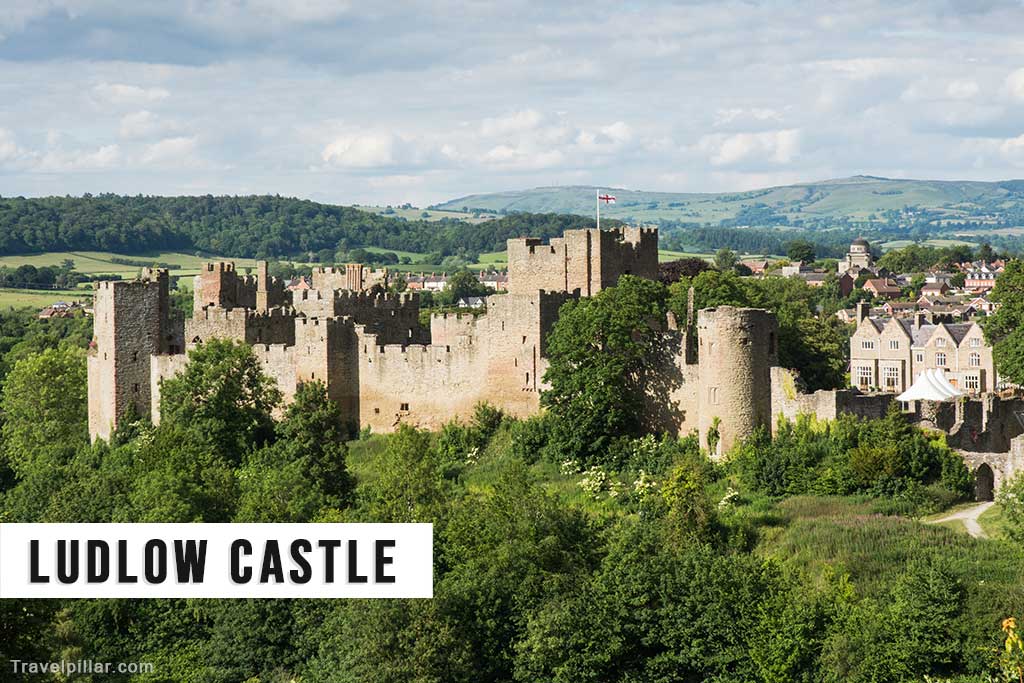
Architecturally, Ludlow Castle reflects its long history. The massive Norman keep and curtain walls dominate the site, while later additions include a great hall, royal apartments, and service buildings. Despite partial decline after the 17th century, substantial remains survive, providing a clear impression of its scale and development. The setting on a promontory above the River Teme enhances its defensive and visual impact.
Today, Ludlow Castle is a major heritage attraction. Visitors can explore the extensive ruins, including the keep, chapel, and towers, and learn about its history through exhibitions. The castle grounds also host cultural events, such as the Ludlow Food Festival and theatre performances, which contribute to its role as both a historical site and a community venue. It remains an important example of a medieval castle adapted over time for political and domestic purposes.
Official website: https://www.ludlowcastle.com
Google map 4.6/5