

St. Mark’s Basilica, or Basilica di San Marco, is one of Venice‘s most iconic and historically significant religious sites. Located in St. Mark’s Square, the basilica serves as the cathedral of the Roman Catholic Archdiocese of Venice and is the most famous church in the city. Its construction began in 828 AD to house the relics of St. Mark the Evangelist, which, according to tradition, were brought to Venice from Alexandria by two Venetian merchants.
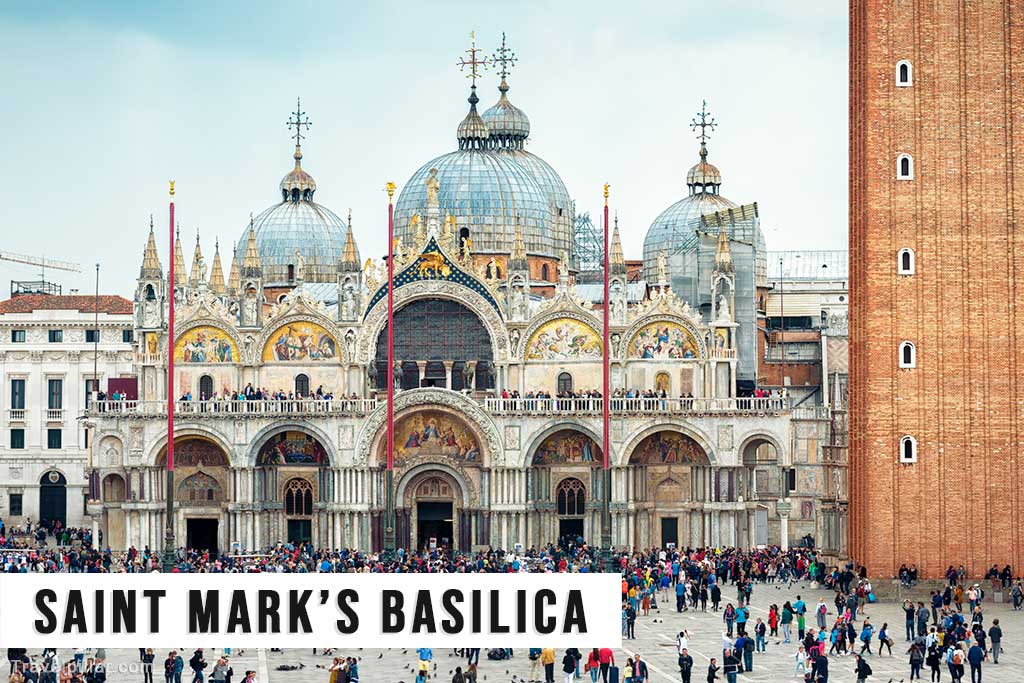
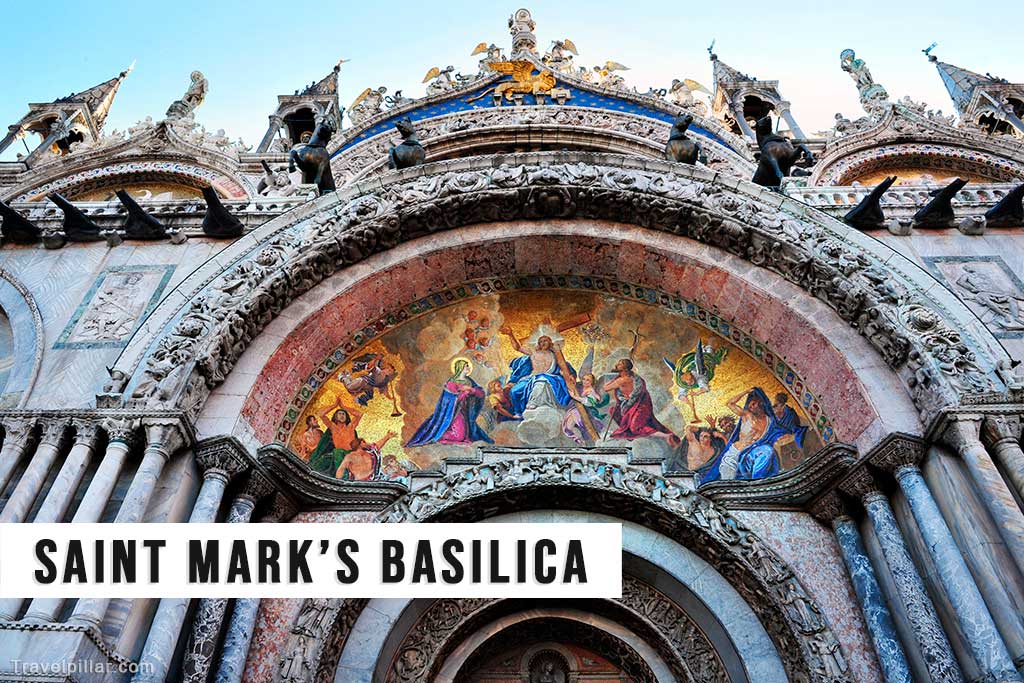
The basilica’s architectural style is predominantly Byzantine, reflecting Venice’s historical connections with the Eastern Roman Empire. Over the centuries, the basilica has been expanded and embellished, incorporating elements of Romanesque and Gothic architecture. The structure is renowned for its opulent design, featuring a blend of Eastern and Western influences.
The exterior of St. Mark’s Basilica is adorned with intricate mosaics, marble columns, and sculptures. The façade is divided into three levels, with five large domes rising above, each covered in lead and crowned with gilded crosses. The central portal is decorated with mosaics that depict various scenes from the life of St. Mark.
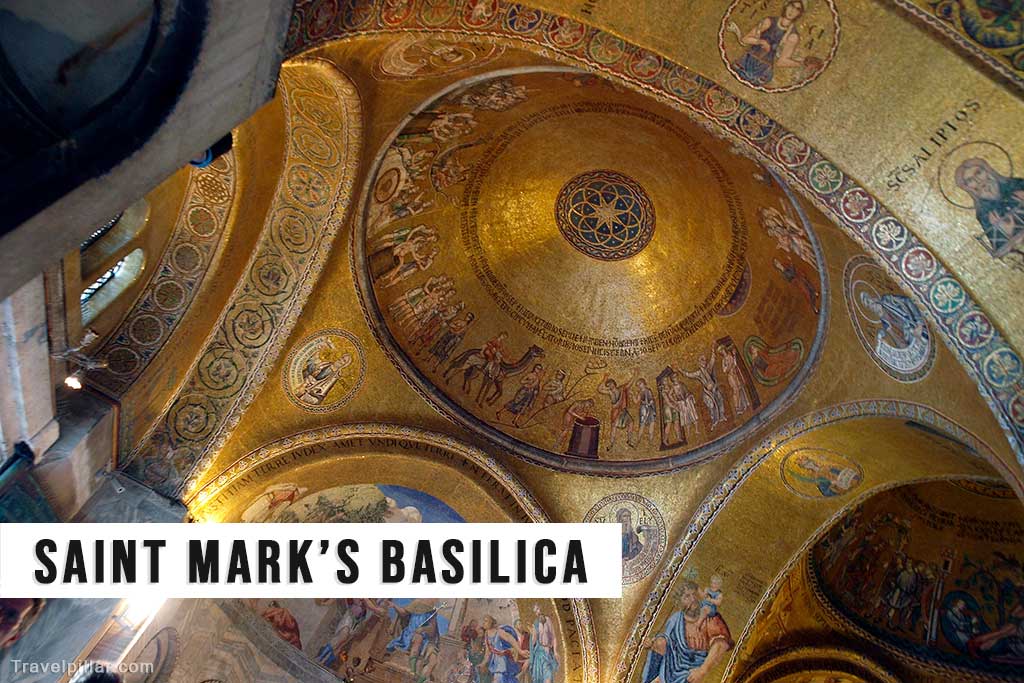
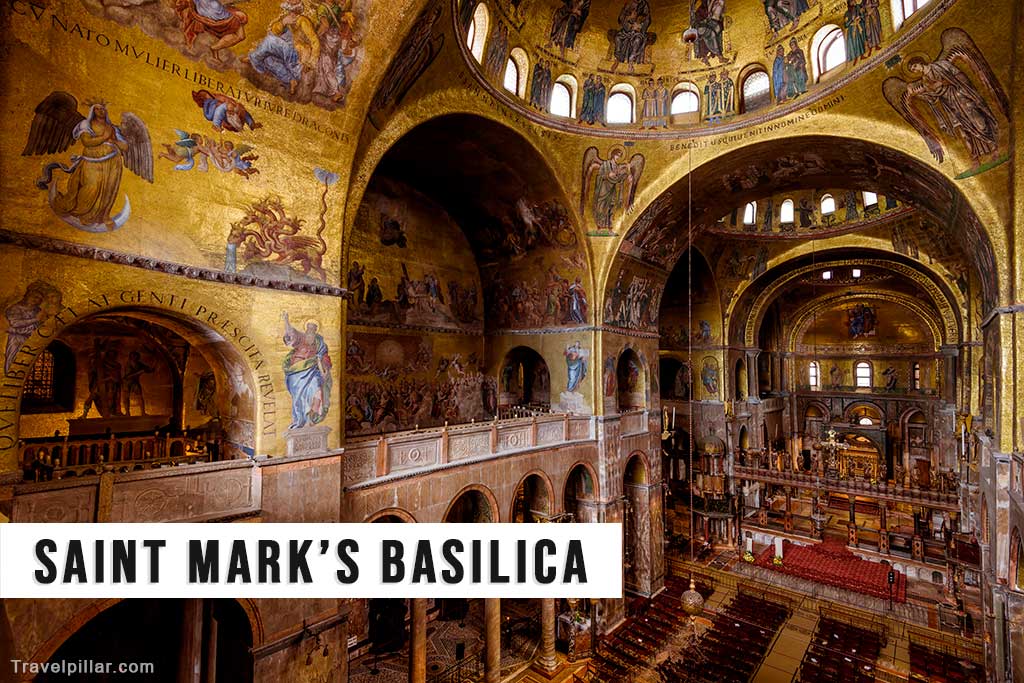
The basilica’s interior is equally impressive, with extensive mosaics covering the walls, ceilings, and domes, most of which date back to the 11th and 12th centuries. These mosaics, created with gold leaf and colored glass, illustrate biblical scenes and reflect the basilica’s Byzantine heritage. One of the most significant features inside is the Pala d’Oro, a golden altarpiece encrusted with precious stones, which is displayed behind the high altar.
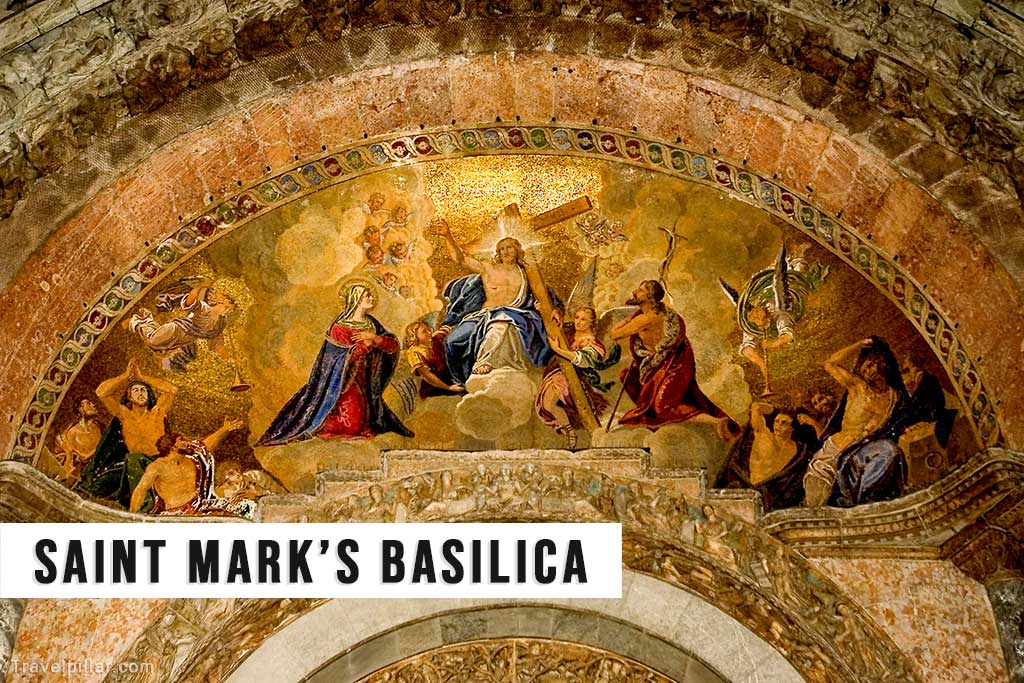
St. Mark’s Basilica also houses numerous relics, including the body of St. Mark, which is interred in a crypt beneath the high altar. (for more info on St. Mark see bottom of page).
Another significant relic in the basilica is a fragment of the True Cross, the cross upon which Jesus Christ was crucified. This relic is kept in the Treasury.
The basilica is open to the public, with guided tours available that provide detailed insights into its history, art, and architecture. Access to some areas, such as the Treasury and the Museum of St. Mark, may require a separate ticket.
Official website:
https://www.basilicasanmarco.it/?lang=en
Google map 4.7/5
St. Mark the Evangelist
St. Mark the Evangelist is a key figure in Christian history, traditionally recognized as the author of the Gospel of Mark, the second book of the New Testament. Though not one of the original twelve apostles, St. Mark was closely associated with the apostles Peter and Paul. He is believed to have been a disciple and interpreter for Peter, with his Gospel reflecting Peter’s teachings and eyewitness accounts.
St. Mark played a significant role in the early Church, particularly in Alexandria, Egypt, where he is credited with founding the Christian community. He is venerated as the first bishop of Alexandria and is considered a martyr, having died for his faith around 68 AD.
St. Mark’s relics were later brought to Venice, where they became central to the city’s religious identity. St. Mark is the patron saint of Venice, and his symbol, the winged lion, is a prominent emblem of the city.