

St. Mark’s Square, or Piazza San Marco, is the most renowned public space in Venice, Italy, and serves as the city’s primary social, political, and religious center. The square has been the focal point of Venetian life since the 9th century, reflecting the city’s historical significance and architectural grandeur.
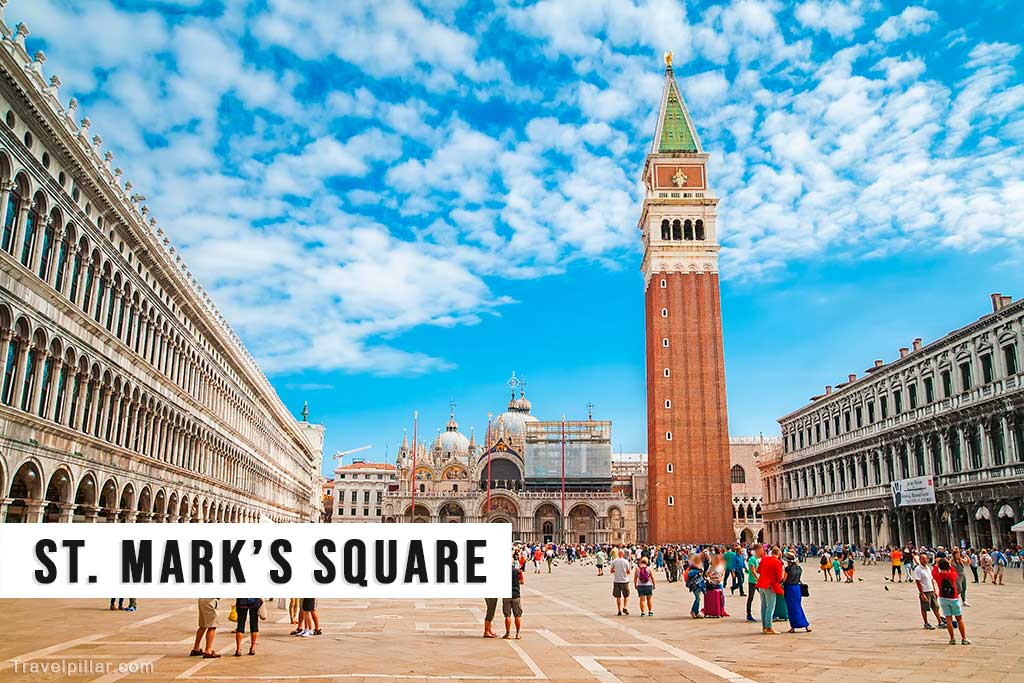
The square is dominated by several key structures that embody Venice’s rich cultural heritage. The most prominent of these is St. Mark’s Basilica. This basilica, with its blend of Byzantine, Romanesque, and Gothic architecture, is the most famous church in Venice and a significant religious site. Originally built in the 9th century to house the relics of St. Mark the Evangelist, the basilica has been rebuilt and expanded multiple times. Its opulent façade, adorned with mosaics and marble columns, reflects Venice’s history as a prosperous trading hub. The interior is equally impressive, with extensive gold mosaics depicting biblical scenes and the famous Pala d’Oro, a golden altarpiece studded with precious stones.
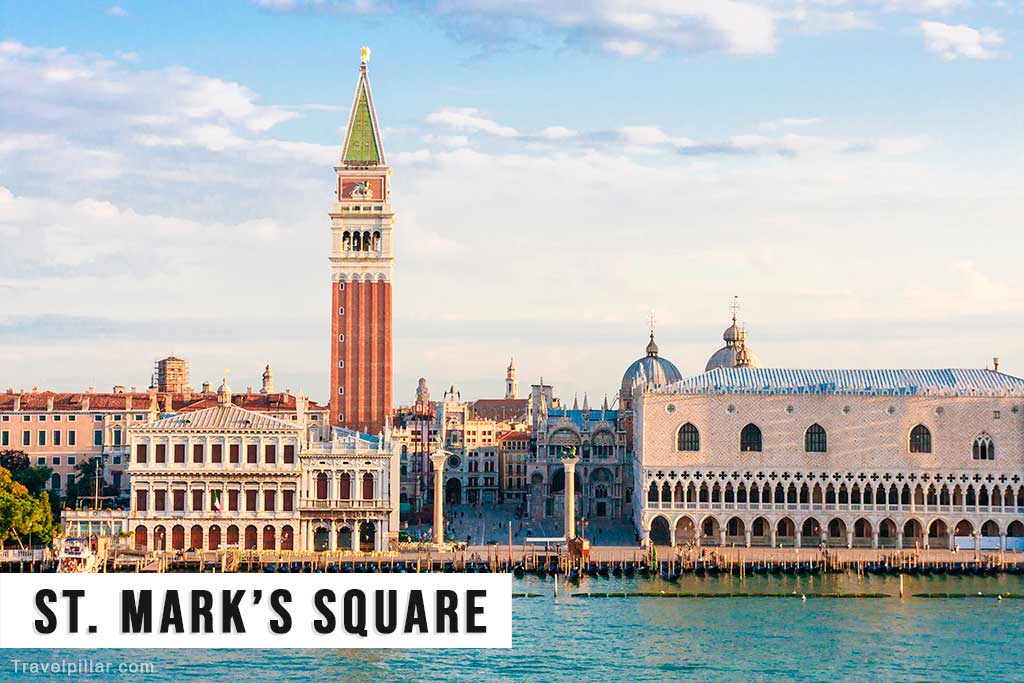
Next to the basilica stands the Campanile, the bell tower of St. Mark’s Basilica. The current structure, rebuilt in 1912 after the original tower collapsed in 1902, is 98.6 meters tall and provides panoramic views of Venice. Originally constructed as a lighthouse for sailors, the Campanile remains one of the city’s most recognizable landmarks.
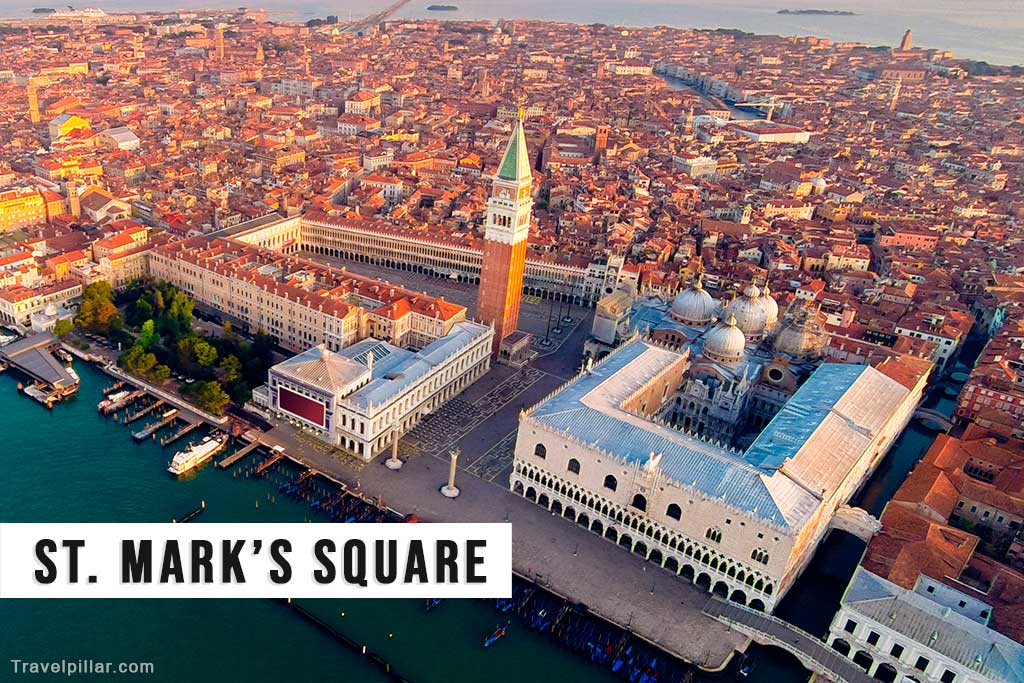
The Doge’s Palace, located adjacent to the basilica, is another significant highlight of St. Mark’s Square. This Gothic-style palace served as the residence of the Doge of Venice and the seat of the Venetian government. The palace’s interior includes the grand halls where the government met, as well as richly decorated rooms featuring works by Venetian masters. The Bridge of Sighs, which connects the palace to the former prison, is a notable feature, historically significant as the passage through which prisoners glimpsed their last view of Venice before incarceration.

The square is bordered on three sides by the Procuratie, a series of connected buildings that once housed the offices of the procurators of St. Mark. These buildings now house shops, cafes, and museums. Among these, Caffè Florian, established in 1720, is one of the oldest cafes in Europe and a symbol of Venetian culture.
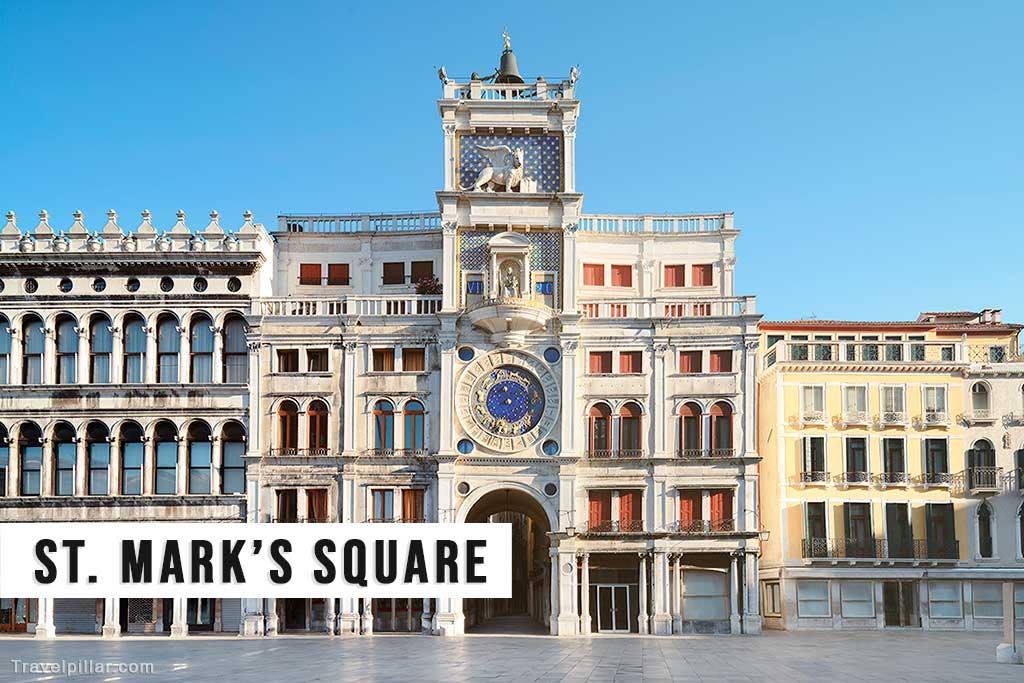
Another architectural feature of the square is the Torre dell’Orologio, a Renaissance clock tower featuring a large astronomical clock that displays the time, lunar phases, and zodiac signs. The clock is topped by two bronze figures, known as the “Moors,” who strike the hour.
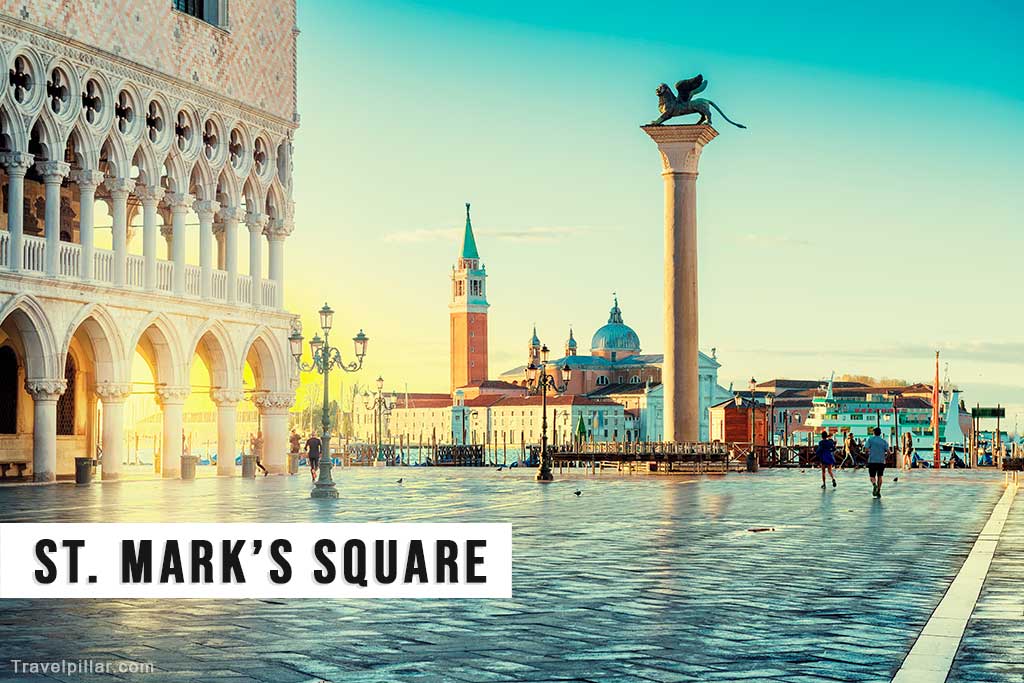
St. Mark’s Square is prone to flooding, particularly during the high tide season, a phenomenon known as “acqua alta.” Elevated walkways are often installed during these periods to allow continued access to the square.

At the southern end of St. Mark’s Square, near the entrance to the Piazzetta, stand the Two Columns of St. Mark and St. Theodore. These columns, erected in the 12th century, are topped with statues of Venice’s patron saints: St. Mark, represented by the winged lion, and St. Theodore, depicted slaying a dragon. These columns historically marked the entrance to the city from the sea and were the site of public executions during the Republic of Venice.
As a key destination in Venice, St. Mark’s Square is typically crowded with visitors, particularly during the peak tourist season. The square’s historical and architectural significance, combined with its role as a central gathering place, makes it a must-see for anyone visiting Venice.
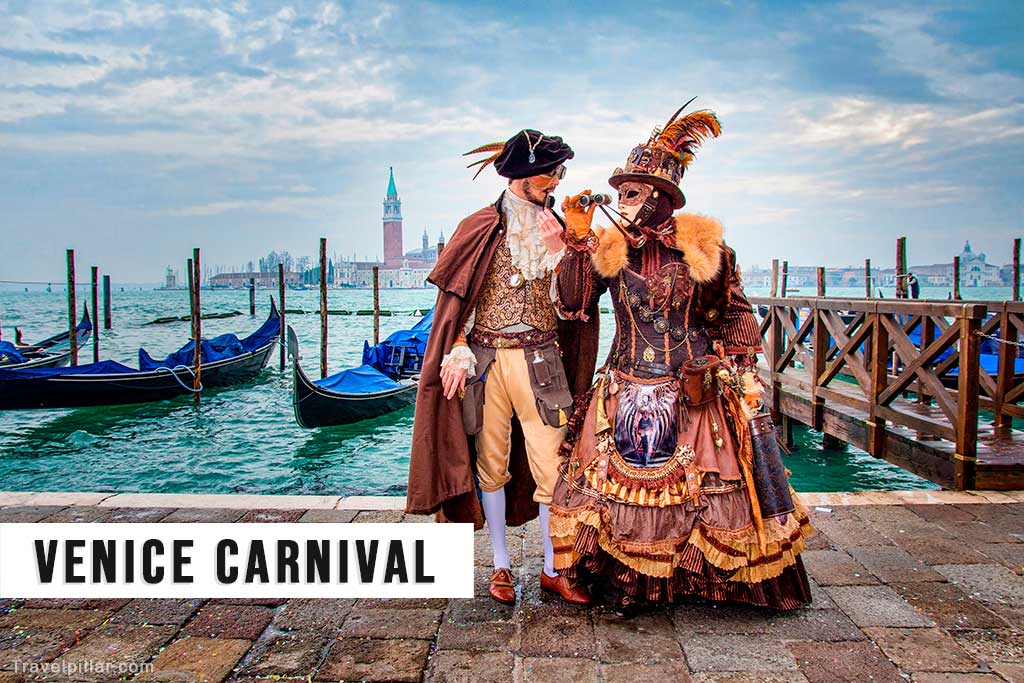
Throughout the year, St Mark’s Square hosts various cultural and religious events, including the Venice Carnival and the Feast of San Marco.
Official website:
https://www.basilicasanmarco.it/?lang=en
Google map 4.7/5