

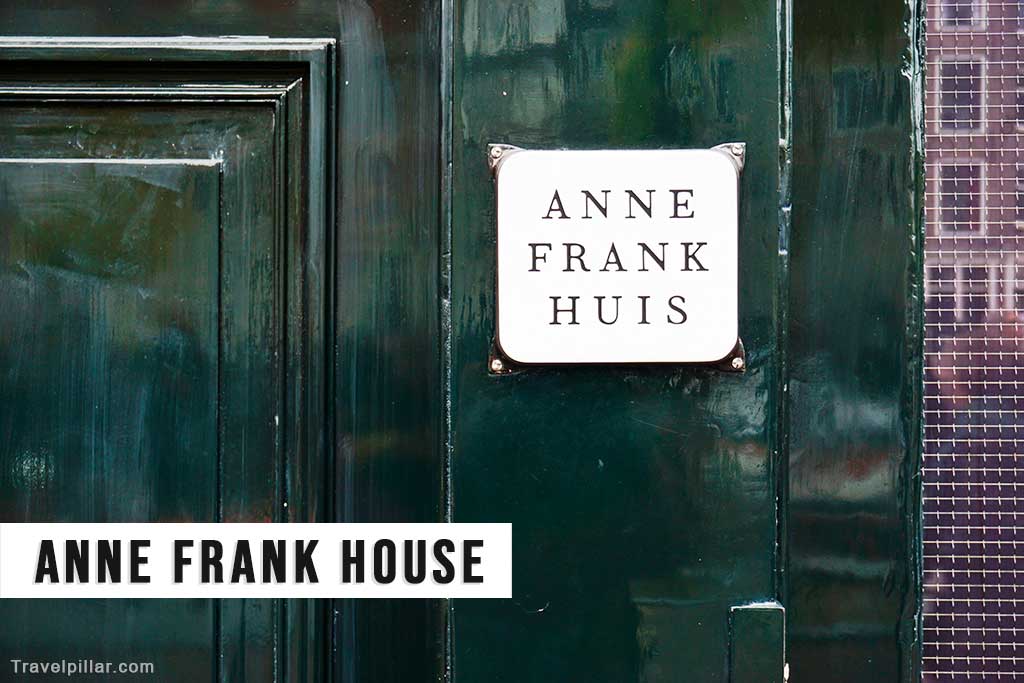
The Anne Frank House, located on Prinsengracht 263-267 in Amsterdam, Netherlands, is one of the most significant historical sites in the city. This museum is dedicated to the Jewish wartime diarist Anne Frank, who hid from Nazi persecution with her family during World War II.
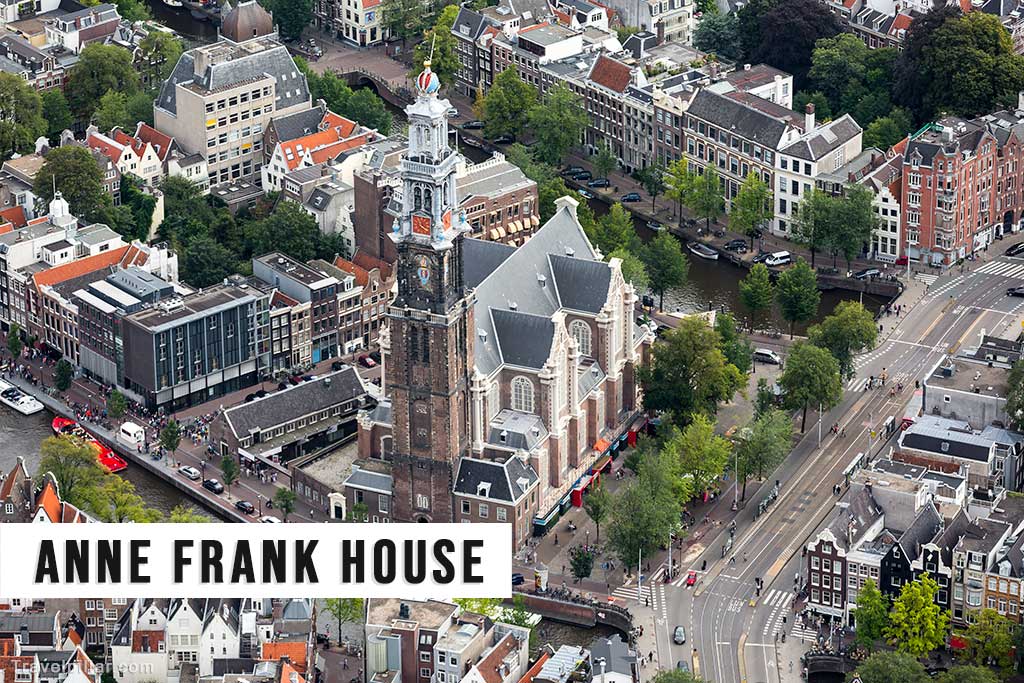
The building, originally a canal house, was where Anne Frank, her family, and four other Jews lived in hiding from July 1942 until their arrest in August 1944. The secret annex, where the group stayed, has been preserved and is accessible to visitors, offering a poignant glimpse into their lives during the German occupation.
The museum was established in 1957 after Otto Frank, Anne’s father and the only surviving member of the family, decided to preserve the site as a testament to his daughter’s life and diary. Opened to the public in 1960, the Anne Frank House has since become a significant place of remembrance and education about the Holocaust.
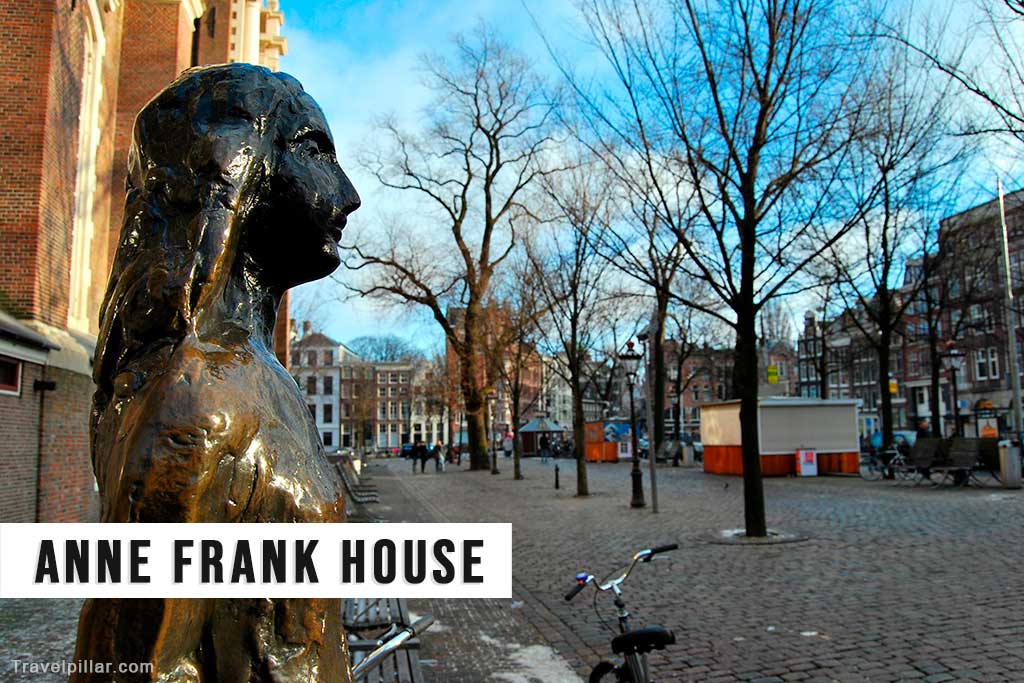
Visitors begin their tour by exploring the lower levels of the building, which include exhibits about the Frank family, their helpers, and the broader context of the Nazi occupation of the Netherlands. Displays feature photographs, letters, and objects that belonged to the residents of the secret annex, providing a comprehensive historical background.
The highlight of the visit is the annex itself. Preserved in its original state, it includes Anne’s room, still adorned with the pictures she placed on the walls, and the movable bookcase that concealed the entrance to the hiding place. This part of the tour offers a deeply moving experience, giving insight into the daily life and enduring hope of Anne Frank and her companions.
The museum also houses a permanent exhibition on discrimination and human rights, linking Anne Frank’s story to contemporary issues. Additionally, the museum includes a bookshop and a café.
The Anne Frank House is open year-round, but due to its popularity, it is advisable to book tickets in advance. The museum offers educational programs and resources for visitors of all ages, making it an essential visit for those interested in history, human rights, and the personal stories of the Holocaust.
Official website: https://www.annefrank.org/en/
Google map 4.5/5
The Anne Frank Story
Anne Frank was a Jewish girl who became one of the most well-known victims of the Holocaust due to the posthumous publication of her diary. Born in 1929 in Frankfurt, Germany, she moved with her family to the Netherlands in 1934 to escape Nazi persecution. Following the German occupation of the Netherlands in 1940, increasing anti-Jewish measures forced the Frank family into hiding.
In July 1942, Anne, her parents Otto and Edith, and her sister Margot went into hiding in a concealed annex behind Otto Frank’s business premises on Prinsengracht. They were later joined by four others: Hermann, Auguste, and Peter van Pels, and Fritz Pfeffer. For over two years, the group lived in secrecy in the annex, supported by a small group of trusted employees and friends who brought food, news, and other supplies.
During this time, Anne kept a diary in which she recorded her thoughts, experiences, and reflections on life in hiding. The diary offers a detailed and personal account of daily life under constant threat, as well as her observations on human nature, identity, and hope.
On 4 August 1944, the hiding place was discovered, and the eight occupants were arrested. They were deported first to Westerbork transit camp and later to Auschwitz. Anne and Margot Frank were eventually transferred to Bergen-Belsen concentration camp, where they died of typhus in early 1945. Otto Frank was the only survivor of the group.
After the war, Otto Frank returned to Amsterdam and was given Anne’s diary by Miep Gies, one of the helpers. He arranged for its publication in 1947 under the title The Diary of a Young Girl. The diary has since been translated into many languages and is considered a key document in Holocaust education.
The building where the family hid is now the Anne Frank House, a museum dedicated to preserving the memory of Anne Frank and promoting reflection on discrimination, persecution, and human rights. It includes the original Secret Annex, historical exhibitions, and material on contemporary issues related to tolerance and freedom.