
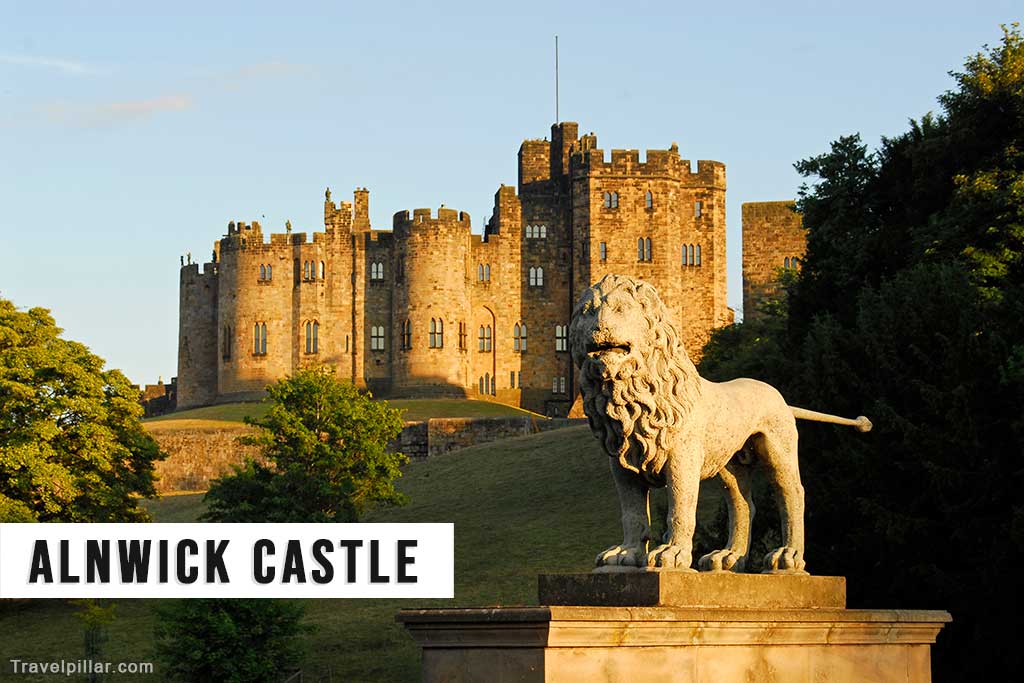
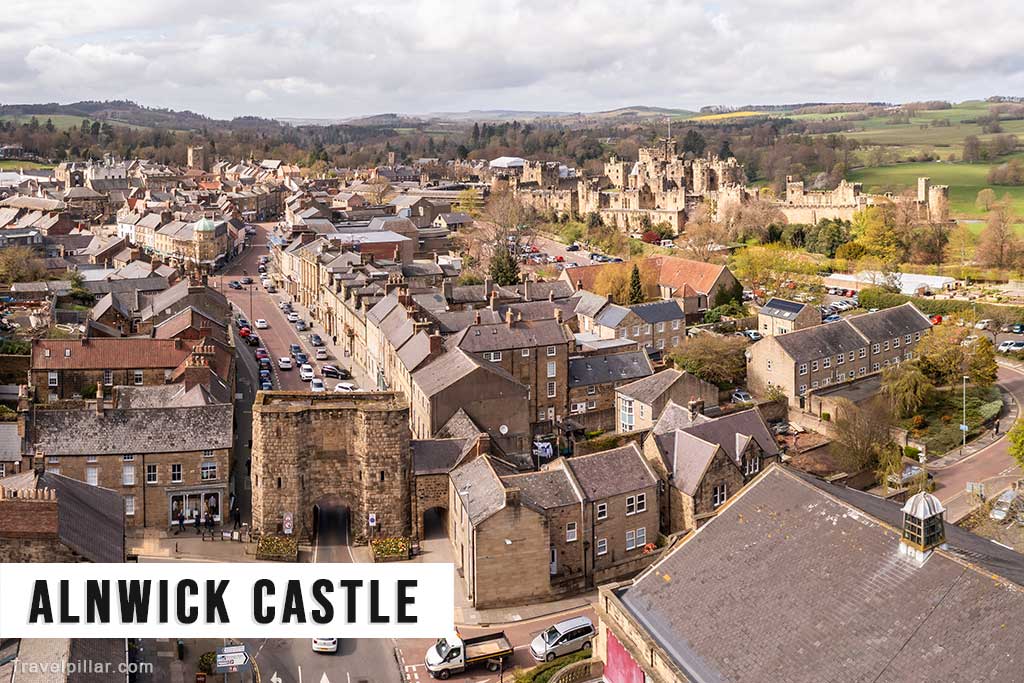
Alnwick Castle, located in Northumberland, is one of the largest inhabited castles in England and has been the seat of the Percy family, Dukes of Northumberland, for over 700 years. Originally constructed in the late 11th century, the castle was strengthened and expanded in the medieval period, reflecting its dual role as a defensive fortress and an aristocratic residence. Its scale and continued use make it a notable example of a living historic monument.

The castle’s exterior is dominated by extensive curtain walls and large towers, giving it a strong military appearance. However, over the centuries it has also been adapted to meet domestic and aesthetic requirements. In the 18th and 19th centuries, significant renovations were carried out by architects James Paine, Robert Adam, and later Anthony Salvin, who introduced Gothic Revival elements to enhance its grandeur and align with the tastes of the time.
Inside, Alnwick Castle contains state rooms decorated with collections of fine art, furniture, and sculpture. Works by masters such as Canaletto, Titian, and Van Dyck are part of its holdings, reflecting the wealth and cultural interests of the Percy family. The Great Hall, drawing rooms, and library illustrate the evolution of the castle from a medieval fortress to a stately home.
The grounds surrounding the castle include the Alnwick Garden, a modern addition created in the early 21st century. The garden features formal landscapes, a large treehouse, and the well-known Poison Garden, which displays toxic and medicinal plants. These developments have added to the castle’s role as a visitor attraction while maintaining continuity with its historic estate setting.
Alnwick Castle has also gained contemporary recognition as a filming location, most famously appearing as Hogwarts in the Harry Potter films and in television series such as Downton Abbey. This association has further increased its popularity as a tourist destination.
Today, the castle remains both a family residence and a heritage site open to the public. Its blend of medieval fortifications, later adaptations, art collections, and cultural significance ensures its place as one of northern England’s most important historic landmarks.
Official website: https://www.alnwickcastle.com
Google map 4.5/5