
Neoclassical architecture revived the elegance and simplicity of Ancient Greece and Rome during the mid-18th century, becoming one of the most influential architectural styles in the Western world. Characterised by symmetrical façades, imposing columns, triangular pediments and restrained decoration, the movement emerged as a reaction against the elaborate ornamentation of Baroque and Rococo architecture. Inspired by archaeological discoveries and the ideals of the Enlightenment, Neoclassical architects sought to create buildings that reflected reason, order and permanence.
The movement coincided with a renewed fascination with the ancient world. Excavations at Pompeii and Herculaneum revealed remarkably well-preserved Roman buildings, while increasing numbers of wealthy Europeans embarked on the Grand Tour, visiting the classical ruins of Italy and Greece. These experiences inspired architects to return to the clean lines, balanced proportions and monumental forms of antiquity.
Neoclassical architecture quickly spread across Europe and North America, becoming the preferred style for government buildings, museums, banks, universities and grand country houses. The style was closely associated with democracy, justice and civic responsibility, making it particularly popular for parliaments, courthouses and memorials. Many of the world’s most recognisable public buildings, including the White House, the United States Capitol and the British Museum, owe their appearance to Neoclassical design.
Although later architectural movements introduced new styles and technologies, Neoclassical architecture has never completely disappeared. Its timeless proportions and dignified appearance continue to influence architects today, making it one of the easiest styles for travellers to recognise.
For visitors exploring Europe’s great capitals or the civic centres of North America, Neoclassical architecture provides a fascinating link between the modern world and the civilisations of Ancient Greece and Rome. Understanding its defining features helps explain why so many of the world’s most important public buildings continue to embrace Classical design.
History of Neoclassical Architecture
Neoclassical architecture emerged during the mid-18th century as Europe experienced the intellectual movement known as the Enlightenment. Thinkers increasingly valued reason, science and rationality, while architects rejected the highly decorative forms of Baroque and Rococo architecture in favour of the simplicity and harmony of Classical antiquity.
A major influence on the movement was the discovery of the Roman cities of Pompeii and Herculaneum, buried by the eruption of Mount Vesuvius in AD 79. Their remarkably preserved buildings provided architects with an unprecedented opportunity to study authentic Roman architecture. At the same time, archaeological expeditions to Greece revealed many of the original temples that had inspired Classical design.
The popularity of the Grand Tour also helped spread Neoclassical ideas throughout Europe. Wealthy young aristocrats travelled to Italy and Greece to study ancient monuments, returning home with a renewed appreciation for Classical art and architecture. Architects such as Robert Adam in Britain, Jacques-Germain Soufflot in France and Karl Friedrich Schinkel in Germany adapted these ancient principles to suit the needs of their own countries.
During the late 18th and early 19th centuries, Neoclassical architecture became the dominant style for civic buildings across Europe and the United States. Governments adopted Classical architecture because it symbolised democracy, stability and justice, ideals closely associated with Ancient Athens and the Roman Republic. Even today, newly constructed government buildings around the world continue to draw inspiration from the Neoclassical tradition.
Key Characteristics of Neoclassical Architecture
Neoclassical architecture is defined by its elegance, symmetry and careful use of Classical design principles. Although regional variations developed, most Neoclassical buildings share several distinctive features.
Symmetrical Design
Balance and proportion are fundamental to Neoclassical architecture. Buildings are usually designed around a central axis, creating façades that appear orderly, harmonious and dignified.
Classical Columns
Columns are one of the most recognisable features of the style. Doric, Ionic and Corinthian columns are widely used to support porticos and create impressive entrances inspired by Greek and Roman temples.
Triangular Pediments
Many Neoclassical buildings feature a triangular pediment above the main entrance, often decorated with sculptures or relief carvings depicting historical or allegorical scenes.
Monumental Porticos
Large columned porticos create a sense of grandeur while emphasising the building’s importance. These impressive entrances are particularly common on museums, courthouses and government buildings.
Domes
Inspired by the Pantheon in Rome, many important Neoclassical buildings feature large domes that dominate the skyline. These became symbols of national pride and civic authority, particularly in the United States.
Restrained Decoration
Unlike Baroque architecture, Neoclassical buildings avoid excessive ornamentation. Decorative elements are carefully controlled and used sparingly, allowing proportion, geometry and Classical detailing to create elegance rather than elaborate decoration.
Famous Examples of Neoclassical Architecture
The British Museum, London, England
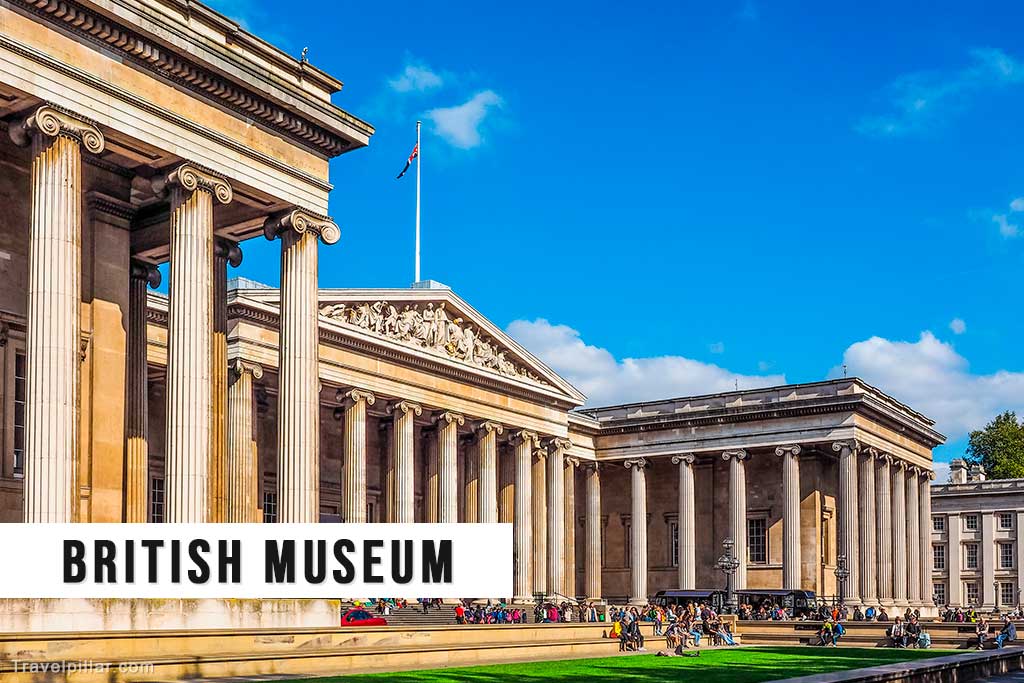
One of the finest examples of Neoclassical architecture in Britain, the British Museum is renowned for its imposing Ionic colonnade and grand portico inspired by the temples of Ancient Greece. Completed in the mid-19th century, the building reflects the ideals of learning, culture and civilisation that were closely associated with the Classical world.
United States Capitol, Washington, D.C., USA

The United States Capitol is one of the world’s most recognisable examples of Neoclassical architecture. Its monumental dome, broad staircases and elegant Corinthian columns were designed to evoke the democratic ideals of Ancient Greece and the Roman Republic. It continues to serve as the home of the United States Congress.
The White House, Washington, D.C., USA

Designed by James Hoban and completed in 1800, the White House combines symmetry, classical proportions and elegant porticos to create one of the world’s most famous official residences. Although expanded and modified over the centuries, it remains an outstanding example of American Neoclassical design.
Panthéon, Paris, France

Originally built as a church dedicated to Saint Geneviève, the Panthéon became a mausoleum for many of France’s greatest citizens following the French Revolution. Designed by Jacques-Germain Soufflot, it combines the grandeur of Classical Roman architecture with the engineering advances of the 18th century, crowned by one of Paris’s most recognisable domes.
Brandenburg Gate, Berlin, Germany

Inspired by the Propylaea, the monumental gateway to the Acropolis in Athens, Brandenburg Gate has become one of Germany’s most famous landmarks. Completed in 1791, its imposing Doric columns and the Quadriga sculpture above the gateway perfectly capture the elegance and dignity of Neoclassical architecture.
La Madeleine, Paris, France

La Madeleine was designed to resemble a Roman temple rather than a traditional church. Surrounded by 52 Corinthian columns, its monumental appearance reflects Napoleon’s admiration for the architecture of the Roman Empire and makes it one of Paris’s most distinctive religious buildings.
Altes Museum, Berlin, Germany
Designed by Karl Friedrich Schinkel, the Altes Museum is considered one of the masterpieces of German Neoclassical architecture. Its long Ionic colonnade, broad entrance steps and carefully balanced proportions set a new standard for museum design throughout Europe.
Royal Crescent, Bath, England

Although residential rather than monumental, the Royal Crescent is one of Britain’s finest examples of Neoclassical design. Completed in the 18th century, its sweeping curved façade, elegant Ionic columns and harmonious proportions have made it one of the country’s most iconic architectural landmarks.
Virginia State Capitol, Richmond, USA
Designed by Thomas Jefferson, who was heavily influenced by Roman architecture, the Virginia State Capitol was modelled on the ancient Maison Carrée in Nîmes, France. It became one of the most influential public buildings in the United States and inspired numerous state capitols that followed.
The General Staff Building, Saint Petersburg, Russia
Facing Palace Square opposite the Winter Palace, the General Staff Building is one of the masterpieces of Russian Neoclassical architecture. Its vast curved façade and monumental triumphal arch demonstrate how Classical principles were adapted on an imperial scale.
Where to See Neoclassical Architecture
Neoclassical architecture can be found throughout Europe and North America, particularly in capital cities where governments sought to express stability, democracy and national pride through monumental public buildings.
Some of the best destinations include:
- London, England – The British Museum, Somerset House, the National Gallery and many elegant Georgian streets showcase Britain’s Neoclassical heritage.
- Paris, France – Visit the Panthéon, La Madeleine, the Arc de Triomphe and numerous civic buildings inspired by Classical Rome.
- Berlin, Germany – Brandenburg Gate, the Altes Museum and many buildings on Museum Island reflect Prussia’s embrace of Neoclassical design.
- Washington, D.C., USA – Home to the United States Capitol, the White House, the Supreme Court and countless memorials inspired by Classical architecture.
- Saint Petersburg, Russia – Grand squares, government buildings and palaces demonstrate the monumental scale of Russian Neoclassicism.
- Bath, England – The Royal Crescent, The Circus and elegant Georgian terraces combine Neoclassical ideals with the city’s distinctive honey-coloured stone.
Why Neoclassical Architecture Matters
Neoclassical architecture represents a return to the timeless principles of balance, proportion and harmony first established by the civilisations of Ancient Greece and Rome. At a time when Europe was embracing the ideals of the Enlightenment, architects looked to the ancient world for inspiration, creating buildings that reflected reason, democracy and civic responsibility. The result was a style that has remained influential for more than 250 years and continues to shape public architecture around the world.
For travellers, Neoclassical architecture provides a fascinating connection between the ancient and modern worlds. Whether standing beneath the columns of the British Museum, admiring the dome of the United States Capitol or walking through the grand squares of Paris and Berlin, visitors can clearly see how Classical design continues to influence the appearance of modern cities. Recognising features such as symmetrical façades, monumental porticos and elegant columns adds a deeper appreciation of many of the world’s most important landmarks.
From Europe’s royal capitals to the great civic buildings of North America, Neoclassical architecture remains one of the most enduring and recognisable architectural styles ever created. Its elegance, simplicity and lasting influence ensure that it continues to inspire architects and travellers alike.
See Also
If you enjoyed learning about Neoclassical architecture, you may also be interested in:
- Classical Architecture – Discover the ancient Greek and Roman buildings that inspired the Neoclassical movement.
- Renaissance Architecture – Learn how Renaissance architects first revived the principles of Classical design.
- Baroque Architecture – Explore the richly decorated style that Neoclassicism replaced during the 18th century.
- The Grand Tour – Discover how journeys through Italy and Greece inspired generations of artists, architects and aristocrats.