
Ubud is a cultural centre in central Bali, known for its temples, rice terraces, traditional crafts and forested landscapes. This Ubud travel guide outlines the main attractions in and around the town, combining historic sites, natural scenery and local markets. While many places of interest are located within walking distance of the centre, others are situated in the surrounding countryside within a short drive, making Ubud a practical base for exploring inland Bali.
Top Attractions in Ubud
1. Sacred Monkey Forest Sanctuary

The Sacred Monkey Forest Sanctuary is a protected forest area in central Ubud, home to hundreds of long-tailed macaques. The site also contains several 14th-century temples set within dense vegetation. Pathways run through the forest, passing stone carvings and bridges. The sanctuary functions as both a conservation area and a religious site, reflecting the relationship between nature and spirituality in Balinese culture.
Official website: https://monkeyforestubud.com
Google map 4.5/5
2. Ubud Palace (Puri Saren Agung)
Ubud Palace is located in the centre of town and was historically the residence of the local royal family. The complex includes traditional buildings with carved stonework and decorative gateways. While much of the palace remains a private residence, parts are accessible to visitors. The site is also used for cultural performances, particularly traditional dance events held in the evening.
Google map 4.3/5
3. Ubud Market

Ubud Market is situated opposite the royal palace and serves both local residents and visitors. In the morning, it operates as a traditional market selling produce and household goods. Later in the day, it focuses on handicrafts such as textiles, jewellery and wood carvings. The market reflects Ubud’s role as a centre for trade and craft production within Bali.
Google map 4.3/5
4. Campuhan Ridge Walk
The Campuhan Ridge Walk is a walking trail located just west of Ubud’s centre. It follows a ridge above river valleys, offering open views of surrounding hills and vegetation. The path is paved and relatively gentle, making it accessible for most visitors. It is commonly used for walking, particularly in the early morning or late afternoon when temperatures are lower.
Google map Campuhan Ridge Walk (start from south) 4.3/5
Google map Ridge Walk start from north
5. Goa Gajah (Elephant Cave)

Goa Gajah is an archaeological site located approximately 3 kilometres southeast of Ubud. Dating to the 9th century, it features a carved cave entrance and a bathing pool with stone fountains. The site reflects a mix of Hindu and Buddhist influences and was likely used for meditation. It provides insight into early religious practices in Bali.
Google map 4.2/5
6. Tegallalang Rice Terraces
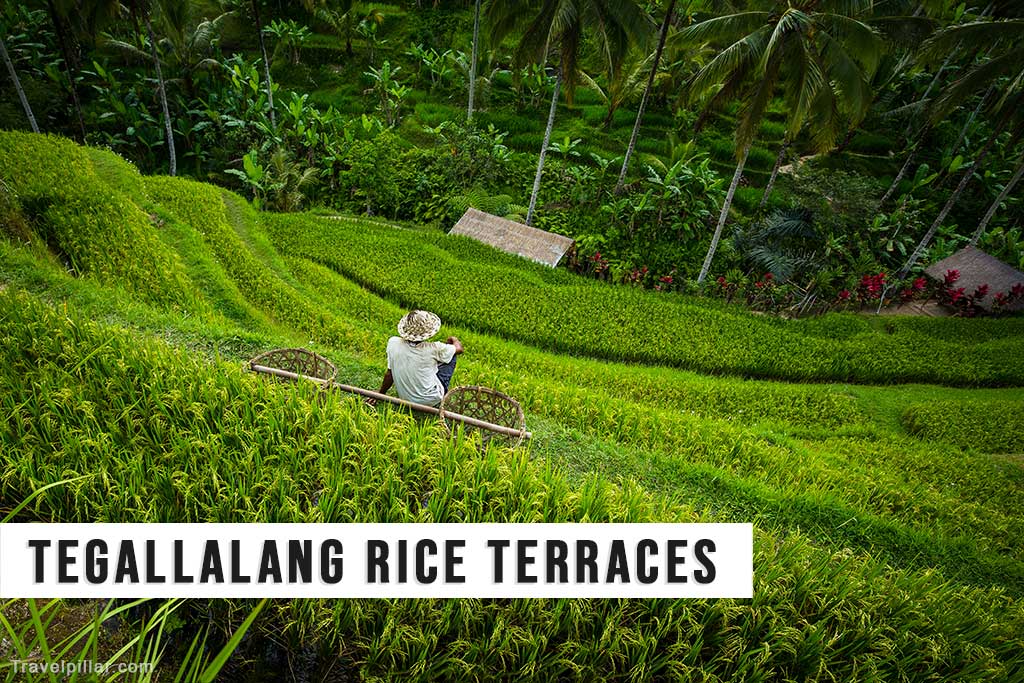
Tegallalang Rice Terraces are located around 10 kilometres north of Ubud. The terraces follow the contours of the hillside and are part of Bali’s traditional irrigation system. The area is known for its layered agricultural landscape and accessible viewpoints. Walking paths allow visitors to explore sections of the terraces, although conditions can be uneven.
Google map 4.4/5
7. Tirta Empul Temple

Tirta Empul Temple is located approximately 15 kilometres northeast of Ubud. It is built around a natural spring used for ritual purification. The complex includes a series of pools with water spouts, where Balinese Hindus perform cleansing ceremonies. The temple remains an active place of worship and reflects the importance of water in local religious practices.
Google map 4.6/5
8. Gunung Kawi Tampaksiring Temple
Gunung Kawi is located about 18 kilometres northeast of Ubud and consists of 11th-century rock-cut shrines carved into a cliff face. The site is set in a river valley surrounded by rice fields and accessed by a long staircase. The monuments are associated with royal funerary practices and represent one of Bali’s most significant archaeological sites.
Google map 4.7/5
9. Blanco Renaissance Museum
The Blanco Renaissance Museum is located within Ubud, overlooking the Campuhan River. It was the home and studio of the artist Antonio Blanco. The museum displays his work alongside personal collections and offers views of the surrounding landscape. The building itself reflects a combination of European and Balinese design influences.
Official website: https://blancomuseum.com
Google map 4.3/5
10. Pura Taman Saraswati Temple
Pura Taman Saraswati Temple is located in central Ubud and is dedicated to the Hindu goddess of knowledge and the arts. The temple is known for its lotus pond and carved stone architecture. Although access to the inner areas is limited, the outer courtyard is open to visitors. The site is also used for cultural performances in the evening.
Google map 4.2/5
11. Tegenungan Waterfall
Tegenungan Waterfall is located approximately 10 kilometres south of Ubud near the village of Kemenuh. It is one of the more accessible waterfalls in the region, with steps leading down to the base. The waterfall flows into a wide pool and is surrounded by vegetation. The site includes viewing platforms and can become busy, particularly during peak visiting hours.
Google map 4.4/5
12. Kanto Lampo Waterfall
Kanto Lampo Waterfall is located around 13 kilometres southeast of Ubud near Gianyar. It features a stepped rock formation over which water flows in a series of cascades. The site is relatively compact and accessible via a short descent from the entrance. Visitors can approach the base of the falls, although conditions can be slippery and require caution.
Google map 4.3/5