

Bamburgh Castle, located on the northeast coast of England in Northumberland, is a prominent coastal fortress with a history spanning over 1,400 years. Built on a basalt outcrop overlooking the North Sea, the site has been occupied since the Anglo-Saxon period. The current stone structure dates primarily from the Norman period, with significant later restoration and additions, particularly in the 18th and 19th centuries.
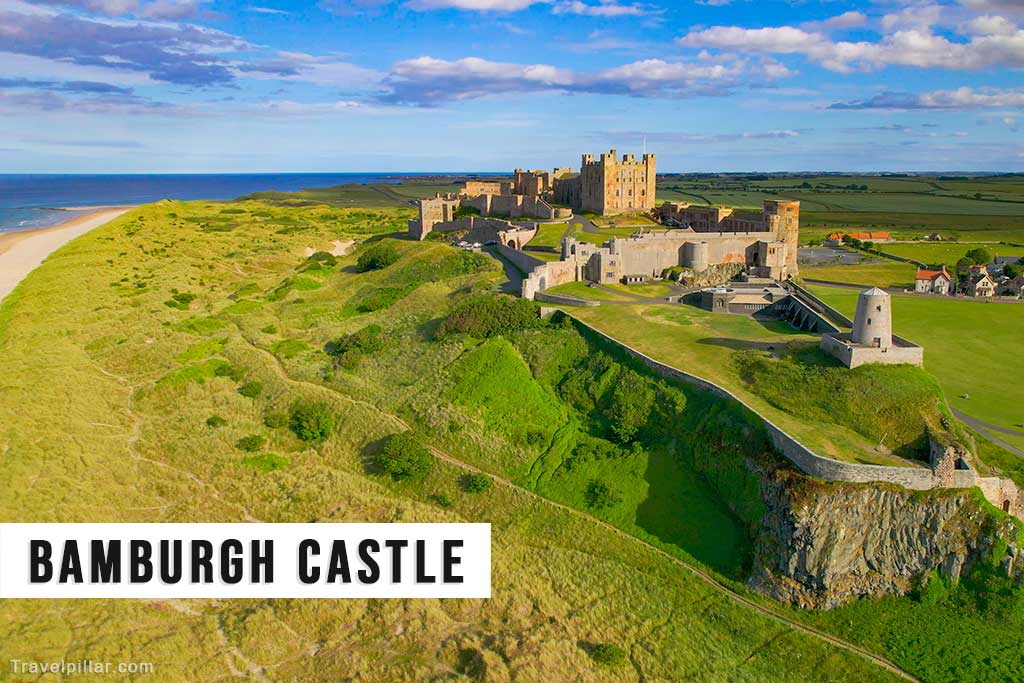
The original fortification was the seat of the kings of Northumbria, making it one of the earliest centres of power in early medieval England. Following the Norman Conquest, the site was developed into a castle, incorporating a great keep, curtain walls, and defensive towers. It later saw action during the Wars of the Roses and fell into disrepair before being restored by the Victorian industrialist William Armstrong, whose descendants continue to own the property.

The castle today includes a mix of preserved medieval architecture and Victorian-era restorations. Key features include the Norman keep, the 12th-century gatehouse, and a series of halls and chambers containing displays on the site’s history, archaeology, and restoration. The Armstrong and Aviation Artefacts Museum, housed within the complex, features items related to engineering, flight, and local history.
Due to its elevated coastal position, Bamburgh Castle offers extensive views over the coastline, the Farne Islands, and the surrounding dunes. The beach adjacent to the castle is a popular destination and enhances the site’s visual impact.
The castle is open to the public with ticketed entry. Visitors can explore the interiors, climb towers, and walk the grounds. Information panels and audio guides are available to aid interpretation. Seasonal events, educational activities, and re-enactments are held throughout the year.
Bamburgh Castle combines historical significance with dramatic natural scenery, offering insight into Anglo-Saxon kingship, Norman military architecture, and Victorian preservation. Its coastal location, continued private ownership, and accessible visitor facilities contribute to its popularity as a heritage site in northern England.
Official website: https://www.bamburghcastle.com
Google map 4.7/5