
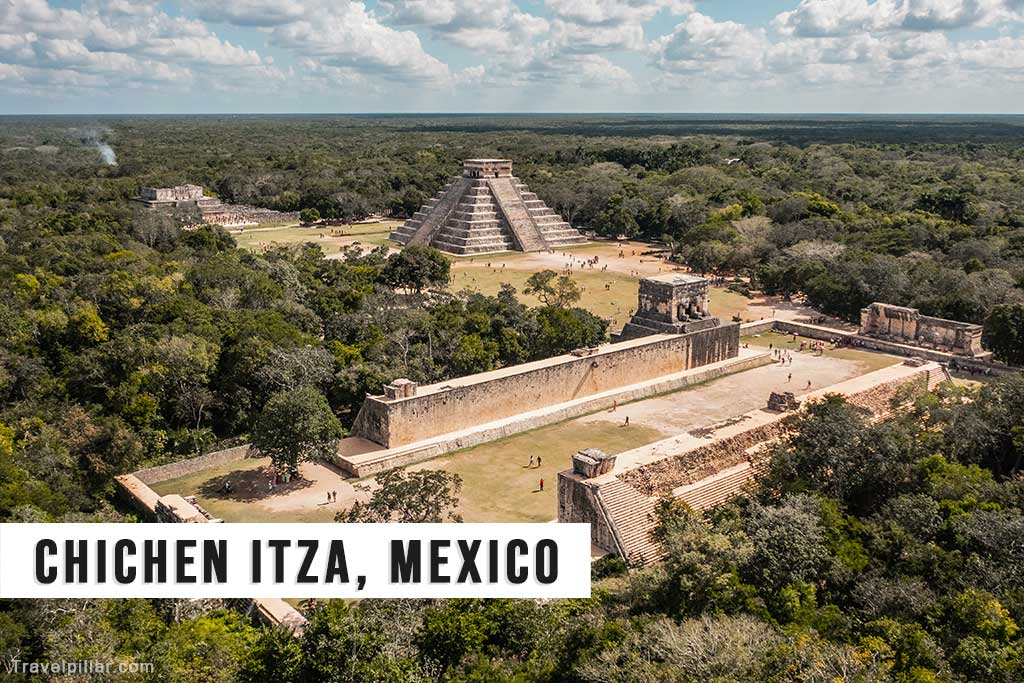
Chichen Itza in Mexico is one of the largest and most well-preserved ancient Maya cities, located on the Yucatan Peninsula. It represents a significant archeological site, showcasing the Maya’s innovative architectural, astronomical, and civic achievements. The city reached its zenith between 600 AD and 1200 AD, becoming a major economic, political, and religious center.
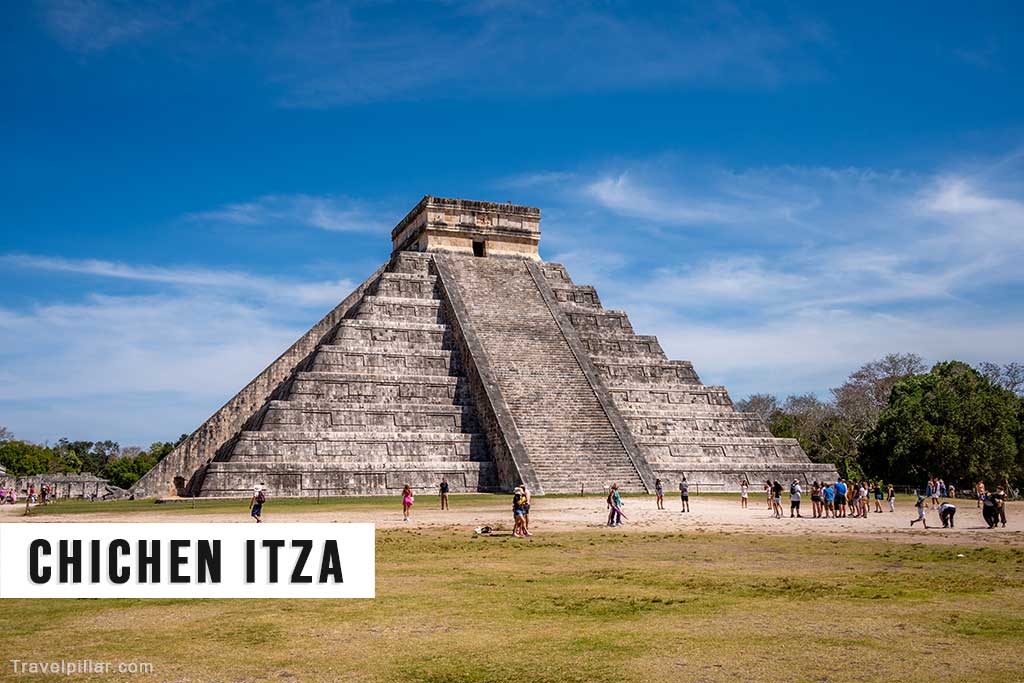
The most iconic structure in Chichen Itza is El Castillo or the Temple of Kukulcan, a pyramid-style edifice with 365 steps, symbolizing the solar year. On the equinoxes, the setting sun casts a shadow that gives the illusion of a serpent descending the steps. This phenomenon illustrates the Maya’s advanced astronomical knowledge and their close connection between architecture and celestial events.
The Great Ball Court, the largest of its kind in ancient Mesoamerica, illustrates the importance of the ballgame ritual in Maya society. Meanwhile, the Tzompantli, or Skull Wall, provides insight into the city’s religious practices and beliefs, including human sacrifice.
Other significant structures include the Observatory, or El Caracol, and the Temple of the Warriors, adorned with intricate carvings and columns. These edifices showcase the Maya’s remarkable architectural skills and their complex societal structure.
In 1988, UNESCO designated Chichen Itza as a World Heritage Site, underscoring its universal cultural significance. Despite facing threats from tourism and environmental factors, ongoing preservation efforts strive to maintain and protect the site.
Chichen Itza remains an invaluable historical resource, providing scholars and visitors with a detailed glimpse into the vibrant and complex Maya civilization. Its unique blend of architectural and astronomical precision makes it a key emblem of Mexico’s pre-Hispanic past.
Official website: https://inah.gob.mx/
Google map 4.8/5