

Château de Castelnaud, located in the Dordogne region of France, stands as an exemplar of medieval military architecture. Perched on a rocky promontory overlooking the Dordogne River, the castle offers commanding views of the surrounding valley and served as a strategic defensive site during periods of intense conflict, particularly the Hundred Years’ War. Its prominent location, combined with its robust fortifications, highlights its historical role as a fortress designed to withstand siege and invasion.
Dating back to the 12th century, the castle’s origins are rooted in feudal rivalries. Château de Castelnaud frequently changed hands during its early history, often contested by French and English forces. The fortress was a stronghold for the English for much of the Hundred Years’ War before ultimately returning to French control. Its tumultuous past reflects the broader geopolitical struggles of the medieval period in southwestern France.

The architecture of Château de Castelnaud is primarily utilitarian, emphasizing defense and strategic advantage. Features such as thick stone walls, a central keep, and battlements demonstrate the castle’s design for repelling attackers. The site also contains a barbican, which provided an additional layer of protection. Within the castle, the spaces are stark, reflecting their use for military purposes rather than comfort or luxury.
Today, Château de Castelnaud is a popular destination for visitors interested in medieval history and military engineering. It houses the Musée de la Guerre au Moyen Âge (Museum of Medieval Warfare), which displays an extensive collection of weapons, armor, and siege engines. Among the notable exhibits are reconstructions of trebuchets and other medieval artillery, which are occasionally demonstrated in live presentations.
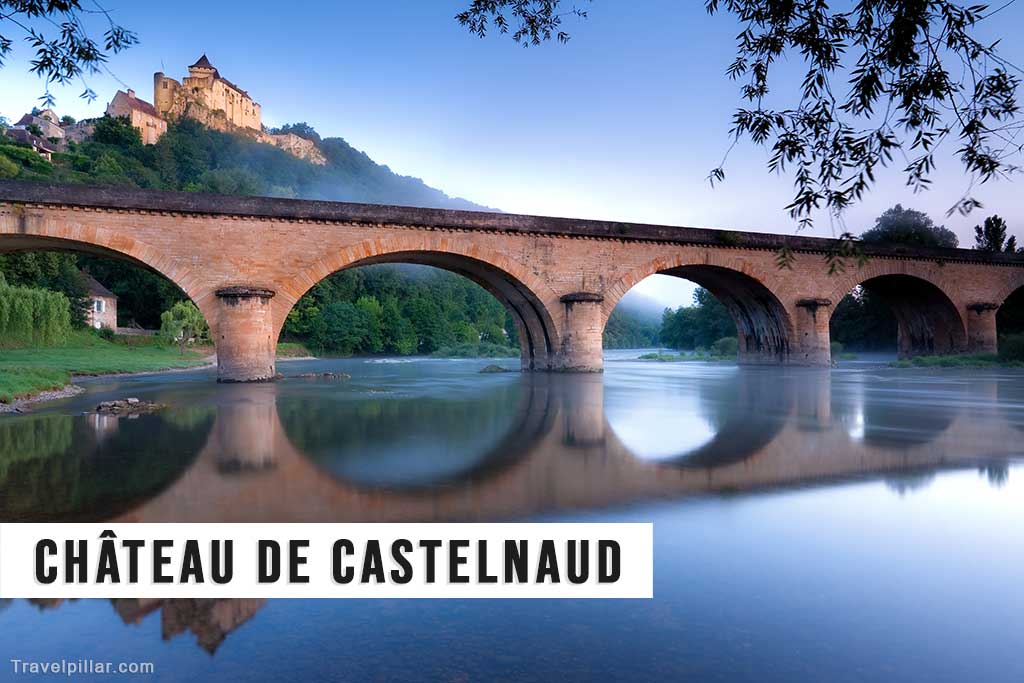
Visitors can explore the castle’s interiors, including the keep, guardrooms, and defensive towers, gaining insight into the daily lives of soldiers and inhabitants during its operational years. The site also provides sweeping views of the Dordogne River and surrounding countryside, enhancing the visitor experience.
The Château combines historical significance with educational value. Its well-preserved architecture and detailed exhibits make it an essential destination for those seeking to understand the region’s medieval heritage. As a testament to the ingenuity and resilience of its era, the castle remains one of the most compelling landmarks in the Dordogne.
Official website: https://castelnaud.com/
Google map 4.6/5