
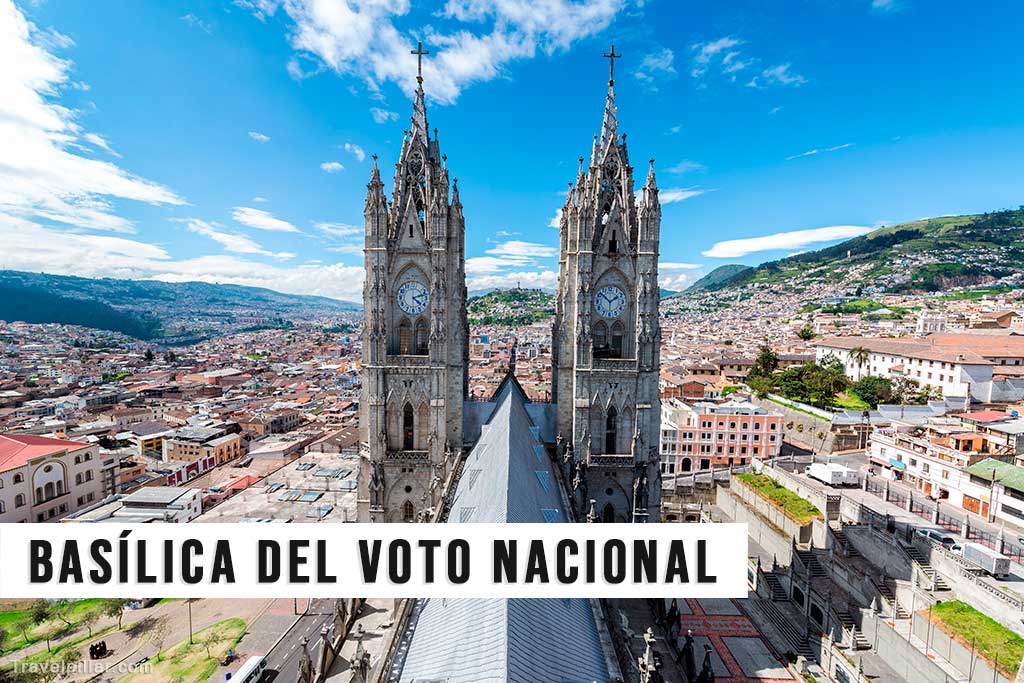
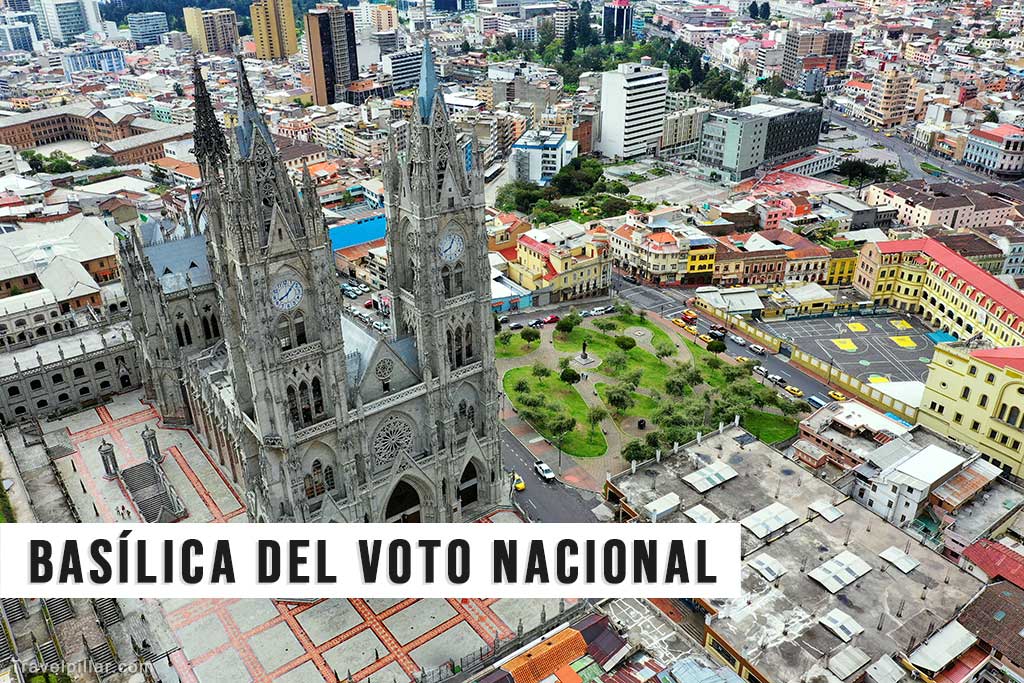
Basílica del Voto Nacional is one of the most prominent landmarks in Quito and the largest neo-Gothic church in Ecuador. Located on the eastern edge of the historic centre, the basilica was initiated in the late 19th century as a national religious project dedicated to the Sacred Heart. Construction began in 1892 and continued into the 20th century, with elements of the building still considered incomplete.
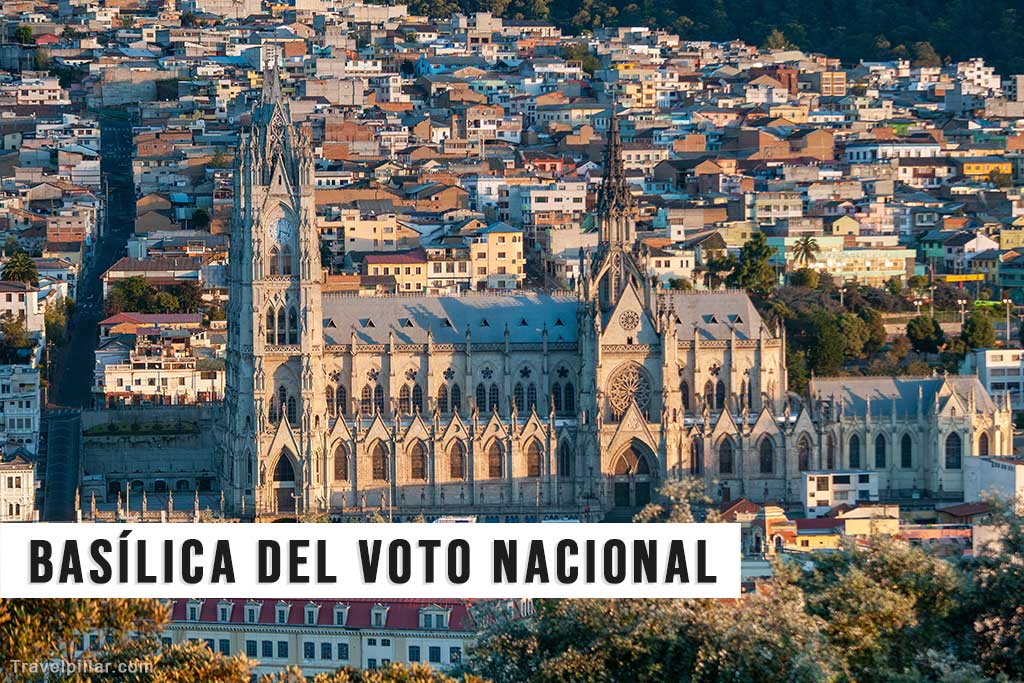
The structure is notable for its scale and vertical design, with tall towers, pointed arches and ribbed vaulting characteristic of Gothic architecture. The basilica was inspired by European cathedrals, but incorporates local adaptations. One of its most distinctive features is the use of native Ecuadorian animals in place of traditional Gothic gargoyles. Sculptures of creatures such as iguanas, tortoises and condors appear along the exterior, reflecting the country’s biodiversity.
The interior is relatively restrained compared to many colonial churches in Quito. It includes a large central nave, stained glass windows and a series of chapels dedicated to different provinces of Ecuador. The stained glass depicts national themes as well as religious imagery, reinforcing the basilica’s role as a symbol of national identity as well as faith.
Visitors can access various parts of the structure, including the towers, which provide elevated views across Quito and the surrounding mountains. Narrow walkways and staircases lead to viewing platforms, offering a perspective over the city’s historic centre and modern districts. These access points are a notable feature of the basilica and contribute to its popularity with visitors.
Basílica del Voto Nacional also has a unique cultural association. Local tradition suggests that the building will never be fully completed, as its completion is said to coincide with the end of the world. While symbolic, this belief reflects the basilica’s place in Quito’s cultural identity.
Today, the basilica remains an active place of worship and an important architectural landmark. Its combination of European design and local elements makes it a distinctive feature of Quito’s urban landscape.
Official website: https://basilicaquito.com
Google map 4.8/5