
La Compañía de Jesús is one of the most significant churches in Quito and a key example of Spanish Baroque architecture in Latin America. Located in the historic centre, the church was constructed by the Jesuit order between the early 17th and 18th centuries. It forms part of Quito’s UNESCO-listed Old Town and is widely recognised for the richness of its interior decoration.
The exterior is built from volcanic stone and features an ornate Baroque façade with detailed carvings, columns and niches. While the outside is relatively restrained compared to the interior, it reflects the influence of European architectural styles adapted to local materials and conditions. The church’s design evolved over time, incorporating elements of Baroque, Moorish and indigenous artistic traditions.
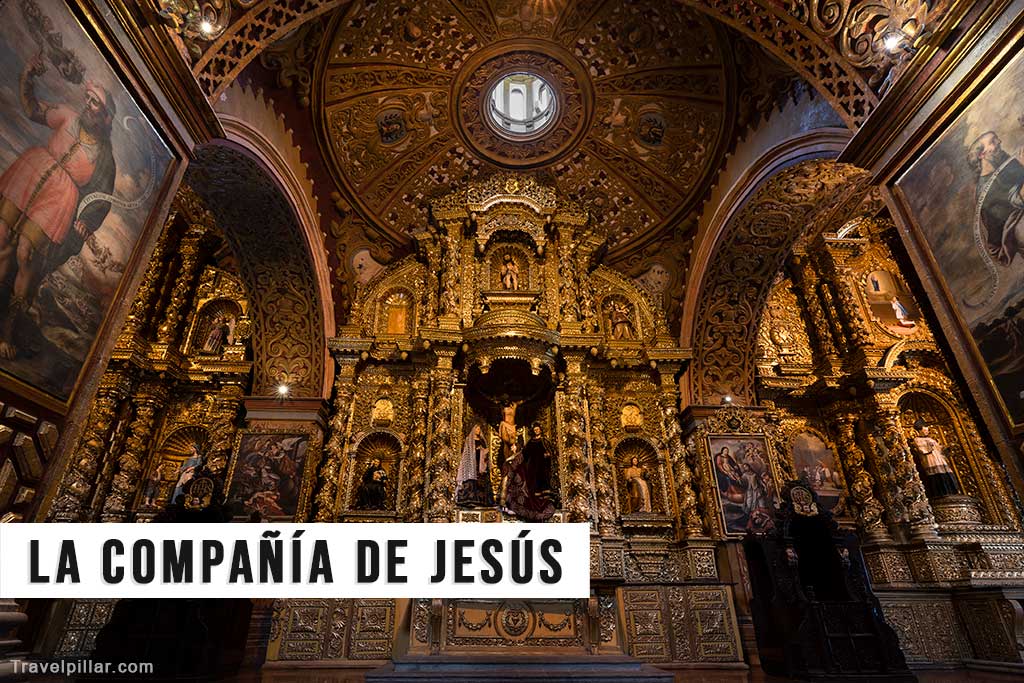
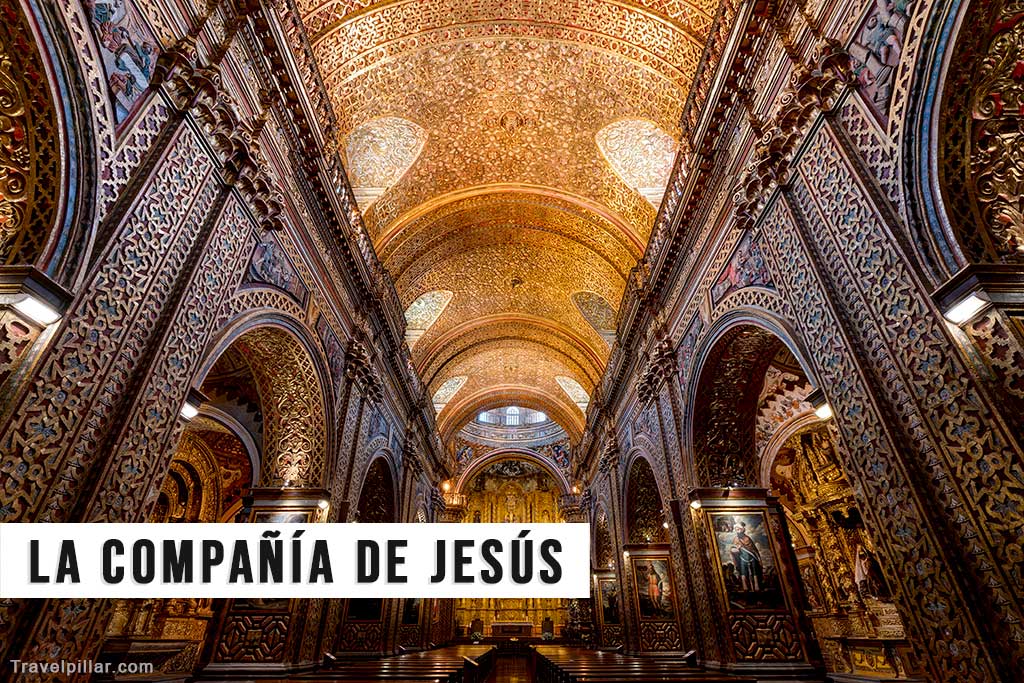
The interior of La Compañía de Jesús is particularly notable for its extensive use of gold leaf, which covers walls, altars and decorative features. This creates a highly elaborate visual effect, with intricate carvings, sculptures and reliefs throughout the space. The decoration is intended to convey religious themes and reinforce the influence of the Catholic Church during the colonial period. The high altar and side chapels are especially detailed, combining artistic craftsmanship with symbolic meaning.
The church also reflects the work of local artisans, many of whom were part of the Quito School of Art. This artistic movement blended European techniques with indigenous influences, resulting in a distinctive regional style. The combination of imported ideas and local craftsmanship is evident in both the structure and decoration of the building.
The church has undergone restoration work following damage from earthquakes, which are common in the region. Despite this, it remains one of the best-preserved colonial churches in Quito. Today, it continues to function as a place of worship while also attracting visitors interested in architecture, art and history. Its location within the historic centre makes it an important stop for understanding Quito’s colonial past and cultural development.
Google map 4.8/5