
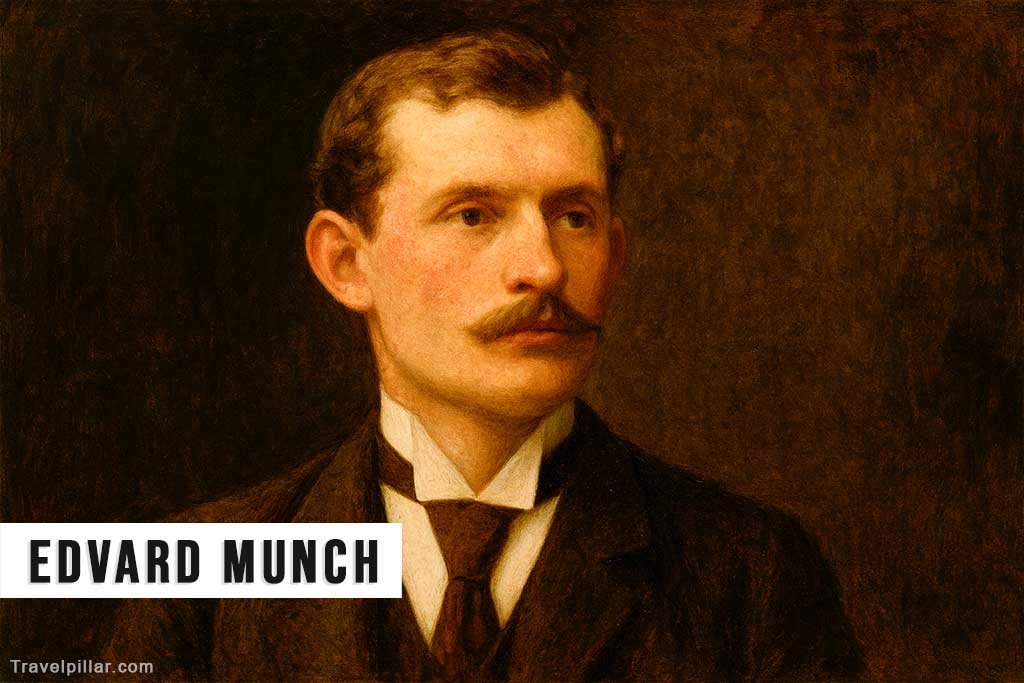
Edvard Munch (1863-1944) was a Norwegian painter and printmaker known for his contributions to Symbolism and Expressionism. His work explored themes of existentialism, anxiety, and human emotion, making him a central figure in the development of modern art. Munch’s style was characterized by its use of vivid color, bold brushwork, and a focus on psychological depth, setting his art apart from traditional representational approaches.
One of Munch’s most famous works, “The Scream” (1893), has become an iconic image in art history, symbolizing universal human anxiety. The painting, which exists in several versions, depicts a figure standing on a bridge, clutching their face in a moment of anguish, set against a swirling, vibrant sky. This work captures Munch’s focus on emotional experience over realistic depiction, emphasizing the inner turmoil of the subject.
Munch was influenced by the Symbolist movement and artists like Vincent van Gogh and Paul Gauguin. His early work often dealt with themes of illness, death, and love, inspired by personal tragedies, including the loss of his mother and sister. Throughout his career, he experimented with various media, including lithography, etching, and woodcuts, contributing to the development of printmaking in modern art.
In addition to “The Scream,” Munch’s notable works include “Madonna,” “The Dance of Life,” and “The Sick Child.” His series “The Frieze of Life” encompassed many of his key themes, exploring the human life cycle, relationships, and emotional states.
Munch’s influence extended beyond Norway, impacting artists and movements such as German Expressionism. His works are housed in major art institutions worldwide, with the largest collection found at the Munch Museum in Oslo. The museum, dedicated to preserving and exhibiting Munch’s legacy, provides insight into his extensive body of work and the complexities of his artistic vision. Munch’s exploration of human psychology and emotion continues to resonate, making him a key figure in the study of modern art.