
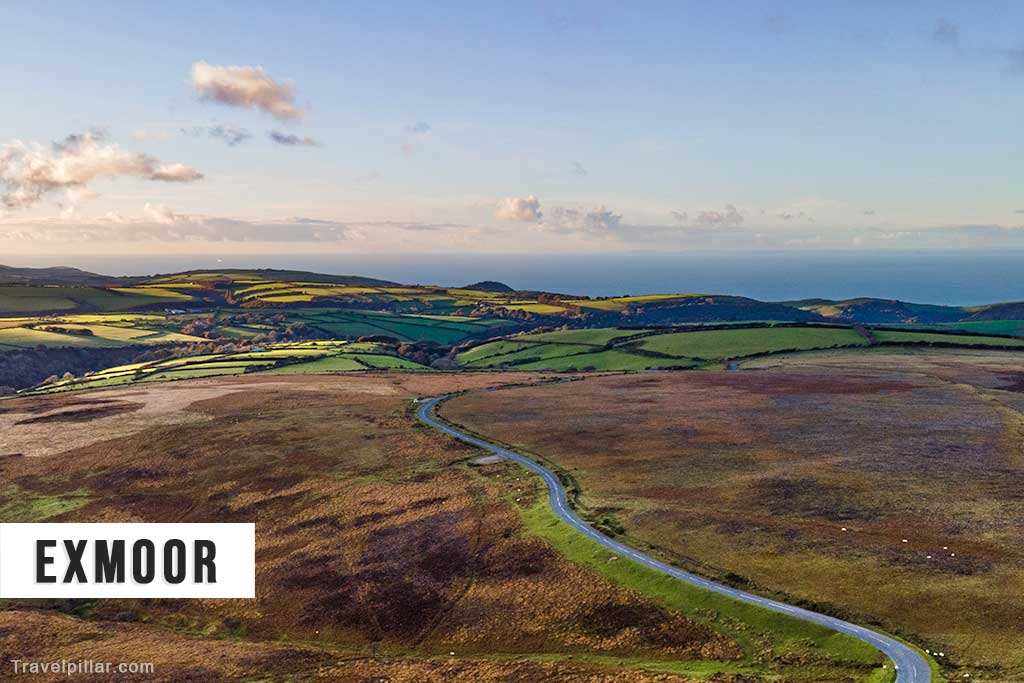
Exmoor National Park, straddling the counties of Devon and Somerset in southwest England, encompasses around 693 square kilometers of varied landscapes. Established in 1954, Exmoor is celebrated for its rugged moorlands, rolling hills, and dramatic coastline along the Bristol Channel, making it a diverse and captivating destination for nature enthusiasts and history buffs alike.
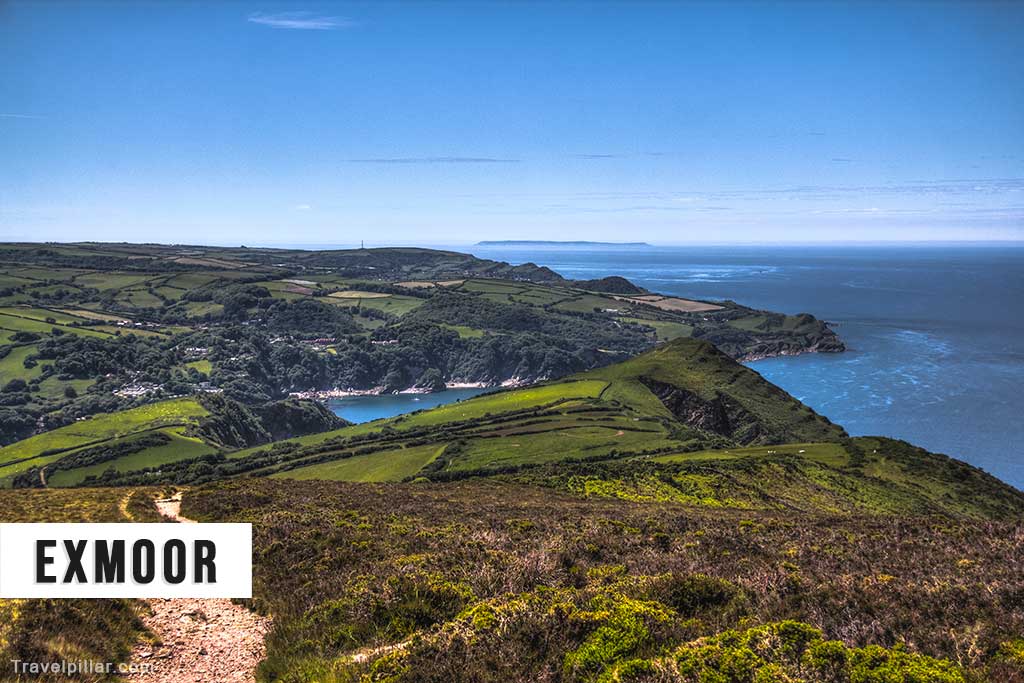
The park’s topography includes expansive heathlands, deep wooded valleys, and high sea cliffs, notably at the Valley of Rocks and Foreland Point. Dunkery Beacon, the highest point on Exmoor at 519 meters, offers panoramic views over the surrounding countryside and is a popular spot for hikers.
Exmoor’s rich history is evident in its numerous archaeological sites, which span from prehistoric times to the medieval period. The park is home to ancient monuments such as the Tarr Steps, a prehistoric clapper bridge across the River Barle, and the Caratacus Stone, a memorial stone dating back to the 6th century. Iron Age hill forts, like those at Haddon Hill, further illustrate the long history of human settlement in the area.
The diverse habitats of Exmoor support a wide range of wildlife. The park is known for its herds of wild Exmoor Ponies, one of Britain’s oldest native breeds. Red deer, the largest land mammal in the UK, can also be spotted in the park, particularly during the autumn rutting season. Birdwatchers can enjoy sightings of species such as peregrine falcons, merlins, and the rare ring ouzel.
Exmoor’s rivers and streams, including the Exe, Barle, and Lyn, are popular for fishing, offering opportunities to catch salmon and trout. The park’s coastline, part of the North Devon Coast Area of Outstanding Natural Beauty, features some of the highest sea cliffs in England and provides dramatic coastal walks with stunning sea views.
Outdoor activities are abundant in Exmoor, with extensive networks of footpaths and bridleways suitable for walking, cycling, and horse riding. The South West Coast Path and the Coleridge Way are among the notable long-distance trails that traverse the park, offering challenging routes with rewarding scenery.
Culturally, Exmoor boasts charming villages like Dunster, with its well-preserved medieval castle and yarn market, and Lynton and Lynmouth, connected by a historic cliff railway. These villages offer local crafts, traditional pubs, and seasonal events, adding to the park’s appeal.
Exmoor National Park’s combination of natural beauty, historical significance, and recreational opportunities makes it a unique and enriching destination for visitors seeking to experience one of England’s most picturesque landscapes.
Official website: https://www.exmoor-nationalpark.gov.uk
Google map 4.8/5