
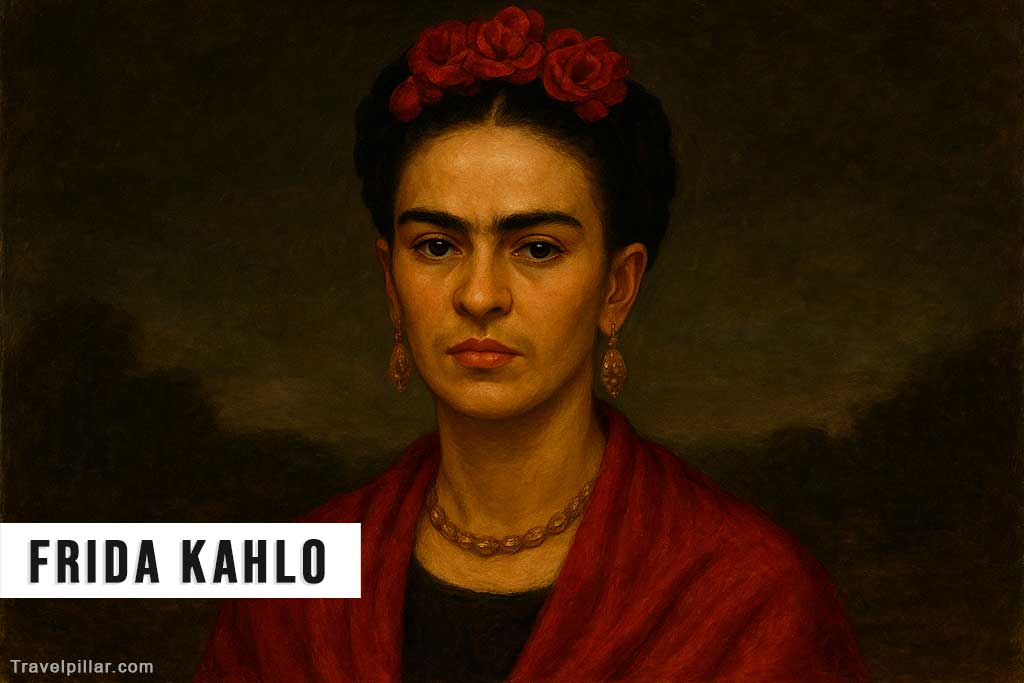
Frida Kahlo, born Magdalena Carmen Frida Kahlo y Calderón on July 6, 1907, in Coyoacán, Mexico City, is one of the most renowned Mexican artists of the 20th century. Her work is celebrated for its vivid portrayal of pain and passion, interwoven with bold, vibrant colors and a unique style that blends elements of realism, symbolism, and surrealism. Kahlo’s life was marked by a series of traumatic events that significantly influenced her artistic output.
At the age of six, Kahlo contracted polio, which left her right leg thinner than the left. Later, in 1925, she was involved in a severe bus accident that resulted in multiple fractures in her spine, collarbone, ribs, pelvis, and right leg. This accident necessitated numerous medical procedures and left her in chronic pain, bedridden for extended periods. It was during these convalescences that Kahlo began to focus seriously on painting.
Kahlo’s paintings often reflect her personal struggles with health and identity. Her works frequently depict her physical suffering and complex psychological states. Among her most famous works is “The Two Fridas” (1939), which portrays two versions of herself seated side by side, symbolizing her dual heritage and the emotional dichotomy she experienced. Another significant piece, “Self-Portrait with Thorn Necklace and Hummingbird” (1940), exemplifies her characteristic style, featuring symbolic elements that reflect her pain and resilience.
Kahlo married the famed Mexican muralist Diego Rivera in 1929. Their relationship was tumultuous, marked by numerous infidelities and separations, yet it was also profoundly influential on her work. Rivera’s interest in Mexican folk art and indigenous culture deeply resonated with Kahlo, further enriching her artistic vision.
Kahlo’s work gained international recognition during her lifetime, particularly in the United States and France. However, it was after her death on July 13, 1954, that her legacy truly flourished. Today, Frida Kahlo is celebrated not only as an artist but also as a feminist icon and a symbol of Mexican cultural heritage. Her life and work continue to inspire and resonate with audiences worldwide, underscoring the enduring power of her artistic and personal journey.