

Española Island is located at the southeastern edge of the Galápagos Archipelago and is one of its oldest islands, estimated to be around four million years old. It covers an area of approximately 60 square kilometres. Due to its isolation, Española has developed a high level of endemism, with several species unique to the island.
One of the principal attractions on Española is Punta Suárez, located on the western tip of the island. This site is known for its high concentration of wildlife. Visitors can observe colonies of blue-footed boobies, Nazca boobies, and Española mockingbirds, which are endemic to the island. The area is also home to the waved albatross, which breeds almost exclusively on Española between April and December. The albatrosses perform elaborate courtship rituals, and their large wingspans make them a notable sight for visitors.
Punta Suárez features a trail of approximately two kilometres that leads through rocky terrain to a cliffside viewpoint. Along the trail, marine iguanas with distinctive red and green colouring can be seen basking on the rocks. The cliff provides views of blowholes, where seawater is forced through cracks in the rock, creating jets that can reach up to 20 metres in height.
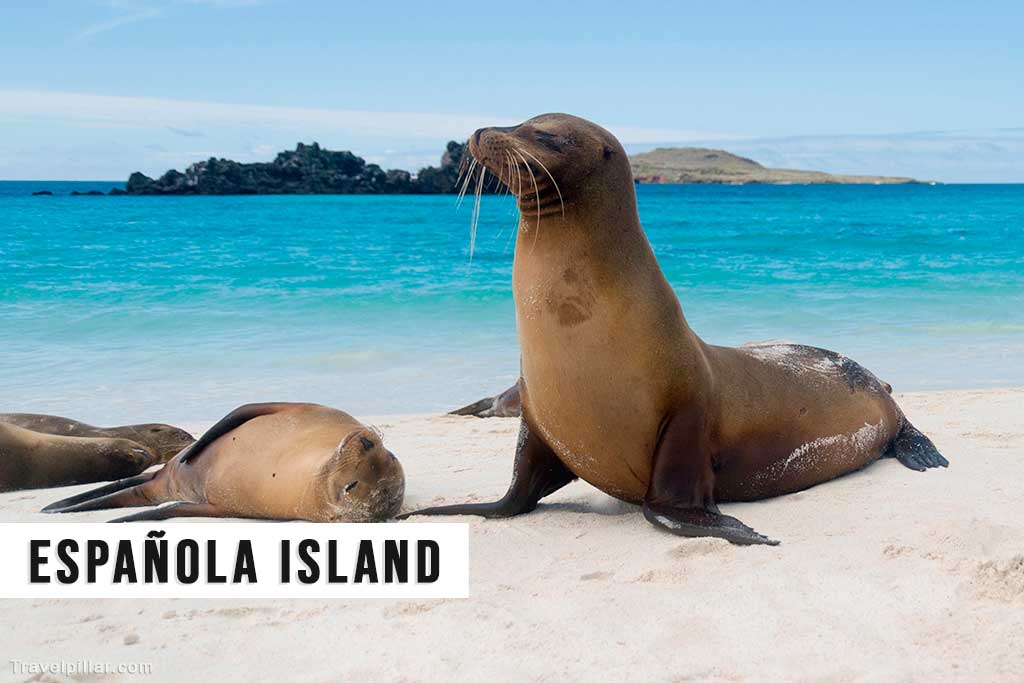
Another significant site is Gardner Bay, located on the northeastern coast of the island. It is known for its long white sand beach, which is frequented by large colonies of sea lions. The beach provides opportunities for swimming and snorkelling, with the possibility of seeing reef fish, sea turtles, and playful sea lions underwater. Offshore, Gardner Islet and Osborn Islet offer additional snorkelling sites with diverse marine life.
Española Island has no human settlements and is accessible only by guided tours. Its attractions focus on wildlife observation, particularly bird species that are difficult to see elsewhere in the Galápagos. The combination of dramatic landscapes, endemic species, and relatively undisturbed habitats makes Española a key destination for visitors interested in the ecological diversity and evolutionary significance of the archipelago.
Google map 4.6/5