

Santiago Island, also known as James Island, is centrally located within the Galápagos archipelago and is notable for its varied volcanic landscapes and diverse wildlife. Covering approximately 585 square kilometers, it is the fourth-largest island in the chain and was formed through extensive volcanic activity. Its surface is characterized by black lava flows, tuff cones, and eroded hills, providing an informative example of the archipelago’s geological origins.
The island has a complex history of human impact. In the 19th century, it was a source of salt mining and a stop for whalers, which led to the introduction of invasive species such as goats, pigs, and donkeys. These animals caused significant damage to the native ecosystems, particularly to tortoise populations and vegetation. Conservation projects, including eradication programs and habitat restoration, have since helped restore parts of the island, making it an important case study in ecological recovery.
Several visitor sites are managed by the Galápagos National Park. Sullivan Bay, on the island’s southeastern coast, is best known for its extensive pahoehoe lava field, created by an eruption in the late 19th century. The surface retains distinctive rope-like textures and patterns, allowing visitors to observe features of relatively recent volcanic activity. Puerto Egas, on the western coast, contrasts this with its black-sand beaches and eroded cliffs, where sea lions and marine iguanas are commonly seen. Inland trails lead past lava formations and tidal pools that attract shorebirds such as herons and oystercatchers.
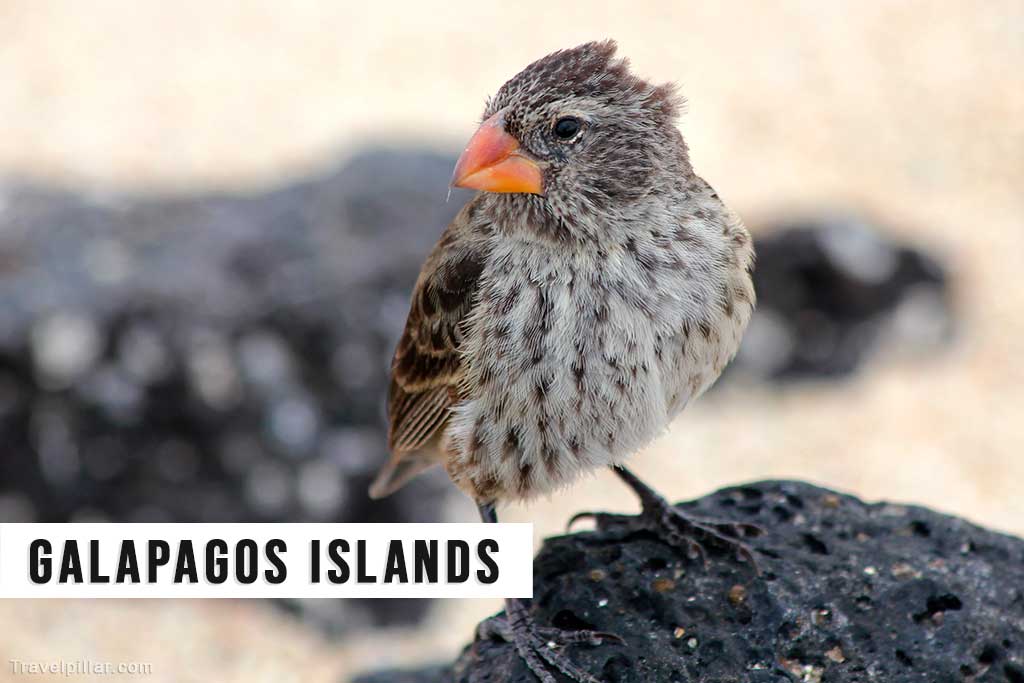
Wildlife is a central aspect of Santiago Island. Marine iguanas are abundant, and Galápagos fur seals are often observed resting in shaded grottos along the shoreline. Birdlife includes Darwin’s finches, Galápagos hawks, and lava herons. Offshore waters are rich in marine species, supporting snorkeling opportunities where visitors may encounter sea turtles, rays, and reef fish.
Santiago Island remains uninhabited and is accessible only through guided tours as part of regulated itineraries. Its blend of geological features, conservation history, and wildlife makes it an important destination within the Galápagos, providing insight into both natural processes and the challenges of preserving fragile island ecosystems.
Google map 4.7/5