
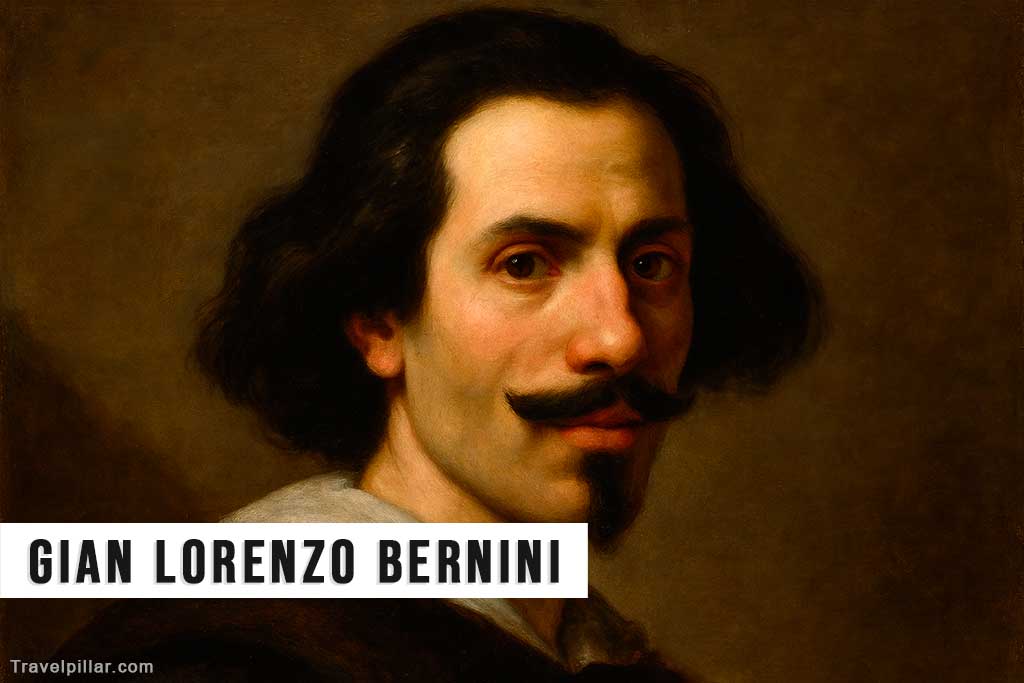
Gian Lorenzo Bernini (1598-1680) was an Italian sculptor, architect, and painter, recognized as one of the foremost figures of the Baroque period. His work in sculpture, architecture, and urban design significantly shaped Rome’s artistic landscape during the 17th century. Bernini was known for his ability to infuse marble with a sense of movement and emotion, creating works that combined technical mastery with dramatic intensity.
Bernini’s early exposure to art came through his father, Pietro Bernini, a sculptor who introduced him to the craft. His talent quickly gained the attention of patrons, including Pope Urban VIII, who became a significant supporter. Bernini’s sculptures often depicted religious and mythological subjects, with a focus on capturing dynamic poses and expressions.
One of his most famous works, “Apollo and Daphne” (1622-1625), demonstrates his skill in conveying intricate details, such as the transformation of Daphne’s fingers into leaves. Another notable piece, “The Ecstasy of Saint Teresa” (1647-1652), located in the Cornaro Chapel in Rome, showcases his talent for combining sculpture, architecture, and light to create an immersive experience. The saint’s expression and the flowing drapery in the sculpture capture a moment of spiritual transcendence, embodying the theatricality of the Baroque style.
In addition to sculpture, Bernini made significant contributions to architecture. His design for the colonnade of St. Peter’s Square in Vatican City is a prime example of Baroque urban planning. The sweeping embrace of the columns creates a sense of openness and grandeur, inviting visitors into the space. His architectural projects also included work on the interior of St. Peter’s Basilica, including the design of the massive bronze canopy, or baldachin, over the high altar.
Bernini’s influence extended well beyond his lifetime, shaping the development of Baroque art and architecture. His works can be found throughout Rome, from grand churches to public fountains, making his contributions integral to the city’s cultural heritage. Bernini’s legacy lies in his ability to blend technical skill with emotional depth, defining the expressive power of Baroque art.