
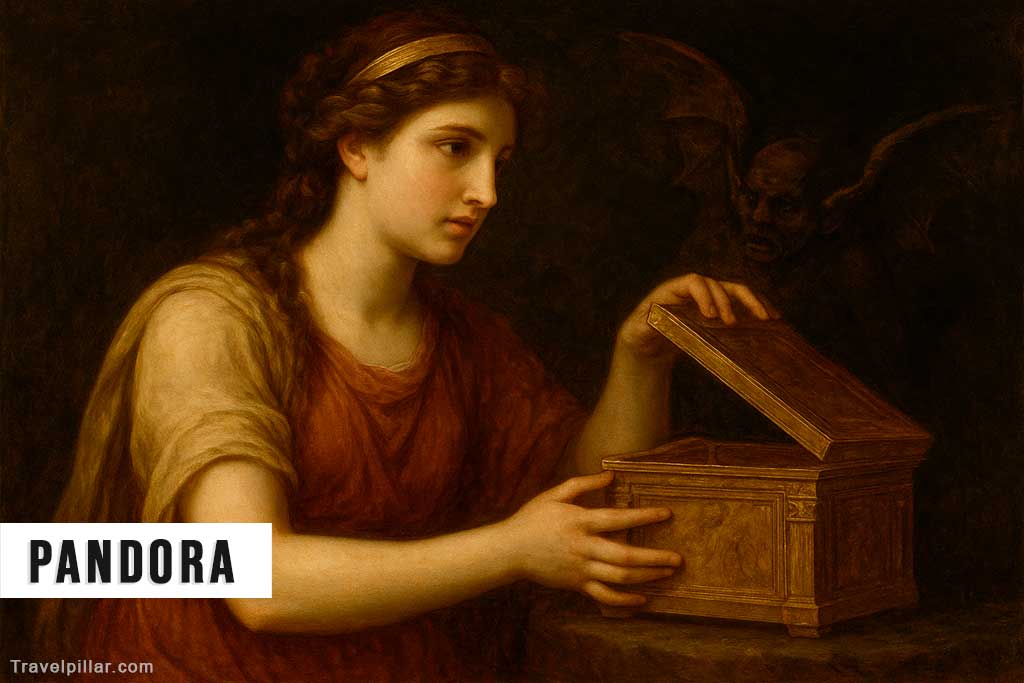
Pandora, a central figure in Greek mythology, is best known as the first mortal woman, created by the gods. Her story is closely tied to the myth of Prometheus and the punishment of humanity for receiving the gift of fire. According to the myth, after Prometheus defied Zeus by stealing fire from the gods and giving it to humans, Zeus devised a plan to punish mankind. He ordered the creation of Pandora, a woman endowed with beauty, intelligence, and curiosity, crafted by Hephaestus and gifted by other gods with various attributes.
Pandora was given a jar (often misinterpreted as a box in later retellings) that contained all the evils of the world. She was instructed not to open it, but driven by curiosity, she eventually did, releasing suffering, disease, and hardship into the world. Only hope remained in the jar after she quickly closed it, offering a small comfort to humanity amidst the afflictions that had been unleashed.
Pandora’s myth is often interpreted as a cautionary tale about the consequences of human curiosity and disobedience to divine authority. It also reflects the ancient Greek view of the origins of human suffering and the tension between mortals and the gods. Her name, meaning “all-gifted,” highlights the role of the gods in her creation, but her actions set in motion a series of challenges for humanity.
Travelers interested in Greek mythology can visit ancient sites and museums in Greece that are closely tied to the myths of the gods and mortals. The city of Athens, home to some of the most significant temples and cultural institutions, offers insight into the rich mythological heritage of the Greeks. The National Archaeological Museum and other cultural sites provide context for myths like Pandora’s, showing how these stories shaped ancient religious practices and beliefs.
Pandora’s legacy as the bringer of both misfortune and hope continues to resonate as one of the most enduring symbols in Greek mythology, influencing literature, art, and culture throughout history.