
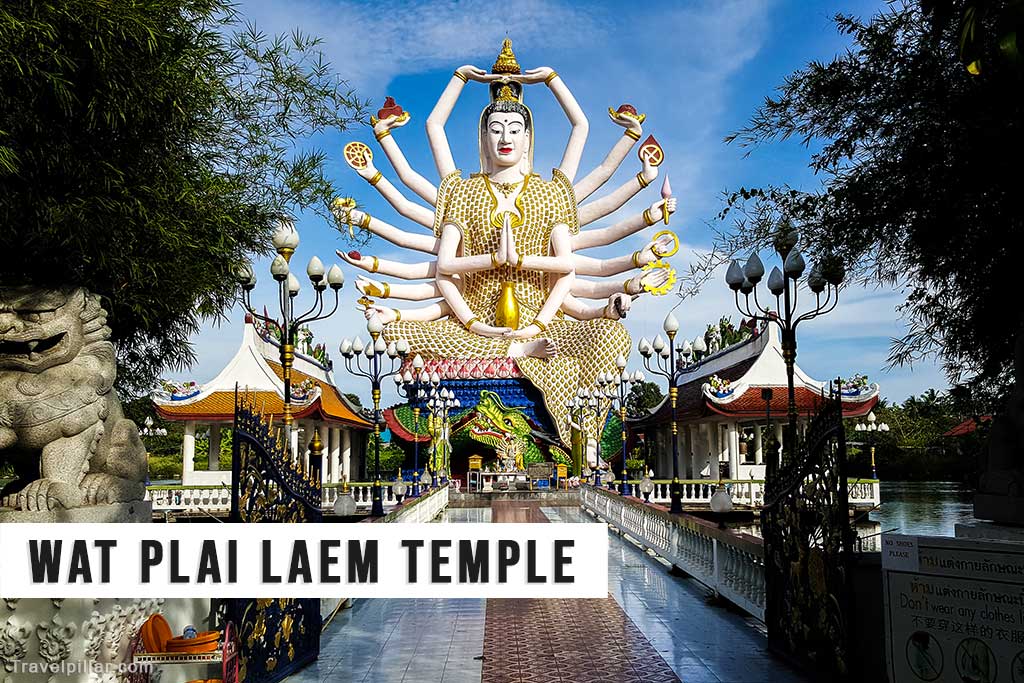
Wat Plai Laem is a modern Buddhist temple complex located in the northeastern part of Koh Samui, Thailand, close to the island’s main airport and the Big Buddha Temple. The site is known for its large and colourful religious statues set around an artificial lake, making it one of the island’s most visually distinctive temple complexes. Although relatively recent in construction, the temple has become an important place of worship for local residents as well as a popular stop for visitors exploring the area.
The most striking feature of Wat Plai Laem is the large statue of Guanyin, the Chinese Goddess of Mercy and Compassion. The figure stands on a platform in the centre of the lake and is depicted with eighteen arms, each representing different ways in which the goddess offers help and protection to those in need. Guanyin is widely revered in Chinese Buddhism, and the statue reflects the strong Chinese cultural influences present in parts of Thai religious practice.
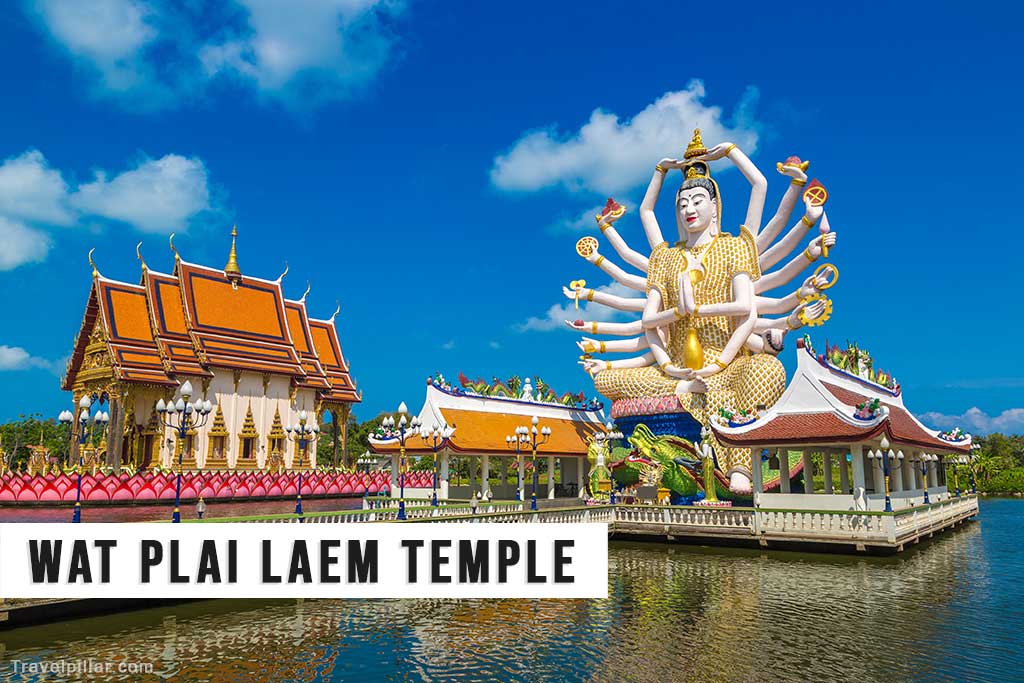
Nearby stands another large statue of a laughing Buddha seated on a raised platform above the water. Although often mistaken for the historical Buddha, the figure represents Budai, a Chinese monk associated with prosperity, happiness and abundance. Surrounding the lake are smaller shrines, temple halls and pavilions decorated with colourful carvings and traditional Buddhist motifs.
Visitors can walk around the lake via a series of paths and small bridges that provide close views of the statues and the surrounding buildings. The temple grounds are generally calm and less crowded than some of the island’s beaches, allowing time to observe the architectural details and religious symbolism. Fish in the lake can be fed with small bags of food sold at nearby stalls, a practice that is considered a merit-making activity in Buddhist tradition.
Wat Plai Laem is easily reached from the nearby Big Buddha Temple and is often visited as part of the same short excursion. The temple is open throughout the day and there is no formal entrance fee, although donations are welcomed.
Visitors should dress modestly with shoulders and knees covered when entering the temple grounds. Because the complex is largely open and exposed to sunlight, bringing water and sun protection is recommended, particularly during the middle of the day.
Google map 4.7/5