
London contains a wide variety of parks and gardens ranging from large Royal Parks to smaller landscaped squares and botanical collections. These green spaces provide opportunities for walking, leisure, and seasonal events across different parts of the city. Many parks feature historic buildings, lakes, and sports facilities. Accessible to both residents and visitors, they contribute to the city’s environmental character and public amenities. This guide outlines notable parks and gardens in London.
#1 Hyde Park (Free entry)

Hyde Park is one of London’s largest and most famous Royal Parks, covering 350 acres in central London. Established by Henry VIII in 1536 and opened to the public in 1637, it offers a green oasis amidst the bustling city. Visitors can enjoy leisurely strolls, picnics, and boating on the Serpentine Lake, or explore the park’s various monuments, such as the Princess Diana Memorial Fountain and the Italian Gardens. Hyde Park is also a popular venue for open-air events, including concerts, festivals, and sporting activities.
Official website: https://www.royalparks.org.uk/
Google map 4.7/5
#2 St James Park

St James’s Park is a 57-acre Royal Park located in the heart of London, adjacent to Buckingham Palace. Established by Henry VIII in the 16th century, the park features a large lake with two islands, home to various waterfowl, including the park’s famous pelicans. St James’s Park offers a serene setting for leisurely walks, picnics, and wildlife watching, as well as providing excellent views of iconic London landmarks such as the Houses of Parliament and the London Eye. The park also hosts seasonal events and activities, making it a popular destination for visitors and locals alike.
Official website: https://www.royalparks.org.uk/
Google map 4.7/5
#3 Kew Gardens

Kew Gardens, officially known as the Royal Botanic Gardens, Kew, is a world-renowned botanical garden and UNESCO World Heritage Site located in southwest London. Spanning over 300 acres, it is home to the most diverse collection of living plants in the world, with more than 50,000 species. Established in 1759, Kew Gardens features iconic structures such as the Palm House, the Temperate House, and the Great Pagoda. Visitors can explore various themed gardens, enjoy treetop walks, and attend seasonal events, exhibitions, and educational programs. Kew Gardens is a vital center for botanical research and conservation, making it an essential destination for plant enthusiasts and nature lovers alike.
Official website: https://www.kew.org
Google map 4.7/5
#4 Richmond Park
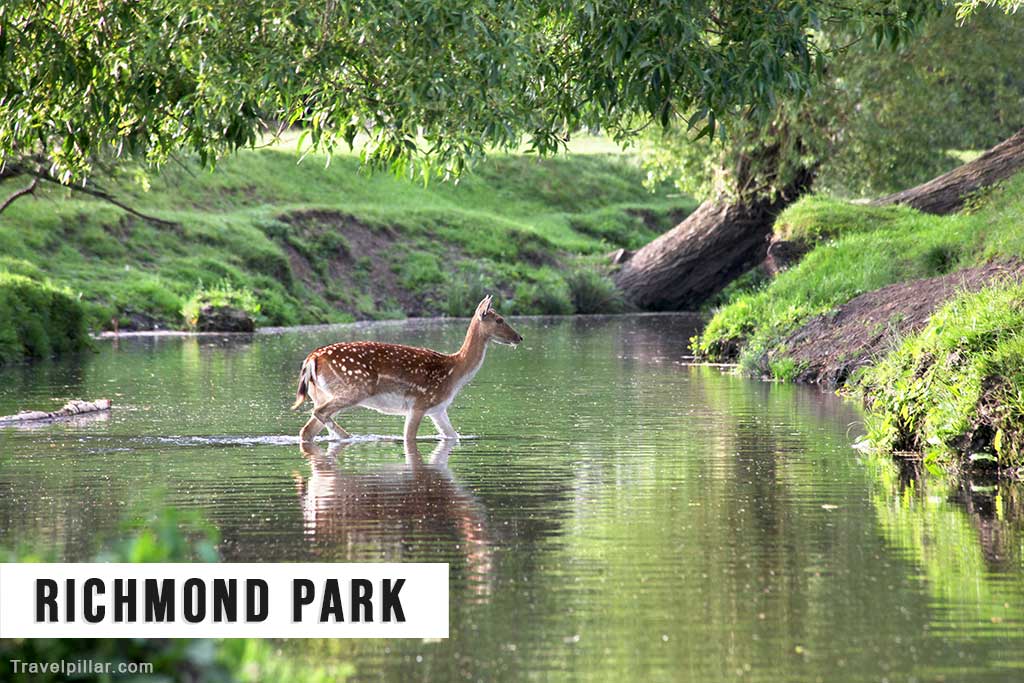
Richmond Park is the largest of London’s Royal Parks, covering 955 hectares (2,360 acres) in southwest London. Established by Charles I in the 17th century as a deer park, it remains home to herds of red and fallow deer. The park features woodlands, grasslands, and the Isabella Plantation, a woodland garden. It is designated as a National Nature Reserve and offers walking, cycling, and panoramic views over London from King Henry’s Mound.
Richmond Park 4.8/5
#5 Kensington Gardens

Kensington Gardens is a 265-acre Royal Park adjacent to Hyde Park in London. Originally part of Hyde Park, it was separated during the reign of Queen Caroline in the 18th century. The gardens are home to several attractions, including the Serpentine Galleries, the Albert Memorial, and the Peter Pan statue. The Italian Gardens, a beautiful ornamental water garden with fountains, statues, and manicured flowerbeds, can also be found within Kensington Gardens.
Google map 4.7/5
#6 Hampstead Heath

Hampstead Heath is a large, ancient parkland in north London, covering 320 hectares (790 acres). It features woodlands, meadows, and ponds, including swimming ponds open year-round. Parliament Hill within the Heath offers panoramic views of the London skyline. The area also includes Kenwood House, an 18th-century villa with an art collection. Hampstead Heath remains a significant natural space, supporting wildlife and providing recreational facilities for walking, swimming, and outdoor activities.
Google map 4.7/5
#7 Regent’s Park
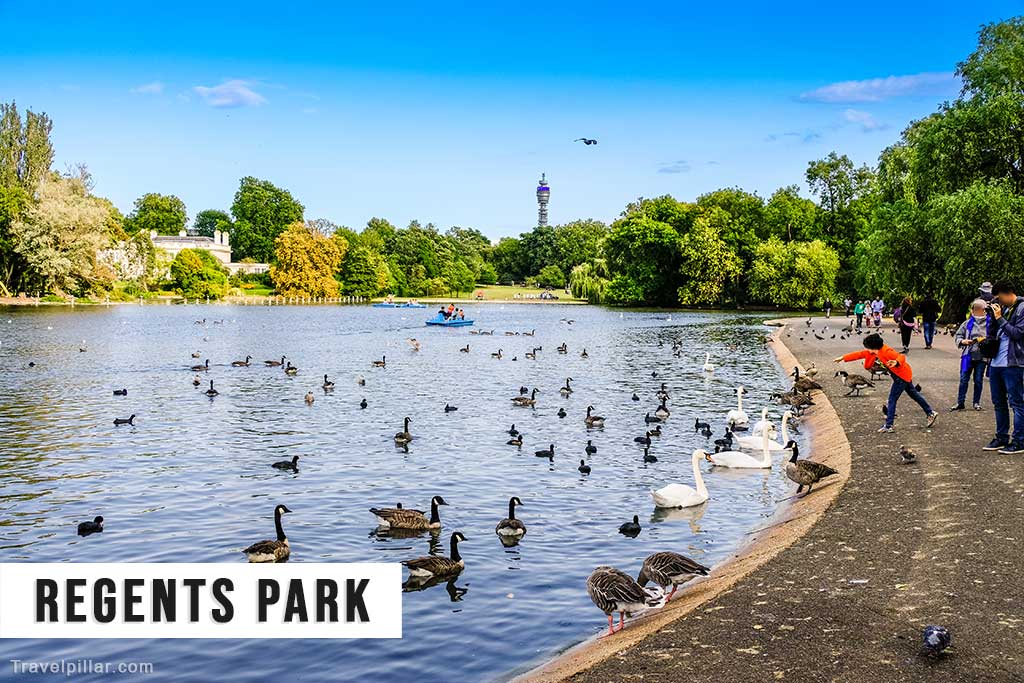
Regent’s Park is a large Royal Park in north-west London, covering 166 hectares (410 acres). Designed by John Nash in the early 19th century, it includes formal gardens, sports facilities, and a boating lake. The park also contains the Open Air Theatre and London Zoo. Its landscaped areas feature wide avenues and ornamental planting. Regent’s Park provides recreational space and cultural venues within a structured urban landscape, accessible from multiple surrounding districts.
Google map 4.7/5
#8 Primrose Hill
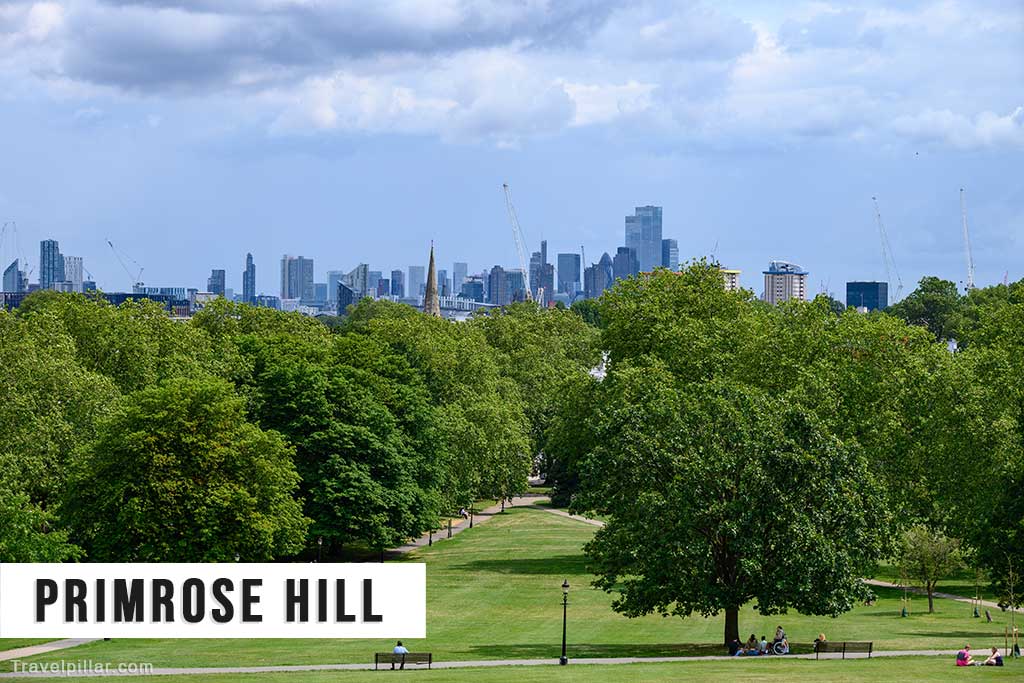
Primrose Hill is a public park located north of Regent’s Park in London. It rises to a height of 63 metres, offering panoramic views of the city skyline, including landmarks such as The Shard and St Paul’s Cathedral. The hill is surrounded by residential streets known for their Victorian terraces and independent cafés. Primrose Hill remains a popular destination for walking, leisure, and views across London, particularly at sunrise and sunset.
Google map 4.7/5