
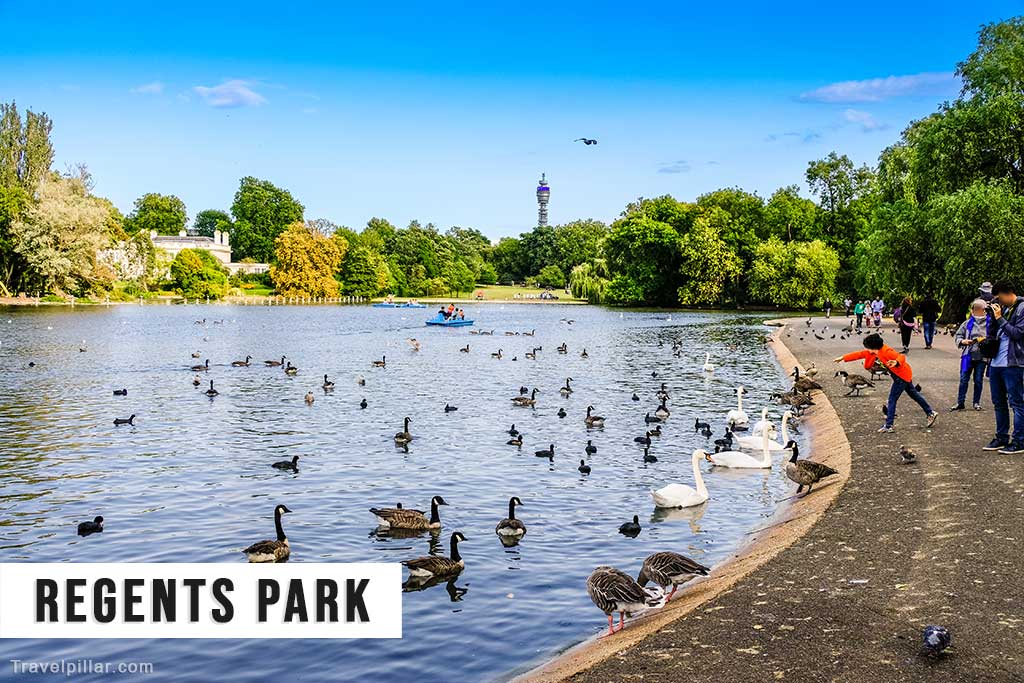
Regent’s Park is one of London’s Royal Parks, covering 395 acres in the northwestern part of the city. It was designed by John Nash in the early 19th century, initially serving as a hunting ground for Henry VIII before becoming a public park. Today, it provides a mix of formal gardens, sports facilities, open fields, and cultural attractions, making it a versatile green space within the urban environment.
A key feature of Regent’s Park is the Queen Mary’s Gardens, which contain London’s largest collection of roses. With over 12,000 roses of various species, the gardens showcase a broad range of colors and fragrances. Additionally, the gardens include a collection of delphiniums, providing seasonal displays that attract visitors throughout the warmer months.
The park also houses several notable structures and recreational facilities. The Open Air Theatre, located in the inner circle of the park, is a well-known venue that hosts a range of theatrical productions during the summer, including Shakespearean plays and musicals. The nearby Regent’s Park Boating Lake offers rowboat and pedal boat rentals, providing an opportunity for leisurely exploration of the park’s water features.
Regent’s Park is also home to the London Zoo, one of the world’s oldest scientific zoos. Established in 1828, it features a variety of animal exhibits, conservation programs, and educational activities, drawing visitors interested in wildlife and zoological research.
The park’s extensive sports facilities include cricket pitches, tennis courts, and football fields, accommodating a range of recreational activities. The pathways that crisscross the park are popular with joggers, cyclists, and walkers, providing scenic routes that include views of flower beds, mature trees, and ornamental water features.
Primrose Hill, located on the northern boundary of Regent’s Park, offers an elevated viewpoint of central London. It is a popular spot for picnics and provides a clear panorama of the city’s skyline.
Regent’s Park, with its combination of landscaped gardens, cultural venues, and recreational spaces, serves as a versatile destination for both leisure and outdoor activities, contributing to its status as a key feature of London’s network of green spaces.
Official website: https://www.royalparks.org.uk/
Google map 4.7/5
The Best Places to Visit in Regent’s Park
Queen Mary’s Rose Gardens
Queen Mary’s Rose Gardens, located at the heart of Regent’s Park, is a world-renowned rose garden. With over 12,000 roses representing more than 85 varieties, it is a stunning attraction, particularly in late spring and summer when the flowers are in full bloom. The garden also features a collection of delphiniums and a picturesque lake, providing a serene retreat. Benches and pathways make it an ideal place for a quiet stroll or relaxation amidst vibrant blooms.
Google map 4.8/5
Regent’s Park Open Air Theatre
This unique theatre offers an immersive cultural experience with performances ranging from classic plays to contemporary musicals. Nestled within the park’s greenery, the theatre operates during the warmer months, typically from May to September. The outdoor setting, combined with high-quality productions, makes it a magical venue. Evening shows are particularly enchanting under the open sky.
Official website: https://openairtheatre.com
Google map 4.7/5
The Boating Lake
The boating lake is a favorite for families, couples, and anyone seeking a leisurely activity. Visitors can rent pedalos or rowing boats to explore the lake, which is surrounded by scenic landscapes and home to a variety of birds. A separate children’s boating pond ensures fun for younger visitors. Nearby cafés offer refreshments, making it easy to spend an enjoyable afternoon by the water.
Official website: https://www.royalparks.org.uk/
Google map 4.7/5
London Zoo
Situated on the northern edge of Regent’s Park, London Zoo is one of the city’s top family attractions. Established in 1828, it is the world’s oldest scientific zoo. The zoo houses over 750 species, including tigers, gorillas, and penguins. Highlights include the Land of the Lions exhibit, the walk-through Lemur Land, and the Reptile House, which gained fame from its appearance in Harry Potter. Educational talks and interactive exhibits add to the experience.
Official website: https://www.londonzoo.org
Google map 4.3/5
The Broad Walk
This grand pathway runs through the park’s core, offering a scenic route for walkers and joggers. Flanked by well-maintained flowerbeds and tree-lined avenues, The Broad Walk showcases the park’s formal landscaping. It’s an excellent way to explore the park’s beauty and connect various attractions.
Google map
The Hub Sports Facility
The Hub is the largest outdoor sports facility in Central London. Surrounded by expansive fields, it provides opportunities for football, rugby, and cricket. The facility also offers fitness classes and a café with outdoor seating, making it a great spot for active visitors. The surrounding open spaces are ideal for casual sports and picnics.
Google map
The Avenue Gardens
Located near the park’s southern end, The Avenue Gardens are a prime example of Victorian horticulture. Featuring symmetrical flowerbeds, ornamental fountains, and neatly trimmed hedges, the gardens are a testament to 19th-century landscaping. Benches scattered throughout the area invite visitors to relax and enjoy the surroundings.
Google map
Primrose Hill
Though technically separate from Regent’s Park, Primrose Hill is a popular extension of the area. Its 63-meter summit offers breathtaking views of London’s skyline, including landmarks such as The Shard, St. Paul’s Cathedral, and the BT Tower. The hill is a favorite for picnics, photography, and watching the sunrise or sunset. Its surrounding neighborhood is also known for charming cafés and shops.
Google map
St John’s Lodge Garden
This hidden gem, located near the Inner Circle, is a quiet, secluded garden filled with sculptures, manicured lawns, and shaded paths. Originally a private retreat, it retains an air of exclusivity and tranquility. It’s a perfect spot for meditation, reading, or simply enjoying a peaceful moment.
Google map
Regent’s Park Wildlife
Regent’s Park is a sanctuary for wildlife, particularly in its Wetland Area and the heronry near the lake. Birdwatchers can spot a variety of species, including swans, ducks, geese, and herons. The park’s diversity of habitats, from open meadows to wooded areas, supports a wide range of flora and fauna, making it a rewarding destination for nature enthusiasts.
Google map