
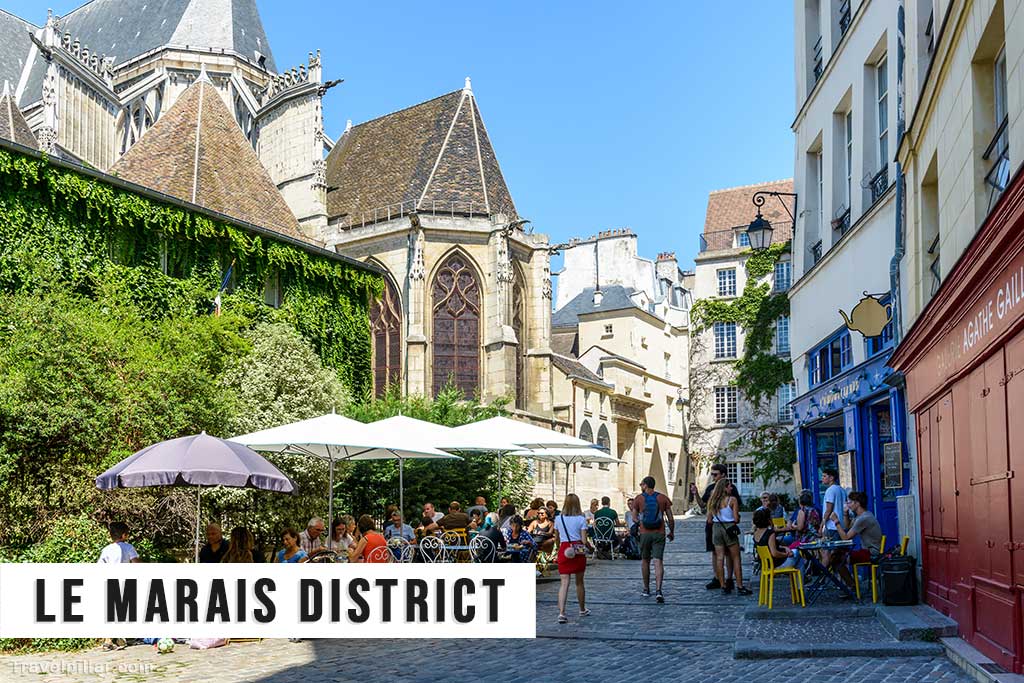
Le Marais, located in the heart of Paris, is one of the city’s most historic and culturally vibrant neighborhoods. Spanning parts of the 3rd and 4th arrondissements, it is renowned for its blend of medieval and Renaissance architecture, narrow cobblestone streets, and lively atmosphere. Its name, meaning “the marsh,” reflects its origins as a reclaimed swamp in the 12th century.
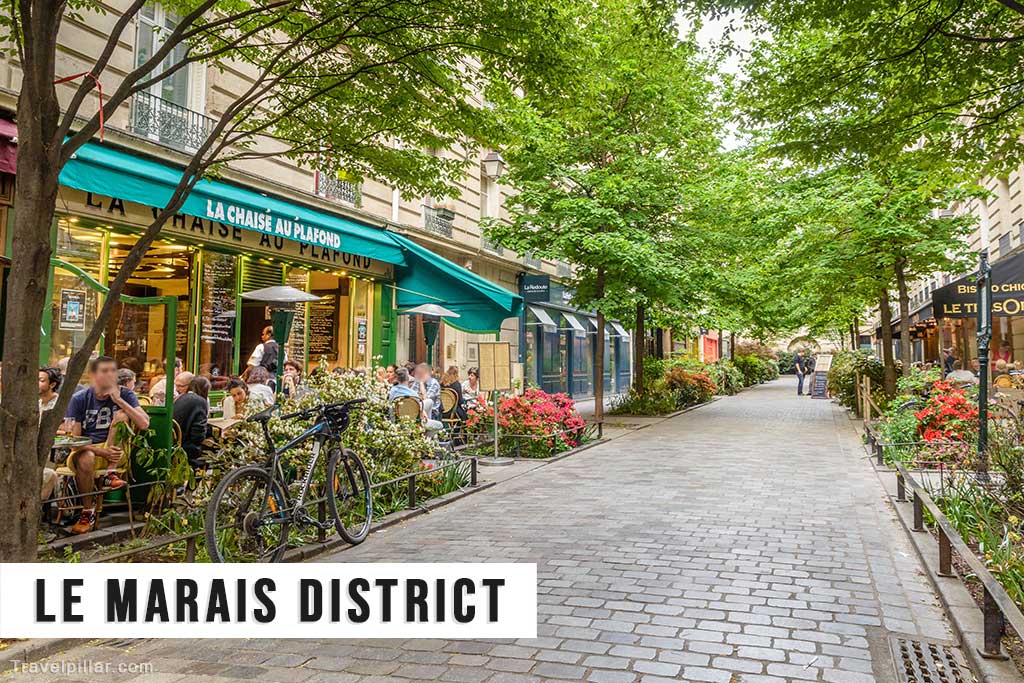
The area gained prominence in the 17th century when aristocrats built elegant hôtels particuliers, or private mansions, many of which still stand today. Over the centuries, Le Marais has evolved into a hub of art, culture, and commerce, while preserving its historic character.
One of its key landmarks is the Place des Vosges, the oldest planned square in Paris, dating back to 1612. This symmetrical square is surrounded by red-brick and stone arcades and offers a peaceful green space at its center. Nearby, the Maison de Victor Hugo, located within the square, provides insights into the life and works of the famed French writer.
Le Marais is also home to the Musée Carnavalet, which chronicles the history of Paris from its origins to the present day. Housed in two adjoining historic mansions, the museum offers a rich collection of artifacts, art, and reconstructed period rooms.
The neighborhood’s Jewish heritage is evident in the Rue des Rosiers, the heart of the Jewish Quarter, lined with traditional bakeries, kosher restaurants, and historic synagogues. This vibrant street reflects the area’s diversity and enduring cultural significance.
Le Marais has become a center for contemporary art, with numerous galleries and the cutting-edge Centre Pompidou located nearby. It is also known for its boutique shopping, from high-end fashion to unique artisan goods.
Today, Le Marais is a dynamic mix of old and new, where centuries-old buildings house modern restaurants, cafés, and shops. Its rich history, architectural beauty, and cultural vibrancy make it one of Paris’s most captivating neighborhoods, appealing to both locals and visitors alike. Le Marais embodies the essence of Paris’s ability to preserve tradition while embracing change.
The Best Places to Visit in Le Marais
Place des Vosges
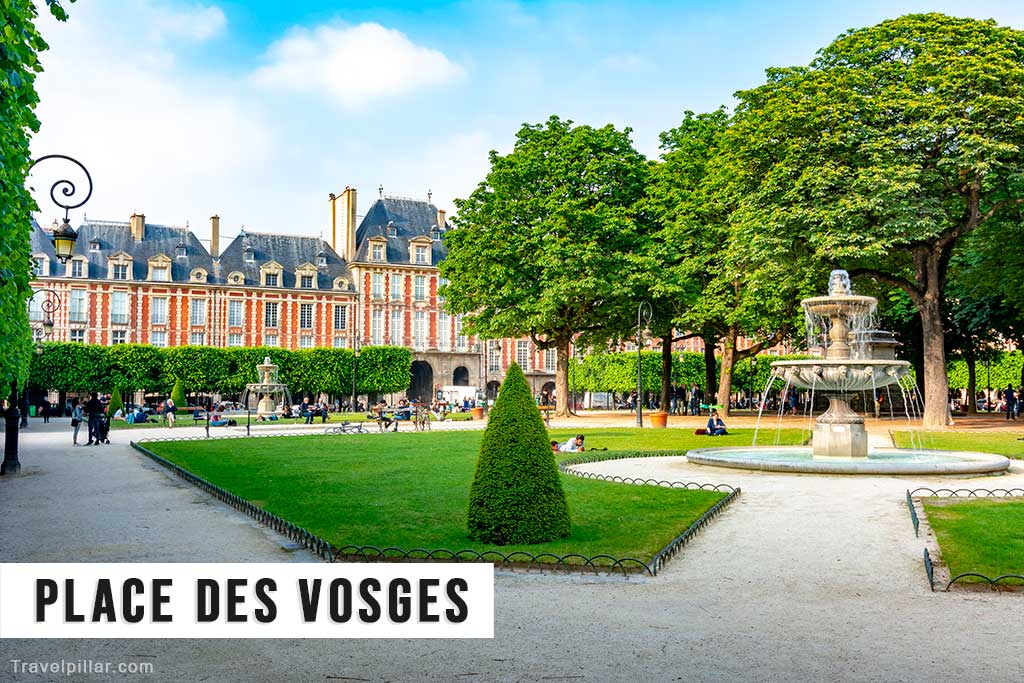
Place des Vosges, established in 1612, is the oldest planned square in Paris and one of the most beautiful. Its harmonious architecture features red-brick façades and stone arcades, with a peaceful garden at its center. Visitors can enjoy the shaded benches, fountains, and manicured lawns. The arcades house art galleries, boutiques, and charming cafés, offering a serene escape and a glimpse into Paris’s historic elegance.
Google map
Maison de Victor Hugo

Nestled in the southeastern corner of Place des Vosges, this museum occupies Victor Hugo’s former residence. The apartment has been restored to reflect Hugo’s life and creative world, showcasing personal items, manuscripts, and illustrations related to his major works, including Les Misérables. The museum also delves into Hugo’s political activism and artistic talents, providing a comprehensive look at one of France’s most celebrated literary figures.
Google map
Musée Carnavalet

Dedicated to the history of Paris, the Musée Carnavalet is located in two adjoining mansions, the Hôtel Carnavalet and Hôtel Le Peletier de Saint-Fargeau. Its collection spans over 600,000 items, including paintings, sculptures, photographs, and historical artifacts. Highlights include relics from the French Revolution, reconstructed 18th-century Parisian interiors, and artworks that vividly depict the city’s evolution.
Google map
Rue des Rosiers
As the heart of the Jewish Quarter, Rue des Rosiers is rich in culture and history. This lively street is lined with kosher bakeries, falafel stands, and historic synagogues. Visitors can enjoy delicacies like challah bread and Middle Eastern dishes while exploring the vibrant mix of shops and cafés. The street also reflects the enduring heritage of Jewish life in Paris.
Google map
Archives Nationales and Hôtel de Soubise
The National Archives, housed in the stately Hôtel de Soubise, offer a window into France’s storied past. Visitors can explore rotating exhibits featuring historical documents, letters, and artifacts, as well as the lush gardens. The building’s Rococo-style interior, with its gilded rooms and intricate details, adds to the experience.
Google map
Musée Picasso
Housed in the 17th-century Hôtel Salé, the Musée Picasso contains an impressive collection of the artist’s works, from paintings and sculptures to ceramics and sketches. The museum provides insights into Picasso’s creative process and evolution as an artist. Temporary exhibitions often explore his influence and relationships with other major figures in modern art.
Google map
Rue Vieille du Temple
This bustling street captures the vibrant energy of Le Marais, with its eclectic mix of boutiques, art galleries, and trendy cafés. It’s a favorite destination for shopping, dining, and people-watching. The street also retains its historic charm, with narrow cobblestone lanes and beautifully preserved buildings.
Google map
Eglise Saint-Paul-Saint-Louis
Built between 1627 and 1641, this Baroque church was commissioned by Louis XIII and reflects the influence of Italian design. The ornate interior features impressive stained glass windows, a grand organ, and a striking dome. The church serves as a quiet sanctuary in the busy district and is a testament to Paris’s rich religious and architectural heritage.
Google map
Marché des Enfants Rouges
Dating back to 1615, this covered market is the oldest in Paris. It offers a vibrant mix of fresh produce, flowers, and artisanal goods, as well as food stalls serving international cuisine. Visitors can enjoy dishes from Moroccan tagines to Japanese sushi in a convivial atmosphere, making it a must-visit for food lovers.
Google map
Hôtel de Ville
Located just on the edge of Le Marais, the Hôtel de Ville is Paris’s City Hall and a masterpiece of Renaissance Revival architecture. Its grand façade features intricate sculptures and statues, while the square in front often hosts public exhibitions, ice rinks, or concerts. Although not part of Le Marais proper, its proximity and significance make it a key stop for visitors.
Google map