
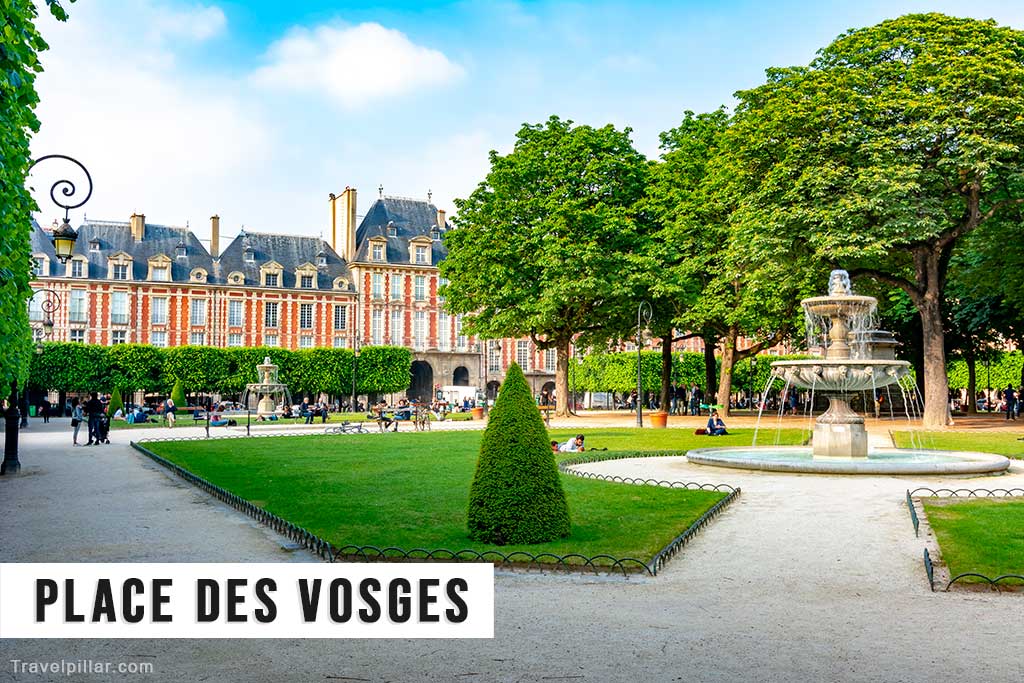
Place des Vosges, located in the Marais district of Paris, is the city’s oldest planned square and a masterpiece of French urban design. Originally known as Place Royale, it was commissioned by King Henry IV in 1605 and completed in 1612. Its symmetrical layout and harmonious architecture set a standard for subsequent European city squares.
The square is characterized by its uniform red-brick façades with stone detailing, steep slate roofs, and arcaded ground floors. These arcades house a variety of shops, art galleries, and cafés, contributing to the lively yet refined atmosphere of the area. At the center of the square is a well-maintained public garden featuring lawns, gravel pathways, fountains, and benches, making it a popular spot for relaxation among both locals and visitors.
Historically, Place des Vosges was a hub for Parisian nobility. Its elegant residences attracted prominent figures, and it served as a fashionable meeting place during the 17th and 18th centuries. One of its most famous residents was the writer Victor Hugo, whose former home at number 6 is now the Maison de Victor Hugo museum. The museum showcases Hugo’s personal belongings and provides insights into his literary achievements and political activism.
Place des Vosges played a role in the cultural evolution of Paris, influencing the development of other squares, such as Place Vendôme. Despite its royal origins, the square retained its significance following the French Revolution, when it was renamed in honor of the Vosges, the first French department to pay taxes under the new republican regime.
Today, Place des Vosges is a blend of history, culture, and everyday life. Its tranquil setting contrasts with the vibrant streets of the surrounding Marais district, offering visitors an opportunity to experience the charm and elegance of historic Paris. Whether for a leisurely stroll, cultural exploration, or a moment of quiet in the heart of the city, Place des Vosges remains a quintessential destination in Paris. Its timeless beauty and historical importance make it a unique and enduring landmark.
Google map